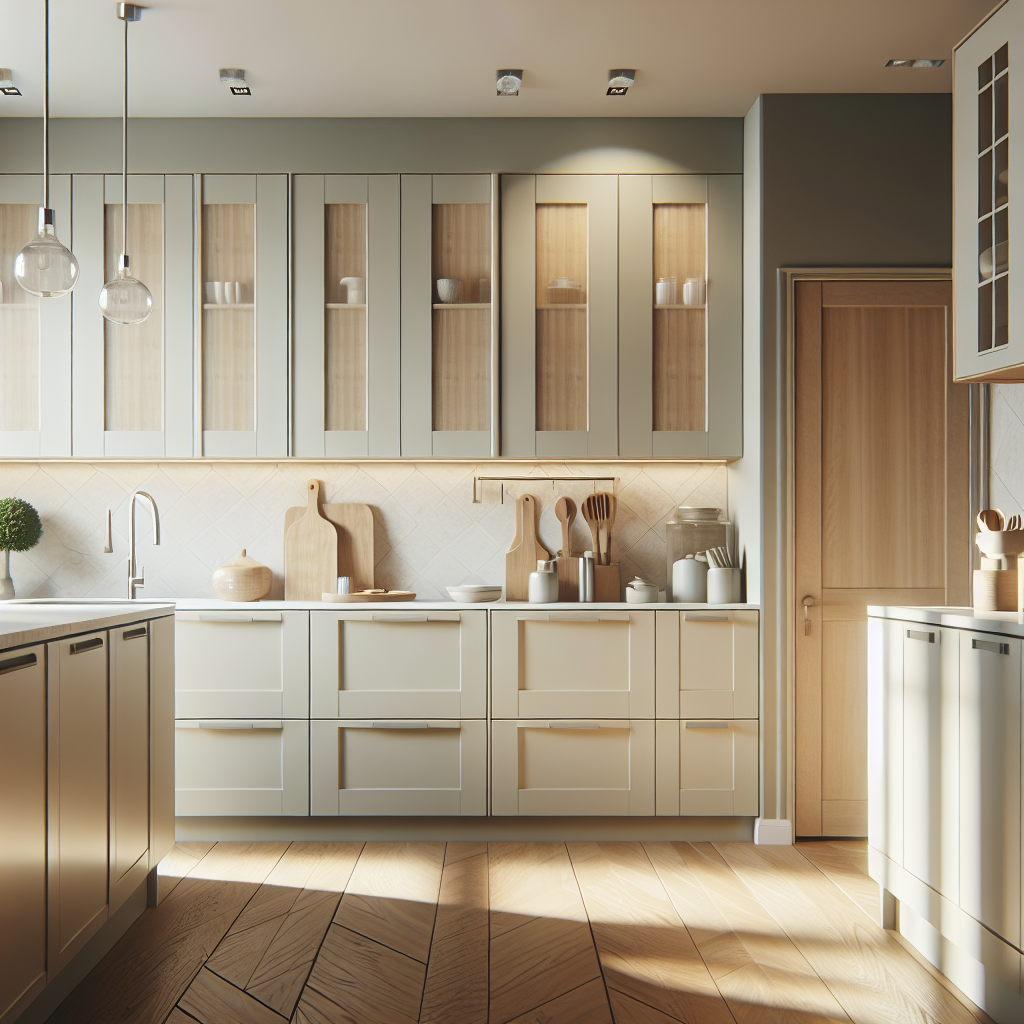
Choosing the right cabinet sizes makes a kitchen feel balanced and work smoothly. Exact measurements affect storage, appliance fit, and how people move through the space.
This article breaks down common measurements for different cabinet types, explains clearances to consider, and offers practical layout pointers that help avoid costly mistakes.
Typical sizing basics and why they matter
Cabinet sizing follows a few common standards, which helps when mixing pieces or buying stock units. Understanding these basics makes it easier to plan efficient storage and appliance placement.
How measurements are listed
Cabinet dimensions are usually given as width x depth x height. Width is the key number when planning runs and aligning appliances.
Depth affects countertop overhang and how far cabinets extend into the room. Height varies by type and use.
Nominal vs. actual size
Some cabinets are sold in nominal sizes that round to convenient numbers. Always check actual dimensions before finalizing layout or buying appliances.
Small differences can add up across multiple cabinets and cause gaps or the need for fillers.
Base cabinet dimensions
Base cabinets support countertops and house sinks, drawers, and appliances. Their size influences workspace height and under-counter storage volume.
Standard heights
Most base cabinets are built to a nominal height of 34 1/2 inches without countertop. With a standard 1 1/2-inch countertop, the working surface is about 36 inches tall.
This height suits the average user and works well with common appliance heights and cooktop clearances.
Standard depths
Base cabinet depths typically measure 24 inches. This depth leaves room for a countertop overhang and aligns with standard appliance dimensions.
For deeper countertops or farmhouse sinks, some base cabinets are available in depths of 27 or 30 inches, but these reduce aisle width.
Standard widths
Widths commonly start at 9 inches and increase in 3-inch increments: 9, 12, 15, 18, 24, 30, 36, and 48 inches.
Choosing widths in these increments makes it easier to plan continuous runs without odd gaps. Appliances like dishwashers are often 24 or 18 inches wide and should be accommodated in this pattern.
Wall cabinet dimensions
Wall cabinets sit above the countertop and are meant for lighter storage. They influence sightlines and the usable space above counters.
Standard heights
Common wall cabinet heights are 12, 15, 18, 24, 30, 36, and 42 inches. Taller cabinets reach near the ceiling and maximize storage.
Shorter cabinets keep items within easy reach and can leave room for decorative space or a vent hood above cooktops.
Standard depths and clearances
Wall cabinets usually measure 12 inches deep. This depth allows space for dishes and glasses without protruding too far over the countertop.
When planning, allow at least 18 inches between the counter and the bottom of the wall cabinet for workspace and appliances like under-cabinet microwaves.
Standard widths
Width options mirror base cabinets and range from 9 to 48 inches in regular increments. Choosing consistent widths simplifies installation and door ordering.
Consider smaller widths near corners or for spice racks, and larger banks for pantry-style storage.
Tall cabinets and pantry sizes
Tall units create vertical storage for brooms, pantry goods, and built-in ovens. They can replace multiple smaller cabinets and centralize storage needs.
Typical heights
Tall cabinets commonly range from 84 to 96 inches in height. These sizes fit between floor and ceiling in most homes and can be stacked or used as single units.
Full-height pantry cabinets often include adjustable shelving and internal organizers to maximize utility.
Depth and width of tall cabinets
Depths for tall cabinets are usually 12, 18, or 24 inches. A 24-inch depth provides a pantry-style feel but may protrude into kitchen traffic if not planned carefully.
Widths for tall cabinets often follow the same 3-inch increment pattern as other units to maintain a cohesive look and allow for modular combinations.
Clearances, work triangles, and workflow
Good clearances make kitchens safer and more comfortable. Measuring aisle widths, appliance doors, and appliance swing areas avoids cramped layouts.
Aisle widths
For a straight run with one cook, a 36-inch aisle is a common minimum. If multiple people will use the kitchen at the same time, aim for 42 inches or more.
Smaller kitchens can function with 32 inches, but mobility and appliance access will be limited.
Work triangle basics
The informal work triangle between stove, sink, and refrigerator aims to reduce unnecessary movement. Keep each leg between about 4 and 9 feet when possible.
Long, narrow kitchens or L-shaped layouts may require adjustments, but the goal is efficient movement and clear access to each station.
Appliance clearances
Account for appliance doors and oven drawers. A dishwasher door needs space to open fully without blocking a walkway.
Also leave room for refrigerator doors to swing and for people to stand in front of work areas comfortably.
Custom vs. stock dimensions and cost trade-offs
Stock cabinets come in standard sizes and are cost-effective. Custom units allow precise fits around windows, closets, and odd angles but cost more.
When stock works best
Stock options suit kitchens with standard wall-to-wall measurements and common appliance sizes. They speed up installation and reduce lead time.
Choose stock if budget and quick turnaround are priorities and your layout uses typical widths and depths.
When to consider custom
Custom cabinets are worth it when you need exact fits, unusual ceiling heights, or specialty storage such as corner pullouts or integrated trim pieces.
They can optimize every inch of space, especially in irregular rooms, at a higher price point.
Practical tips to avoid layout mistakes
Small planning choices save time and money. Think through traffic flow, appliance placement, and where heavy items will live.
Plan for future appliances
When picking cabinet widths, consider future appliance upgrades. An 18-inch single oven today might be replaced with a 24-inch model later.
Leave space or selectable fillers so future changes are easier to implement.
Think in zones
Group storage by task: prep, cooking, cleanup, and food storage. Place frequently used items within easy reach of their zone.
Designing in zones reduces wasted movement and keeps counters clear during busy moments.
Use fillers and adjustments
Fillers of 1/8 to 1/4 inch help hide gaps at walls or between cabinets and appliances. They make installations look intentional and polished.
Adjustable feet and shims can correct uneven floors so doors align properly.
Materials, door styles, and their impact on sizing
Door style and thickness can change the final measurement from face-frame to frameless cabinets. Know what type is being used to avoid surprises.
Face-frame vs. frameless
Face-frame cabinets use a front frame that the doors attach to and often require slightly different clearances. Frameless (full-access) cabinets give a wider internal opening at the same exterior width.
Choose based on the visual and functional priorities of the kitchen.
Door thickness and overlay
Thick slab doors can add a noticeable inch or more to the perceived cabinet depth or width when doors overlap adjacent units.
Inset doors sit inside the cabinet frame and require precise tolerances; overlays cover the frame and can hide small gaps.
Conclusion
Understanding common sizes for base, wall, and tall cabinets makes planning a kitchen much simpler. Standard widths and depths help mix and match components efficiently.
Proper clearances, thoughtful appliance planning, and attention to door style ensure the finished space is both functional and comfortable.
Frequently Asked Questions
Below are short answers to common measurement questions related to cabinet selection and kitchen layout.
What is the typical counter height?
Standard counter height is about 36 inches from the floor when the cabinet plus countertop are combined. This suits most general kitchen tasks.
How deep should wall cabinets be?
Wall cabinets typically measure 12 inches deep, which balances storage capacity with a comfortable workspace below.
What widths are best for base cabinets?
Widths in 3-inch increments from 9 to 48 inches are common and help create continuous runs without awkward gaps or large fillers.
How much aisle space do I need?
Aim for at least 36 inches for a single cook and 42 inches or more for kitchens with multiple users. Narrower aisles limit movement and access.
Do custom cabinets change standard dimensions?
Custom cabinets can be any size, so they’re ideal for irregular spaces or when maximizing storage. They typically cost more than stock options but fit precisely.