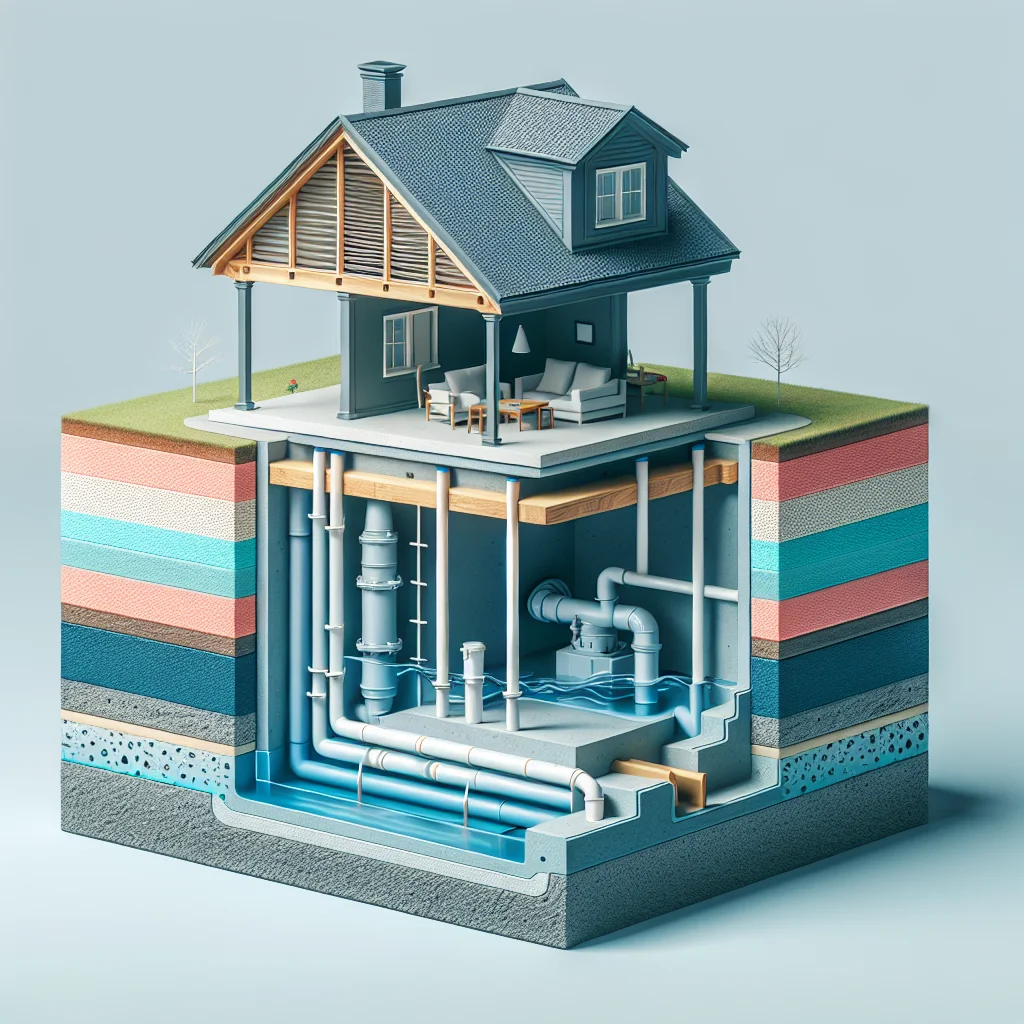
Water entering a foundation can start as a small wet spot and turn into costly structural damage if left unchecked. Understanding the methods to keep foundations dry helps property owners preserve value and avoid health risks like mold.
This article outlines common causes of foundation moisture and clear, practical methods to stop water at the source. It covers surface and subsurface solutions, what affects performance, and how to maintain long-term protection.
Why foundation moisture is a serious concern
Moisture near or inside the foundation affects more than the basement floor. It can lead to cracked walls, warped framing, and mold growth that impacts indoor air quality.
Beyond health and comfort, water intrusion shortens the lifespan of building materials and can reduce resale value. Detecting and addressing issues early saves money and stress.
Common causes of foundation water problems
Identifying the root causes helps pick the most effective solutions. Problems often start outside the house and move inward along weak points.
Poor grading, clogged drains, hydrostatic pressure, and cracks in the foundation are frequent culprits. Each requires a different response to control or eliminate water entry.
Poor drainage and slope
Soil that slopes toward a foundation channels rainwater back to the wall. Even small amounts of standing water can increase pressure against the foundation over time.
Correct grading and ensuring gutters discharge well away from the foundation reduce the volume of water that reaches the foundation walls.
Hydrostatic pressure
When the ground becomes saturated, water pressure builds and forces moisture through tiny pores, joints, and cracks. This is common in areas with high groundwater or heavy rain.
Relieving that pressure with drainage systems or waterproof barriers helps prevent seepage through concrete or masonry.
Cracks and construction joints
Settling, freeze-thaw cycles, and improper curing can create cracks in concrete. Joints between sections or around penetrations like pipes are also weak points.
Sealing cracks and ensuring continuous protection at joints are essential steps to keep water out.
Exterior waterproofing methods
Waterproofing from the outside prevents moisture from ever contacting the foundation wall. This is often the most reliable but can be more invasive during installation.
Common exterior methods include membranes, drainage boards, and protective coatings. Each has strengths depending on soil and site conditions.
Sheet membranes
Thick polymer or rubber sheets are applied to the outside face of the foundation. They create a continuous barrier against liquid water and vapor.
Proper installation includes baking the membrane to the substrate or using adhesives, and protecting it during backfill to avoid punctures.
Liquid-applied coatings
These are trowel or spray-applied compounds that form a seamless layer over the wall. They can conform to irregular surfaces and seal small cracks.
Liquid coatings work well where access is limited, but require careful surface prep and multiple coats to achieve uniform thickness.
Drainage boards and protection layers
Drainage boards placed over membranes protect the barrier from backfill damage and create a channel to guide water down to perimeter drains.
They also reduce the chance that soil will hold moisture against the wall, extending the life of the waterproofing layer.
Subsurface drainage and exterior work
Managing water that collects around the foundation often requires a combination of a drainage system and water barriers. This approach reduces hydrostatic pressure.
Perimeter drains, gravel backfill, and sump systems are frequently used together to move water away from the foundation safely.
Perimeter footing drains
Also known as French drains, these systems collect water at the footing level and route it to a safe discharge point or sump pump. They use perforated pipe wrapped in filter fabric.
Proper depth, slope, and clean filter material are key to prevent clogging and maintain long-term performance.
Sump pump systems
A sump basin with a pump removes collected groundwater and discharges it away from the building. Battery backups help during power outages in storm events.
Sump pumps are a common part of a full drainage solution, but they work best when combined with exterior waterproofing and good grading.
Interior methods and crack repairs
When exterior access is difficult or costs are high, interior fixes can control moisture entering the living space. These approaches manage rather than stop water at the source.
Interior solutions include sealing cracks, installing interior drains, and using vapor barriers. They are often faster and less disruptive to install.
Epoxy and polyurethane injections
Low-viscosity resins can be injected into cracks to seal them against water. Polyurethane expands and blocks active leaks, while epoxy creates a rigid structural bond.
Injection is precise and minimally invasive, making it suitable when localized leaks are present.
Interior drain systems
These systems capture water at the base of the wall and direct it to a sump pump inside the basement. They are installed under the floor edge and tied into a discharge system.
Interior drains are effective at protecting the finished basement space and can be paired with wall coatings to keep surfaces dry.
Vapor barriers and sealants
Sheet vapor barriers or applied sealants reduce humidity and slow moisture migration through block or poured walls. They improve comfort and reduce mildew risk.
While not a substitute for structural fixes, vapor control is an important layer in a multi-step approach.
Choosing materials and methods by site conditions
No single solution fits every property. Soil type, water table level, climate, foundation material, and budget all influence the best approach.
Matching the method to the cause of moisture ensures lasting results and avoids repeated repairs that waste time and money.
Soil and water table considerations
Clay soils hold water and create pressure, while sandy soils drain faster but may allow water to pool at certain depths. High water tables require robust drainage or full exterior membranes.
Soil testing helps determine the right combination of drainage and barrier systems to use.
Foundation material and condition
Poured concrete, concrete block, and stone each behave differently. Block walls have cells and joints that need special attention, while poured walls often respond well to continuous membranes.
Addressing cracks and structural issues before waterproofing ensures materials bond and seals perform as intended.
Budget and long-term value
Some methods have higher upfront costs but lower maintenance and longer life. Other fixes are cheaper now but may need repeat work.
Consider expected future conditions and resale value when selecting materials and systems.
Maintenance and inspection tips
Waterproofing systems are most effective when paired with regular checks and simple maintenance. Small actions prevent big problems.
Scheduled inspections and prompt repairs keep drainage systems clear and barriers intact, extending the life of any waterproofing effort.
Routine checks
Inspect gutters, downspouts, and slopes at least twice a year. Remove debris and ensure downspouts discharge away from the foundation.
Look for fresh stains, bubbling paint, or new cracks inside as signs that moisture is finding a path in.
Maintain drainage systems
Perimeter drains and French drains can clog over time. Check clean-outs and monitor sump pumps for reliable operation, especially before wet seasons.
Replacing clogged filter material and ensuring good slope extends system life and reduces repair needs.
Conclusion
Preventing foundation moisture is a mix of good site management, appropriate materials, and timely repairs. A layered approach that combines barriers and drainage usually offers the best protection.
Evaluate the source of water carefully and choose solutions that address both symptom and cause. Regular maintenance keeps protection effective and avoids costly surprises.
Frequently Asked Questions
How do I tell if water is coming through the foundation?
Look for damp spots, efflorescence (white mineral deposits), a musty smell, or peeling paint. Water stains near the floor or wet carpet edges also indicate intrusion.
Is exterior or interior waterproofing better?
Exterior methods stop water before it reaches the wall and reduce hydrostatic pressure. Interior methods manage water once it passes the wall. The best choice depends on access, cost, and the source of the problem.
Can I seal foundation cracks myself?
Small, non-structural cracks can be filled with appropriate sealants or injection kits. Larger cracks or those associated with settlement should be assessed to avoid masking a structural issue.
How often should I inspect waterproofing systems?
Inspect gutters and grading twice a year. Check sump pumps and drain clean-outs at least annually, and after storms if heavy rain is expected in your area.
Will landscaping changes affect foundation moisture?
Yes. Adding soil near the foundation, planting trees too close, or altering drainage paths can increase moisture at the wall. Maintain proper slope and choose plantings that do not concentrate water near the foundation.