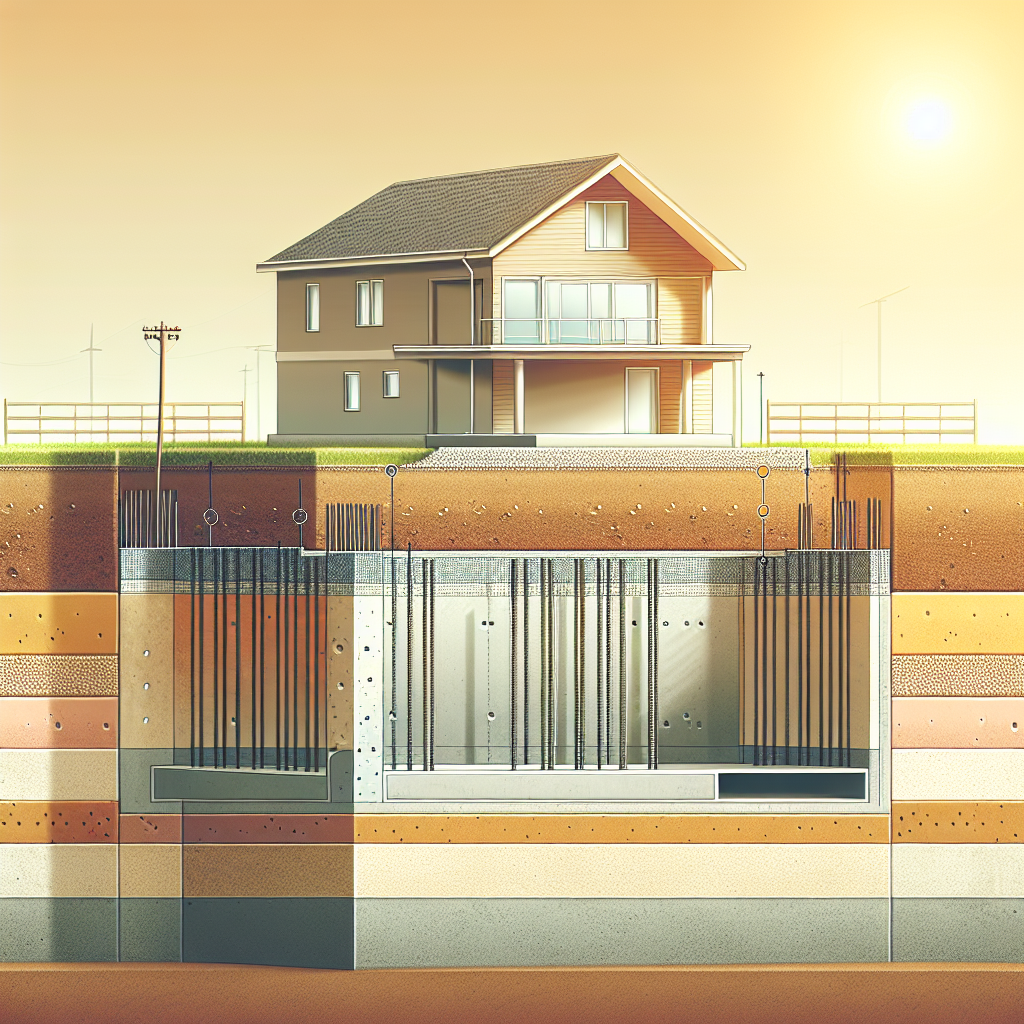
Building a two-storey home starts beneath the surface. The right foundation keeps the structure level, prevents cracks, and handles the extra load that comes with a second floor.
This article explains common foundation types, how to assess the soil and site, key design choices, and cost factors so you can plan a durable base for a 2 storey house.
Common foundation types suitable for two-storey homes
Different soils and budgets call for different foundation styles. Choosing the right type depends on load, soil bearing capacity, water table, and local climate.
Shallow strip footings
Strip footings spread wall loads along continuous strips of concrete. They are common where soil is stable and has good bearing capacity.
These footings are cost-effective and work well when excavation depth is limited and frost depth permits. They suit traditional masonry and framed walls.
Raft (mat) foundations
A raft foundation covers the whole building footprint with a reinforced concrete slab. It distributes loads evenly, reducing differential settlement.
Rafts are useful on weaker soils or when load differences between parts of the house are significant. They can be thicker under heavy load points like masonry chimneys.
Piled foundations
Piles transfer loads deep into firmer layers below soft or expansive soils. They are common where shallow soils cannot support the house weight.
Piled systems can be driven timber, precast concrete, or bored piles with reinforced concrete caps linking to the ground beam system.
Strip footings with grade beams
This approach combines continuous footings and beams to form a stiff base. Grade beams link isolated footings or piles and reduce bending in slender walls.
It’s a good middle ground when parts of the site vary in strength or there are local voids and filled areas.
Soil checks, site preparation, and depth considerations
Before deciding on a foundation type, basic tests and observations of the site are essential. Soil behavior drives depth, reinforcement, and drainage needs.
Soil investigation essentials
A simple soil test reveals bearing capacity, groundwater level, and whether expansive clays or organic layers exist. Even a basic borehole and pocket penetrometer reading reduces surprises.
Look for signs of previous movement, such as leaning fences, cracks in nearby buildings, or wet patches that indicate a high water table.
Determining foundation depth
Depth rules vary by region, climate, and frost level. In cold areas, foundations must sit below frost depth to avoid heave. In warmer climates, shallower foundations may be fine if soils are stable.
When soil is variable, deeper foundations or piles are safer. For rafts, the slab depth is set to provide the required stiffness and to resist bending from concentrated loads.
Site clearing and compaction
Remove organic topsoil, tree roots, and loose fill from the building footprint. Good compaction of the subgrade ensures uniform support under footings or slabs.
Use mechanical compaction and test in layers. Poorly compacted backfill is a common cause of later settlement and cracking.
Design choices, reinforcement, and water control
Design details make the difference between a short-lived patchwork and a long-lasting base. Reinforcement, control joints, and drainage all play roles.
Reinforcement layout
Reinforced concrete resists tension and bending. Footings and rafts typically include mesh or rebar laid with correct cover to prevent corrosion.
Designers size and place reinforcement based on load paths and soil stiffness. Over-reinforcing does not compensate for poor foundations or bad soil.
Control joints and crack management
Concrete shrinks as it cures and with temperature changes. Control joints localize cracks in slabs so they don’t appear at random locations.
Place joints at regular intervals, aligned with walls and openings, and finish with saw cuts or formed joints once the slab has gained strength.
Waterproofing and drainage
Water under or beside a foundation accelerates deterioration and can cause uplift in expansive soils. A good drainage plan is essential.
Include perimeter drains, proper grading away from the house, and damp-proof membranes where groundwater or capillary rise are concerns.
Materials, typical construction steps, and cost factors
Materials and the sequence of work influence durability and final cost. Understanding typical steps helps set realistic expectations for budget and schedule.
Key materials
- Concrete: mix strength and durability matter; use recommended slump and curing practices.
- Steel reinforcement: grade, spacing, and cover protect against cracking and corrosion.
- Membranes and coatings: damp-proof membranes and bituminous coatings reduce moisture ingress.
- Gravel and crushed stone: used for sub-base and to improve drainage beneath slabs.
Typical construction sequence
Work usually follows a clear sequence: excavation, subgrade compaction, formwork and reinforcement, concrete pour, curing, and backfill.
For piles, the sequence adds pile installation and load testing, then caps and ground beams before slab work.
Factors affecting cost
Costs vary by site complexity, material prices, labor rates, and the chosen foundation type. Simple strip footings are often cheapest; piles and complex rafts cost more.
Unseen conditions, such as buried debris, rock, or high groundwater, raise costs quickly. Allow a contingency to cover unexpected groundwork.
Conclusion
A stable foundation is essential for a safe, long-lasting two-storey house. Match the foundation type to soil conditions, load needs, and local climate.
Spend time on soil checks, thoughtful design, and proper site preparation. These steps reduce repair needs and provide peace of mind as the building rises above the base.
Frequently Asked Questions
Below are common questions homeowners ask when planning a foundation for a two-storey home, with straightforward answers to clarify choices and expectations.
What foundation depth is needed for a two-storey house?
Depth depends on frost line, soil type, and bearing capacity. In cold regions foundations must be below frost depth. In weak soils, depth increases or piles are used. A simple soil test will give the numbers needed for design.
Is a raft better than strip footings for uneven soil?
Raft foundations spread loads evenly and can reduce differential settlement on sites with variable soil strength. They are often chosen when strip footings would need uneven depths across the site.
How do water and drainage affect foundation choice?
High groundwater or poor surface drainage can cause buoyancy, uplift, or corrosion. Foundations in wet sites need drainage systems, waterproofing, and sometimes deeper or piled solutions to remain stable.
Can a two-storey house be built on a shallow foundation?
Yes, if the soil has sufficient bearing capacity and frost issues are addressed. Many two-storey houses use shallow foundations successfully where conditions are right and loads are properly distributed.
What maintenance helps keep a foundation healthy?
Keep gutters and grading directing water away, repair cracks early, and avoid planting large trees close to the foundation. Regular checks after heavy rain or seasonal changes catch problems early.