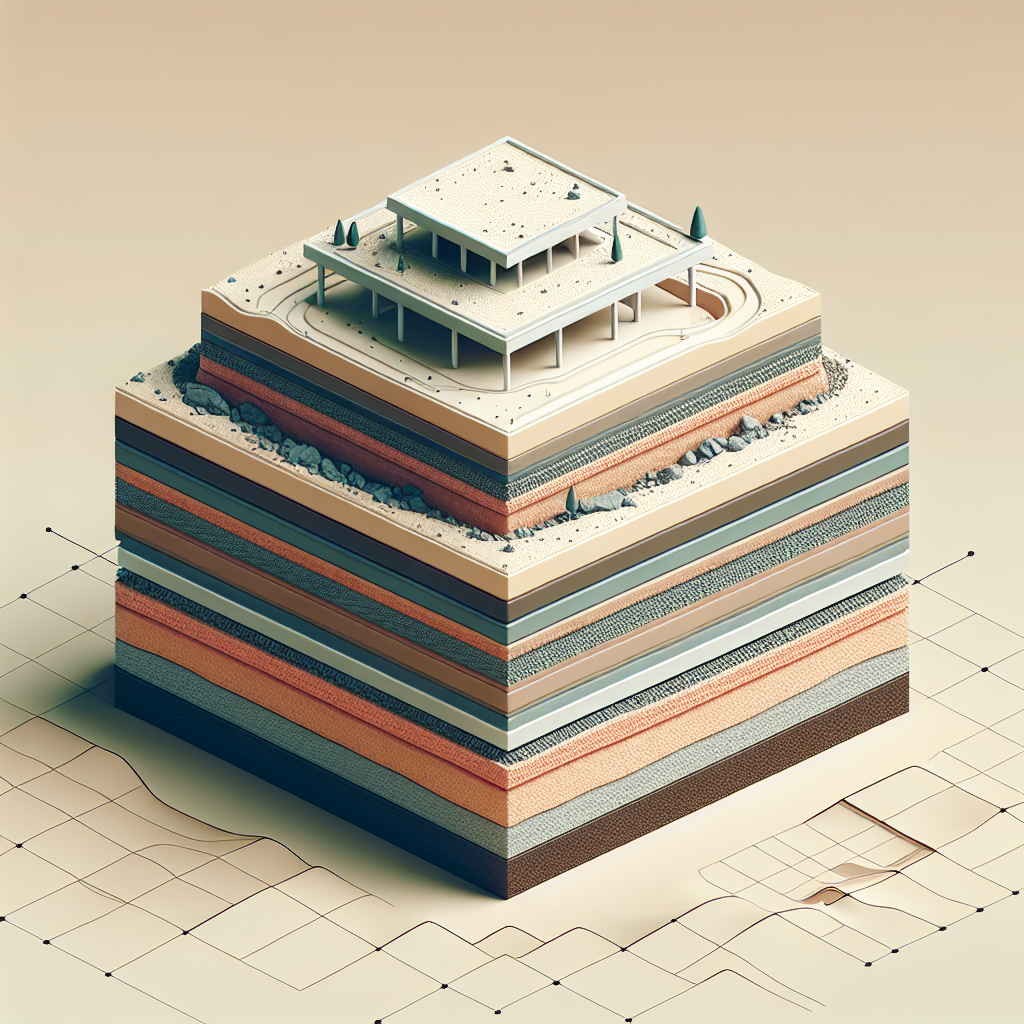
Every building starts at ground level. A reliable base that matches soil conditions, loads and environmental factors is essential to keep structures safe and durable.
This article explains how to think about foundation design in straightforward terms. It covers types, soil checks, load handling, and construction practices that make foundations perform well over time.
Types of foundation systems
Choosing the right base depends on soil, load and budget. Many projects use one of a few common systems, each with clear pros and cons.
Shallow foundations
Shallow options sit near the surface and transfer loads directly into competent soil layers. Examples include spread footings and slab-on-grade.
They work well where soil near the surface has adequate bearing capacity and where deep excavation is unnecessary.
- Advantages: simpler construction, lower cost, faster schedule.
- Limitations: not suitable for very weak or highly compressible soils.
Deep foundations
When strong soil is deep or surface soils are poor, piles and drilled shafts carry loads down to firmer layers. These transfer forces by skin friction and end bearing.
Deep systems add capacity and reduce settlement, but they require specialized equipment and careful design.
- Advantages: high capacity, better performance in soft soils, good for large structures.
- Limitations: higher cost, more complex installation, site noise and vibration.
Special foundations
Certain sites or structures need unusual solutions like mat foundations, ground improvement, or floating slabs. These respond to unique soil or load conditions.
Mat or raft foundations spread load across a large area and can be effective where differential settlement is a concern.
Soil and site assessment
Understanding the ground is the most important step. A few targeted tests reveal capacity, compressibility, and groundwater behavior.
Soil investigation essentials
Borings, standard penetration tests, and laboratory classification show soil type, density and strength. These data define what the base must do.
Proper sampling helps avoid surprises such as hidden soft layers or compressible organic deposits.
Groundwater and drainage
Water lowers effective stress and can cause buoyant forces, heave, or erosion. Knowing seasonal water levels and flow paths is critical.
Design should include drainage planning and waterproofing details when groundwater is near foundation depth.
Bearing capacity and settlement
Calculate allowable bearing pressure and estimate settlement under expected loads. Different soils behave differently—clays compress slowly, sands settle quickly but predictably.
Design tolerances must match the building’s sensitivity to differential movement to protect finishes and structural elements.
Load and structural considerations
Foundations must carry dead loads, live loads and environmental forces like wind or seismic action. How loads reach the base changes design choices.
Load paths and distribution
Trace how weight from walls, columns and slabs flows down to the soil. Uniform load distribution reduces local overstress and uneven settlement.
Where concentrated loads occur, such as under heavy columns or equipment pads, local reinforcement or enlarged footings may be needed.
Controlling settlement and movement
Design to limit both total and differential settlement. Tolerances depend on finishes, cladding systems and utility connections.
Methods include stiffening foundations, using deep elements, improving soil, or redistributing loads to reduce local compression.
Seismic and lateral forces
In seismic areas, foundations must resist uplift, sliding and overturning. Base design ties structural elements into the ground to share lateral loads.
Details such as continuous footings, shear keys and proper anchorage ensure the foundation and frame act together when shaken.
Construction practices and quality control
Good plans mean little without careful execution. Field work and testing keep design assumptions valid as the project proceeds.
Excavation and preparation
Clear and level bearing surfaces before placing concrete or piles. Remove unsuitable materials and recompact the subgrade where necessary.
Protect adjacent structures and slopes during digging, and control water at the excavation to avoid disturbance of bearing layers.
Concrete, reinforcement and materials
Use specified concrete strengths and correct reinforcement detailing. Cover thickness, lap lengths and placement quality all affect performance.
Check material certificates and perform on-site inspections to ensure mixes and bars meet the design requirements.
Compaction and verification
Fill and backfill around foundations should meet compaction standards. Poor compaction leads to future settlement and uneven loads.
- Test compacted layers with standard density checks.
- Keep records of tests and corrective actions.
Inspection and testing checklist
Consistent checks during critical stages keep performance predictable. Typical checks include survey alignment, footing depth, reinforcement placement and concrete curing.
- Verify layout and elevations before pouring.
- Confirm reinforcement spacing and cover.
- Test concrete strength with cylinders or cubes.
- Watch for water seepage or unexpected soil conditions.
Conclusion
Design that matches soil, loads and construction capability leads to foundations that last. Early, clear soil data and realistic load estimates reduce risk.
Careful execution and testing during construction preserve the benefits of sound design. Simple choices made early often prevent costly repairs later.
Frequently Asked Questions
Below are common questions about foundation design and clear, direct answers to help make decisions on typical projects.
What is the main factor in choosing a foundation type?
Soil conditions and load magnitude are the primary drivers. If competent soil is near the surface, shallow systems are cost-effective. If not, deep elements or ground improvement will be needed.
How much settlement is acceptable?
Acceptable settlement depends on the building’s tolerance for movement. Small, uniform settlement is often fine, but differential settlement that affects finishes or structure must be minimized. Typical limits are set by codes and project requirements.
When should piles be preferred over spread footings?
Piles are preferred when shallow soils are weak, compressible, or when loads are very high. They also help where surface space limits footing size or where vibration and settlement control are critical.
How does groundwater affect foundation decisions?
High or fluctuating groundwater can reduce bearing capacity, cause uplift, and complicate excavation. Design responses include deeper foundations, drainage systems, waterproofing and temporary dewatering during construction.
Can soil be improved instead of using deep foundations?
Yes. Methods like compaction, stone columns, grout injection, or geosynthetics can raise bearing capacity and reduce settlement. The choice depends on soil type, cost, and required improvement level.
What role does reinforcement play in footings?
Reinforcement controls cracking, helps distribute loads, and resists bending or uplift. Proper detailing and cover ensure durability and structural performance over time.
How important is drainage around foundations?
Very important. Proper drainage prevents water from weakening soils, reduces frost heave risk, and protects waterproofing. Simple grading and subsurface drains can greatly extend foundation life.
When should a structural review be repeated during construction?
Reassess when site conditions change, unexpected soil layers are found, loads increase from design changes, or if performance issues like excessive settlement appear. Early detection saves time and cost.