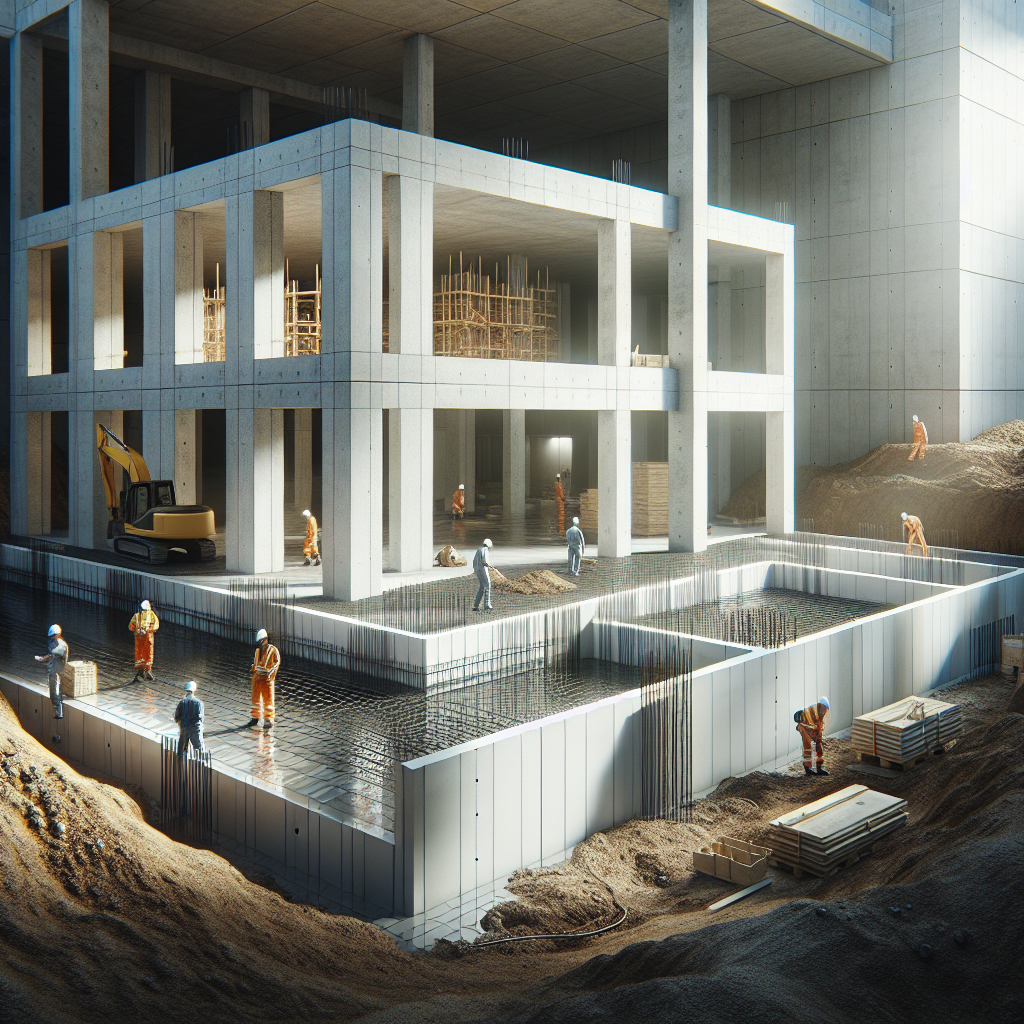
Choosing the right foundation often decides how a building performs over decades. Shallow foundations are a practical option for many low- to mid-rise structures when soil near the surface can safely carry loads.
This article explains common shallow foundation solutions, how they behave on different soils, and what to weigh when selecting one. Practical examples and clear comparisons help demystify the options.
When shallow foundations make sense
Shallow foundations sit close to the ground surface and transfer loads directly into near-surface soils. They are suitable when the bearing stratum is strong enough at a shallow depth and settlement limits can be met.
Typical situations include residential buildings, small commercial structures, and simple retaining walls. These foundations minimize excavation cost and construction time compared with deep alternatives.
Load and soil checks
Start by checking the bearing capacity of the topsoil and the expected settlement under load. A few boreholes and standard penetration tests usually provide enough data to decide if a shallow approach is viable.
Frost and groundwater
Local climate affects foundation depth; in cold climates you must place the foundation below frost penetration. High groundwater may require drainage, waterproofing, or a different foundation type.
Common shallow foundation types
Several shallow foundation styles are commonly used. Each one addresses different load patterns, site constraints, and construction budgets.
Isolated pad (or spread) footing
Isolated pad footings are square or rectangular pads placed under single columns. They spread column loads over a wider soil area to reduce bearing pressure.
These are common under individual columns in low-rise buildings and are simple to construct. Sizes are chosen to keep soil stress within allowable limits.
Combined footing
Combined footings support two or more columns when column spacing is tight or when a property line prevents symmetric footing placement. They balance load transfer and reduce differential settlement between adjacent columns.
Design often uses bending and shear checks similar to beam design, with soil pressure considered along the base length.
Strip or continuous footing
Strip footings run continuously under load-bearing walls. They provide even support along the wall line and are cost-effective for structures with linear loads.
Widths are sized so the load per unit length does not exceed soil capacity. They are a common choice for masonry and load-bearing wall systems.
Raft (mat) foundation
A raft foundation covers the entire building footprint and spreads loads across a large area. Use this when soil strength is low but fairly uniform, or when column loads are closely spaced.
Mats can reduce differential settlement and may be designed as a thick slab with stiffening beams or as a flat slab, depending on loads and stiffness needs.
Slab-on-grade
Slab-on-grade is a single concrete slab cast directly on prepared ground, often used for lightweight structures and floors. It combines the floor and foundation into one element.
Proper edge design and reinforcement control cracking and transfer loads into the supporting soil. It is economical where frost depth is shallow or mitigated.
Design and construction considerations
Designing a shallow foundation involves soil assessment, load calculations, and practical site planning. Construction quality strongly affects long-term performance.
Here are key factors typically reviewed during design and on site.
Soil investigation essentials
A soil report should cover bearing strength, compressibility, stratigraphy, and groundwater conditions. Tests like standard penetration, cone penetration, and laboratory consolidation tests help estimate settlement.
Sometimes a thin layer of poor soil can be removed and replaced with compacted fill to improve conditions for a shallow foundation.
Settlement prediction
Limit total and differential settlement to values acceptable for the structure type. Excessive settlement can crack finishes and misalign doors and windows.
Combined footings and raft foundations help control differential movements in challenging soils.
Reinforcement and structural detail
Concrete thickness, steel reinforcement, and joint placement control cracking and distribute loads. Design codes provide limits and methods to size these elements.
Edge beams or stiffeners in a mat foundation increase bending capacity and reduce deflections under concentrated loads.
Construction sequence and quality control
Good compaction of the subgrade, correct concrete mix, and proper curing are critical. Poor practices cause early cracking, settlement, or loss of bearing strength.
Keep water away from excavation, verify elevations, and confirm reinforcement placement before pouring concrete.
Comparing costs, advantages, and drawbacks
Shallow options usually cost less than deep foundations, but site specifics can change the balance. Below are practical pros and cons to weigh.
- Cost: Spread footings and strip footings are typically cheaper on strong soils. Rafts cost more material but can save money by avoiding deep piles.
- Construction speed: Shallow foundations are faster to build when soils are favorable.
- Settlement control: Rafts and combined footings help reduce differential settlement in weaker soils.
- Site disruption: Less heavy machinery than piling is needed, but large excavation for rafts can still be significant.
- Suitability: Not suitable where weak layers exist at shallow depth unless ground improvement is performed.
Typical cost drivers
Material volume, excavation depth, reinforcement, and concrete strength drive cost. Groundwater management or soil replacement adds to the budget.
Early soil investigation reduces risk of unexpected costs once construction starts.
When shallow options become impractical
If required bearing depth is deep, or if subsurface conditions are layered with compressible strata, deep foundations such as piles may be necessary.
In areas with high lateral loads from nearby excavation or seismic forces, check local codes and possibly consider hybrid solutions.
Practical examples and quick checks on site
Simple field checks help decide if a shallow solution is likely feasible before detailed design starts. These do not replace professional testing but provide early indicators.
Use quick visual and simple hand tests along with basic measurements to screen a site.
Hand penetrometer and proof rolling
Proof rolling with a loaded vehicle can reveal soft spots. A hand penetrometer gives a rough bearing estimate near the surface.
If noticeable rutting or sinking occurs, deeper evaluation is needed before choosing shallow support.
Test pits and small borings
Excavating test pits or taking shallow borings lets you see soil layers, identify organic or loose fill, and measure groundwater level.
These observations guide whether to remove weak layers or opt for a different foundation type.
Conclusion
Shallow foundations offer efficient, cost-effective support when near-surface soils are adequate and settlement limits are achievable. Choosing the right type depends on loads, soil behavior, groundwater, and climate.
A careful soil investigation and attention to construction quality help ensure the chosen shallow solution performs well over time.
Frequently Asked Questions
What are the main types of shallow foundations?
The most common are isolated pad footings, combined footings, strip or continuous footings, raft (mat) foundations, and slab-on-grade. Each suits different load and site conditions.
How deep should a shallow foundation be?
Depth depends on frost depth, soil bearing capacity, and any thin weak layers near the surface. Typical depths range from just below the topsoil down to the frost line or slightly deeper to reach competent soil.
When is a raft foundation preferable?
Use a raft when soil strength is low but fairly uniform, when columns are closely spaced, or when minimizing differential settlement is important. Rafts spread loads across the whole footprint.
Can groundwater force a different choice?
High groundwater increases construction complexity and may reduce soil strength. Drainage, dewatering, or selecting a different foundation system might be required.
How does slab-on-grade differ from a raft?
A slab-on-grade is typically a thinner floor slab that also supports light loads, while a raft is a structural mat designed to carry heavy concentrated loads and control settlement across the building footprint.