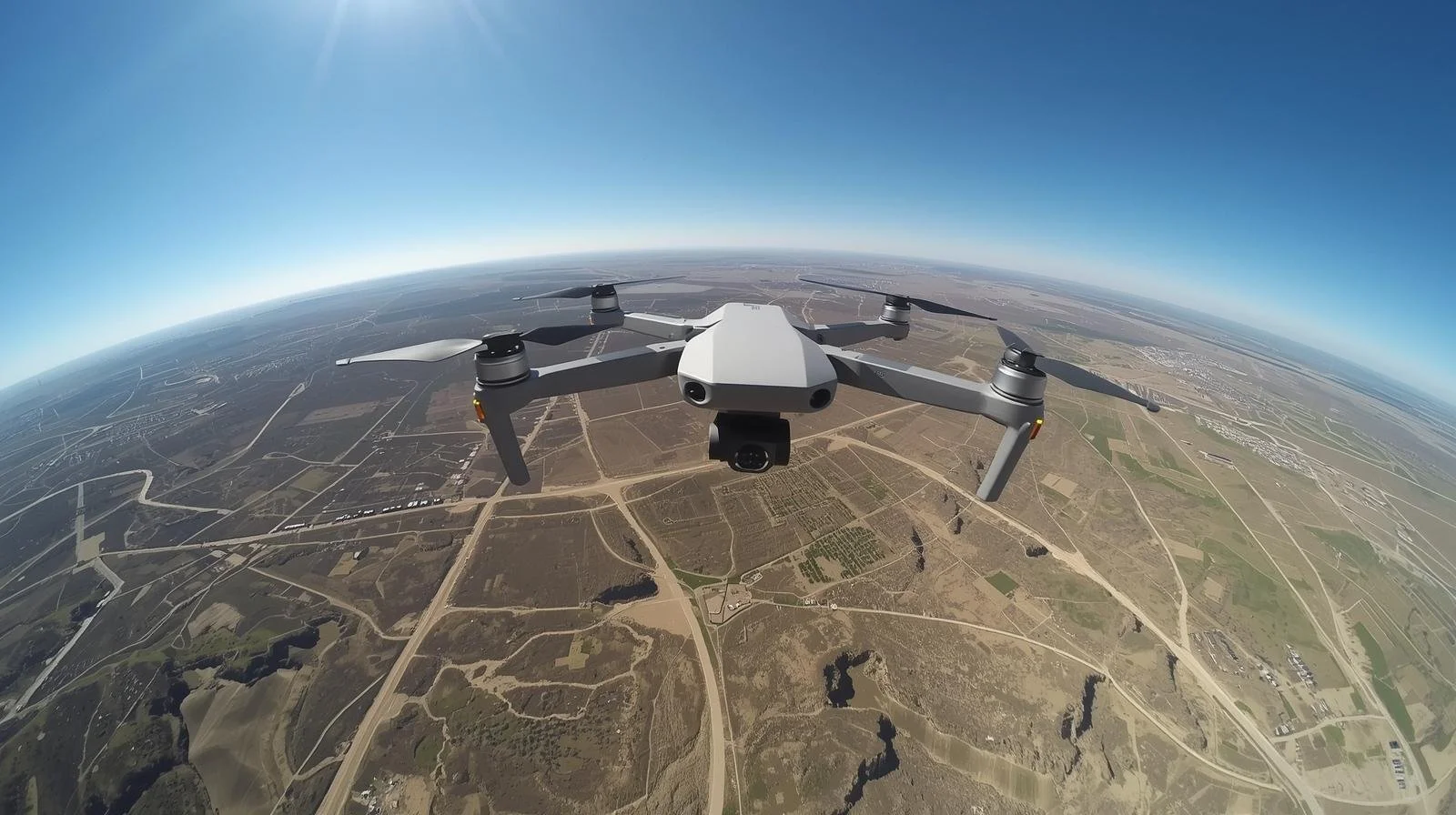
Drone surveying civil projects photogrammetry point cloud orthomosaic generation is a powerful set of tools for modern engineers and surveyors. This article explains how drone surveying for civil projects works, the photogrammetry process, point cloud creation, and orthomosaic generation. It also covers processing workflow, practical applications, and cloud options like Clouddrone. The guide is simple and useful for readers who want a clear overview, including those learning in Hindi.
What is Drone Surveying for Civil Projects?
Drone surveying civil projects uses UAVs to collect aerial images and data. These images are turned into maps, models, and measurements. Photogrammetry is the main method to convert photos into 3D data. The outputs help with design, monitoring, and quality control.
Key benefits
- Fast data collection over large areas
- Lower cost than manned surveys
- High-resolution mapping and measurements
- Safe access to hard-to-reach places
Core components
- Drone and camera
- Flight plan software
- Ground control points (GCPs) for accuracy
- Processing software for photogrammetry and point cloud
- Cloud platforms like Clouddrone for storage and processing
Photogrammetry Workflow and Data Types
Photogrammetry converts overlapping images into 3D data. The process has clear steps from planning to final export. Below is a simple introduction before the detailed steps.
Image capture
Plan a flight with good overlap (usually 70-80% forward and 60-70% side). Fly at consistent altitude and speed. Use good lighting and avoid strong shadows for best results.
Ground control and GPS
GCPs improve absolute accuracy. Use GNSS-referenced points on the ground. If GCPs are not possible, high-precision RTK/PPK drones help reduce errors.
Processing steps
- Image alignment / tie point extraction
- Dense point cloud generation
- Mesh and textured model (optional)
- Digital Surface Model (DSM) and Digital Elevation Model (DEM)
- Orthomosaic generation
Point Cloud Generation and Use
Point clouds are a dense set of 3D points made from images or LiDAR. They are essential for measurement and modeling in civil projects.
Photogrammetric point cloud vs LiDAR
Photogrammetry gives dense color point clouds from images. LiDAR gives precise distance points and can penetrate some vegetation. Both have pros and cons for civil work.
Common uses of point clouds
- Volume calculation (stockpiles, earthworks)
- Topographic mapping
- Design verification and as-built comparisons
- Clash detection and 3D modelling
| Output | Typical Use |
| Point cloud (LAS/LAZ) | Detailed 3D measurements, modeling |
| DSM/DEM | Elevation maps, drainage analysis |
| Orthomosaic (GeoTIFF) | High-resolution base map for plans |
Orthomosaic Generation and Quality Control
An orthomosaic is a stitched, geometrically corrected aerial image. It removes perspective and scale differences so you can measure directly on the map. Here is a short intro before the tips.
Steps to create an orthomosaic
- Align images and build dense cloud
- Generate DSM/DEM
- Reproject and stitch images using DEM for correction
- Export as GeoTIFF with proper coordinate system
Quality control tips
- Check GSD (ground sample distance) to meet project needs
- Validate accuracy with independent checkpoints
- Inspect seam lines and color balance
- Use cloud tools for versioning and sharing
Practical Applications in Civil Projects
Drone surveying helps many civil tasks. Below are common applications with short examples to show value.
Roads and highways
Use orthomosaics for alignment checks. Use point clouds for slope and cut/fill analysis.
Earthworks and volumes
Calculate stockpile volumes from point clouds and orthomosaics. Track changes over time with repeat surveys.
Construction monitoring
Compare design models with as-built point clouds. Monitor site progress weekly or monthly.
Inspection and safety
Inspect bridges, slopes, and embankments safely. High-resolution images reveal cracks and damages.
Processing Workflow Example
This section gives a clear, step-by-step workflow for a typical civil project. It is practical and easy to follow.
Step-by-step workflow
- Plan flight and mark GCPs.
- Conduct pre-flight checks and capture images with required overlap.
- Download images and organize by project.
- Run photogrammetry software: align, dense cloud, DEM, orthomosaic.
- Export point cloud (LAS/LAZ), orthomosaic (GeoTIFF), and DEM.
- Perform QC: check checkpoints, GSD, and seam lines.
- Share results via cloud or local delivery formats.
Clouddrone and Cloud Processing
Cloud platforms make processing faster and easier. Clouddrone and other cloud services let teams process, store, and share results without heavy local hardware.
Benefits of cloud processing
- Faster processing on scalable servers
- Easy collaboration and sharing
- Automatic backups and version control
- Access from mobile for site teams
Considerations
Check data security, cost per job, and supported export formats. Many users combine local and cloud workflows for best results.
Data Delivery and Formats
Deliverables must suit the client needs. Here are common formats and why they matter.
Common deliverables
- Orthomosaic (GeoTIFF) — base map for plans
- Point cloud (LAS/LAZ) — precise 3D data
- DEM/DSM — elevation models for analysis
- PDF maps and measurement reports
- 3D models (OBJ, PLY) for visualization
Frequently Asked Questions
What accuracy can I expect from drone photogrammetry?
Accuracy depends on drone type, camera, flight height, and use of GCPs or RTK/PPK. With good GCPs, horizontal and vertical accuracy can reach a few centimeters.
How is a point cloud different from an orthomosaic?
A point cloud is a set of 3D points with x, y, z values. An orthomosaic is a 2D corrected image. Both come from photogrammetry but serve different uses.
Can I use Clouddrone for processing?
Yes. Clouddrone and other cloud services can process images into point clouds and orthomosaics. They save local computing time and help teams share results.
Is this guide useful for Hindi speakers?
Yes. The practical workflow and applications are clear and easy to translate. Readers learning in Hindi will find these steps helpful for civil projects.
Conclusion
Drone surveying civil projects using photogrammetry delivers fast and accurate data. Point clouds and orthomosaic generation support design, monitoring, and inspections. Use good planning, GCPs, and consider cloud tools like Clouddrone to speed processing. This guide gives a practical workflow and clear examples for civil work.