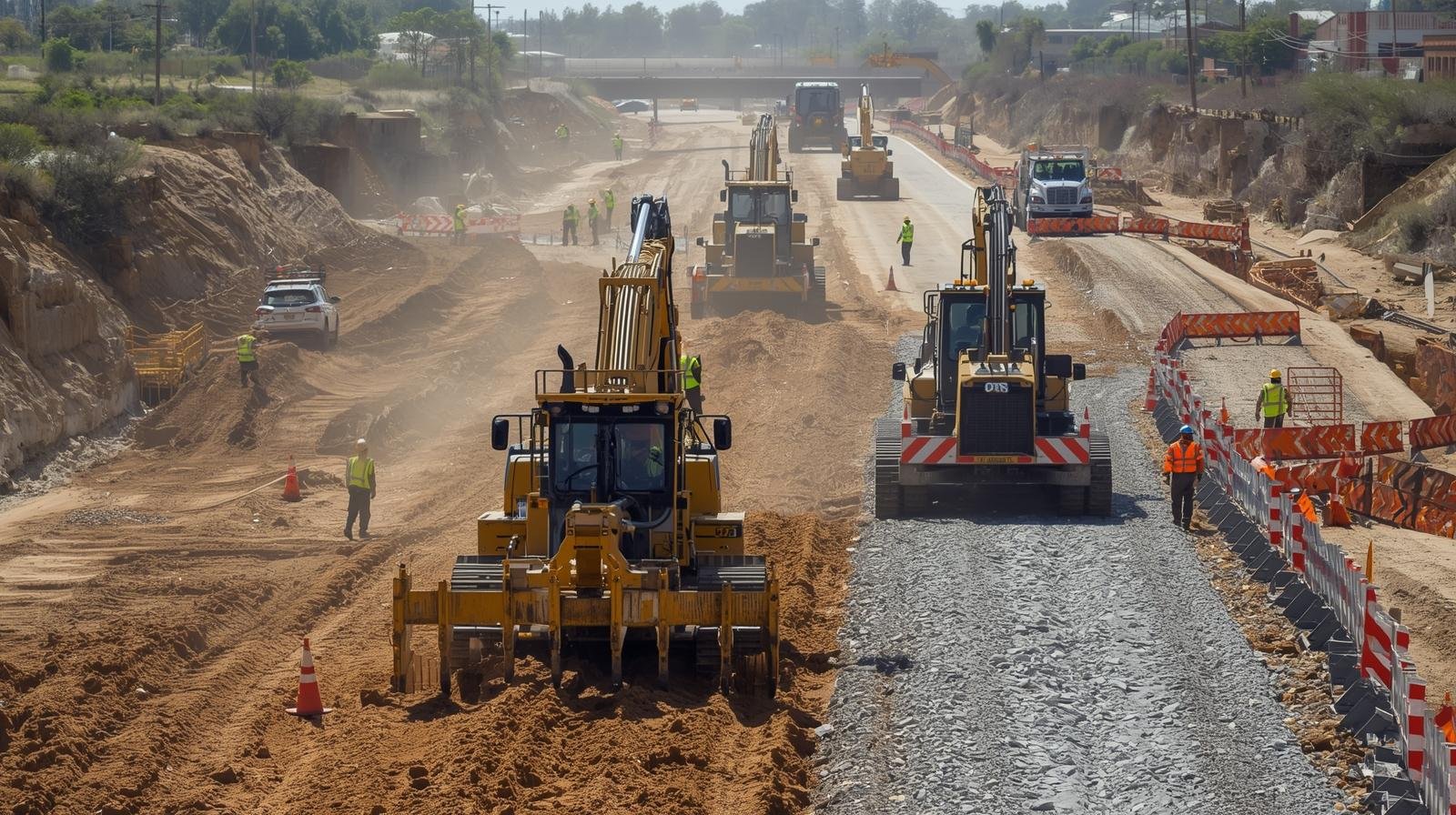
Road construction process is the systematic method used to build a safe and durable road from natural ground to finished driving surface. The road construction process includes soil preparation, layer construction and surface finishing so that traffic load safely transfers to the ground without damage. Proper sequence and quality control are important because mistakes in early stages cause cracks, settlement and potholes later.
Survey and Planning
Before starting work, engineers study traffic volume, soil condition and drainage. Alignment, width and pavement thickness are decided based on design standards. Marking of centerline and levels is done using surveying instruments to guide construction.
Site Clearing and Earthwork
Trees, grass and unwanted materials are removed to prepare natural ground. Excavation or filling is done to achieve required formation level. The soil is then spread and compacted to create a stable foundation for the pavement layers.
Subgrade Preparation
Subgrade is the compacted natural soil that supports the entire road structure. Proper moisture content and rolling are necessary to achieve required density. Weak soil is stabilized using lime or cement if needed.
FAQs
Why subgrade compaction is important
Because the entire pavement strength depends on soil stability and poor compaction causes settlement.
Granular Sub-Base (GSB) Layer
GSB layer is placed over subgrade to improve drainage and distribute load. Well graded aggregates are spread and compacted using rollers until desired thickness and density are achieved.
Base Course Construction
The base course provides major structural strength. Wet mix macadam or crushed aggregates are laid using paver and compacted properly. This layer prevents rutting and supports upper layers.
FAQs
What happens if base layer is weak
The road will develop depressions and cracks under traffic.
Prime Coat Application
A thin bitumen spray is applied over the base layer. It binds loose particles and improves bonding between base and bituminous layers.
Binder Course Laying
Binder course asphalt is laid using paver machine and compacted with rollers. It distributes load and prepares a strong platform for the surface course.
Tack Coat Application
Another thin bitumen layer is sprayed before the final surface. It ensures proper bonding between binder and surface layer.
Surface Course Construction
The top wearing layer is laid using bituminous concrete or asphalt concrete. Proper rolling provides smooth riding surface and skid resistance.
FAQs
Why surface course must be smooth
It improves safety, comfort and fuel efficiency.
Road Shoulders and Drainage
Side shoulders are constructed to support pavement edges and provide emergency stopping space. Side drains are made to remove rainwater quickly because water weakens pavement structure.
Quality Control Checks
Density tests, level checks and material grading tests are performed during construction. Temperature of asphalt is monitored to ensure proper compaction and bonding.
Conclusion
Road construction process involves sequential preparation of subgrade, sub-base, base and surface layers with proper bonding and drainage. Following correct procedure ensures strong, smooth and long lasting road performance while reducing maintenance cost and improving safety for road users.