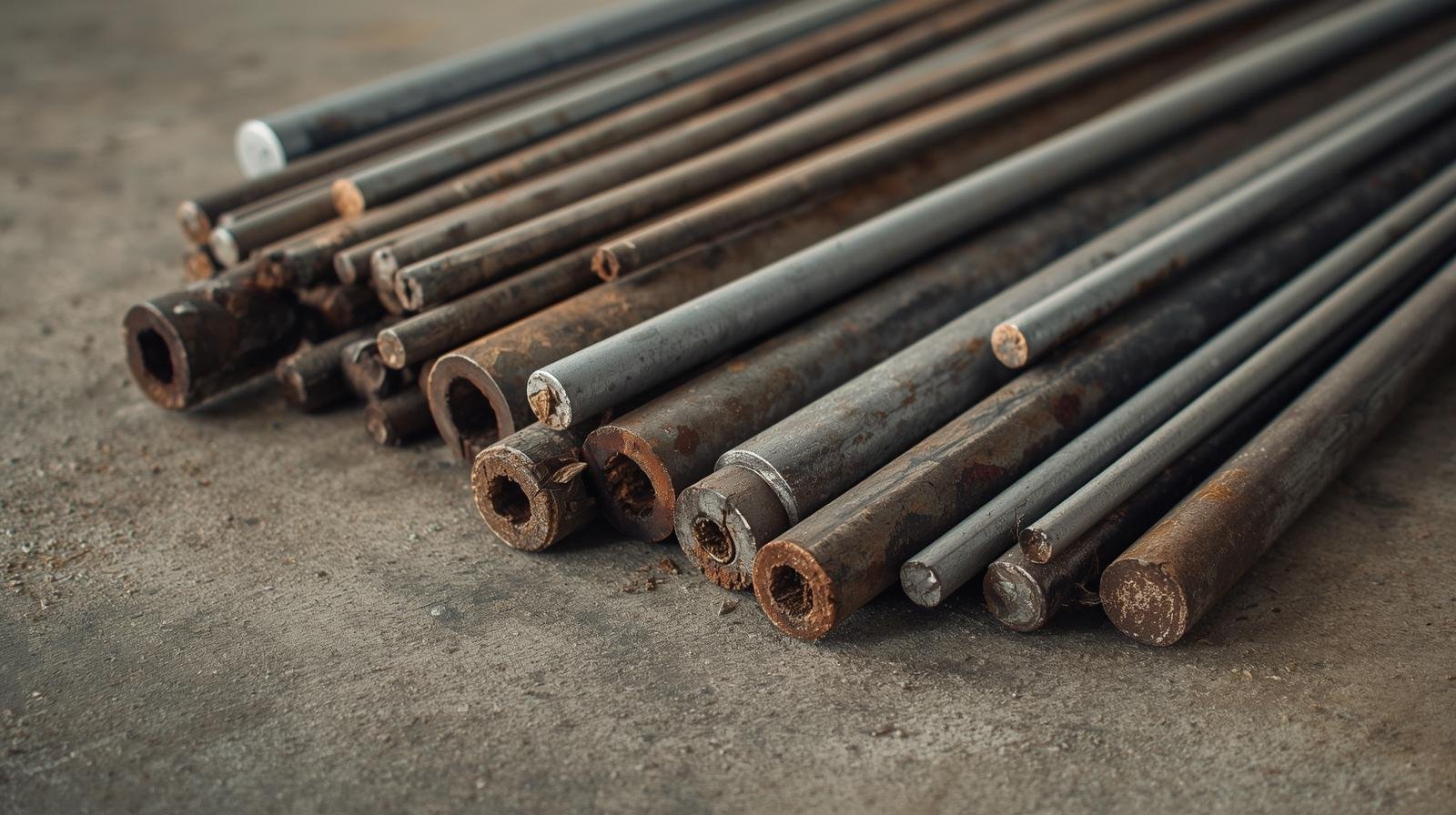
This guide on dowel bars and tie bars is structured for maximum topical authority, precise technical understanding, and real-world application in concrete pavement and slab construction.
Concrete pavements rely on controlled load transfer, joint stability, and crack management. Dowel bars and tie bars are the backbone of this system. When designed and installed correctly, they extend pavement life, reduce maintenance costs, and improve structural performance under traffic and environmental loads.
What Are Dowel Bars in Concrete Construction
Dowel bars are short, smooth, round steel bars placed across transverse joints in concrete pavements. Their primary function is load transfer between adjacent concrete slabs while allowing horizontal movement caused by temperature changes and shrinkage.
Dowel bars prevent differential settlement and slab faulting when wheel loads move from one slab to another. They do not provide tensile strength but act as a mechanical connector that distributes stress efficiently.
Purpose of Dowel Bars
Dowel bars ensure uniform performance of rigid pavements by:
- Transferring wheel loads across joints
- Reducing joint faulting
- Minimizing corner cracking
- Improving riding quality
- Extending pavement service life
Key Characteristics of Dowel Bars
Dowel bars are designed with precision because incorrect sizing or alignment leads to joint locking or slab damage.
- Smooth surface for free longitudinal movement
- Placed parallel to pavement centerline
- Half embedded in each adjacent slab
- Often epoxy-coated to prevent corrosion
Types of Dowel Bars Used in Pavements
Plain Steel Dowel Bars
These are traditional mild steel bars used widely in highways and industrial pavements. They require corrosion protection in aggressive environments.
Epoxy-Coated Dowel Bars
Epoxy coating increases durability by resisting moisture and chloride attack. These are standard in modern pavement construction.
Stainless Steel Dowel Bars
Used in high-exposure conditions such as coastal roads, ports, and airport runways. Higher cost but superior longevity.
Fiber-Reinforced Polymer Dowel Bars
Lightweight, corrosion-resistant alternatives gaining popularity in advanced pavement systems.
Dowel Bar Size, Length, and Spacing
Dowel bar design depends on slab thickness and expected traffic load.
Standard Dowel Bar Dimensions
- Diameter: 20 mm to 38 mm
- Length: 450 mm to 500 mm
- Spacing: 300 mm center-to-center
Placement Guidelines
- Positioned at mid-depth of slab
- Aligned accurately to avoid restraint
- Installed using dowel baskets or drilling
Incorrect placement leads to joint failure, cracking, and premature pavement distress.
What Are Tie Bars in Concrete Construction
Tie bars are deformed steel bars placed across longitudinal joints in concrete pavements. Their role is to hold adjacent slabs together, preventing separation due to temperature variations and shrinkage.
Unlike dowel bars, tie bars are not meant to allow movement. They are fully bonded to concrete and work in tension.
Purpose of Tie Bars
Tie bars provide:
- Longitudinal joint integrity
- Crack control
- Load distribution stability
- Reduced joint opening
Tie bars ensure pavement panels behave as a unified system under service conditions.
Types of Tie Bars Used in Pavements
Deformed Steel Tie Bars
These are the most commonly used due to their strong bond with concrete.
Epoxy-Coated Tie Bars
Used where corrosion protection is required, especially in wet or chemically exposed zones.
Galvanized Tie Bars
Offer moderate corrosion resistance and extended service life.
Tie Bar Size, Length, and Spacing
Standard Tie Bar Specifications
- Diameter: 12 mm to 16 mm
- Length: 600 mm to 1000 mm
- Spacing: 600 mm to 900 mm
Design Considerations
Tie bar length must be sufficient to develop full bond strength. Improper embedment causes joint separation and surface cracking.
Difference Between Dowel Bars and Tie Bars
Understanding the distinction between dowel bars and tie bars is essential for correct pavement detailing.
Functional Differences
Dowel bars allow movement while transferring load. Tie bars restrict movement and maintain alignment.
Structural Behavior
Dowel bars act in shear. Tie bars act in tension.
Joint Application
Dowel bars are used in transverse joints. Tie bars are used in longitudinal joints.
Surface Characteristics
Dowel bars are smooth. Tie bars are deformed.
Installation Methods for Dowel Bars and Tie Bars
Dowel Bar Installation Techniques
- Dowel baskets placed before concreting
- Dowel bar inserters in slip-form paving
- Drilled and grouted dowels in repair works
Tie Bar Installation Techniques
- Pre-placed bars before slab casting
- Drilled and epoxy-grouted tie bars
- Mechanical insertion during paving
Precision during installation directly impacts pavement performance.
Common Problems Due to Poor Installation
Improper handling of dowel bars and tie bars leads to serious pavement defects.
Dowel Bar Issues
- Joint locking
- Slab cracking
- Faulting
- Corrosion-induced expansion
Tie Bar Issues
- Longitudinal joint separation
- Random cracking
- Loss of slab alignment
Quality control during construction is non-negotiable.
Role of Dowel Bars and Tie Bars in Rigid Pavements
Rigid pavements depend on controlled joint behavior. Dowel bars and tie bars work together to:
- Maintain structural continuity
- Control stresses from traffic loads
- Manage thermal movements
- Increase pavement durability
Their combined use ensures performance consistency over decades.
Design Codes and Best Practices
While design standards vary by region, universally accepted principles include:
- Proper alignment tolerance
- Adequate corrosion protection
- Correct bar spacing and sizing
- Regular inspection during placement
Strict adherence to engineering drawings and specifications ensures long-term success.
Applications of Dowel Bars and Tie Bars
Highway and Expressway Pavements
Essential for load transfer under heavy traffic volumes.
Airport Runways and Taxiways
Critical for preventing slab faulting under aircraft loads.
Industrial Floors
Used to maintain slab continuity and prevent joint damage.
Urban Roads and Streets
Improve riding comfort and reduce maintenance frequency.
Why High-Quality Design Matters
Using properly designed dowel bars and tie bars:
- Reduces lifecycle costs
- Enhances structural safety
- Improves surface performance
- Minimizes repair interventions
Superior pavement systems start with precise joint detailing.
Future Trends in Dowel and Tie Bar Technology
Advancements focus on:
- Corrosion-free composite materials
- Automated placement systems
- Smart alignment monitoring
- Longer service life with minimal maintenance
These innovations continue to redefine rigid pavement engineering.
Conclusion
Dowel bars and tie bars are not optional accessories; they are essential structural components in concrete pavements. Their correct selection, design, and installation determine whether a pavement performs for decades or fails prematurely. Mastery of these elements separates average construction from engineering excellence.