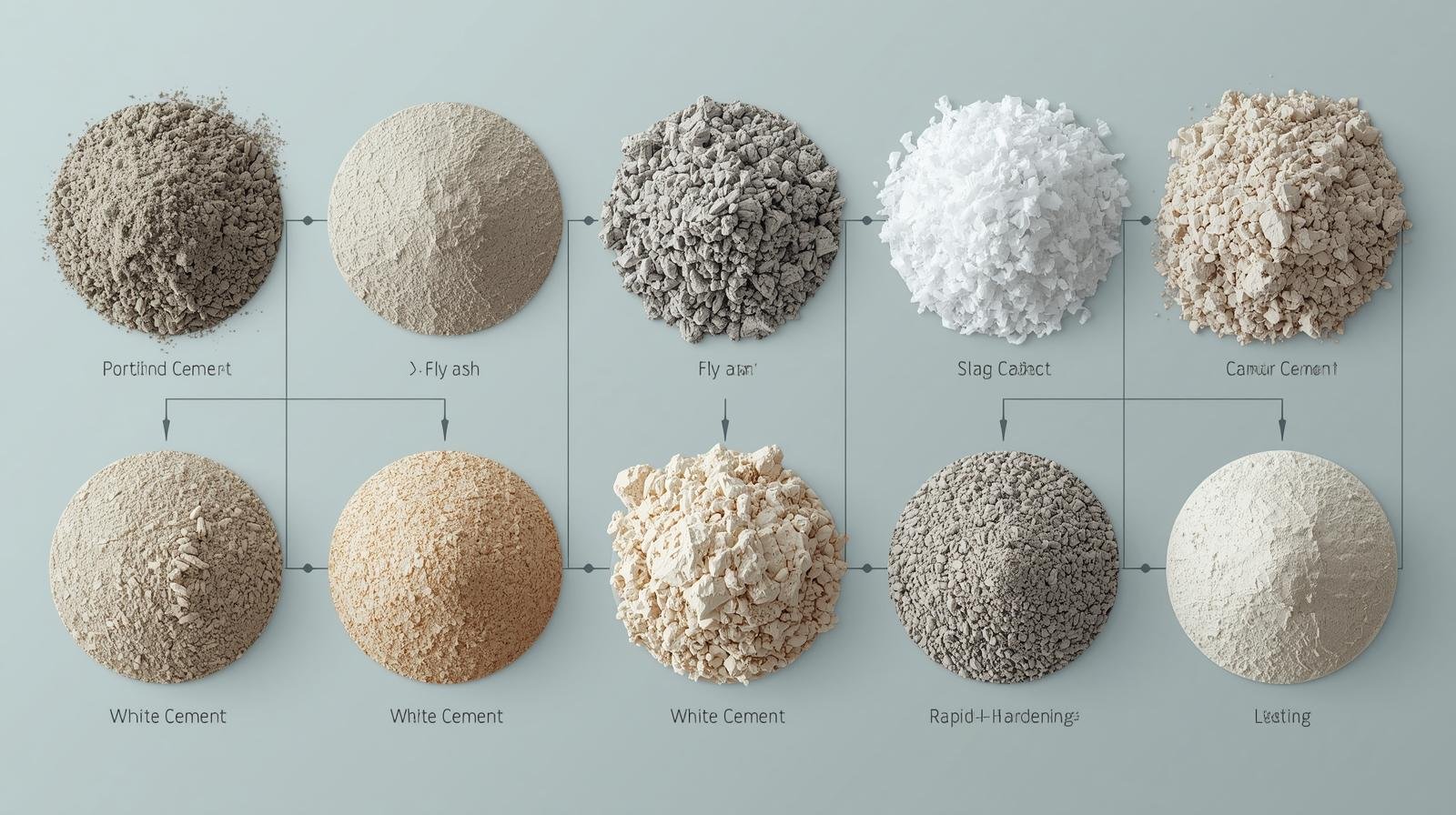
Cement is the backbone of civil engineering. Without cement, modern buildings, bridges, roads, and dams simply wouldn’t exist. It acts like a glue that binds sand, aggregates, and water into concrete, giving strength and durability to structures. While many people think cement is just one standard material, civil engineering uses multiple types of cement, each designed for specific conditions, loads, and environments. Choosing the right type of cement is not optional; it directly affects strength, durability, and service life.
What Is Cement?
Cement is a fine binding material made primarily from limestone, clay, and other minerals. When mixed with water, it undergoes hydration, forming a hard mass that binds aggregates together. In civil engineering, cement quality and type play a critical role in structural performance, crack control, and resistance to environmental effects.
Why Are Different Types of Cement Needed?
Different construction conditions demand different cement properties. Some structures require rapid strength gain, others need resistance against sulphates or heat, while some demand low heat of hydration to avoid cracking. One cement type cannot satisfy all conditions, which is why multiple types of cement are used in civil engineering projects.
Ordinary Portland Cement (OPC)
Ordinary Portland Cement is the most commonly used cement in civil engineering. It is suitable for general construction like residential buildings, pavements, and simple RCC structures. OPC is available in different grades such as 33, 43, and 53 grade, where the number represents compressive strength after 28 days. OPC 53 is widely used in RCC works where higher early strength is required.
Portland Pozzolana Cement (PPC)
Portland Pozzolana Cement is made by blending OPC clinker with pozzolanic materials like fly ash. PPC generates less heat of hydration and offers better long-term strength and durability. It is commonly used in mass concrete works, residential buildings, and structures exposed to aggressive environments. PPC is slower in early strength gain but performs exceptionally well over time.
Portland Slag Cement (PSC)
Portland Slag Cement is manufactured by blending blast furnace slag with clinker. This cement offers excellent resistance to sulphate attack and chloride penetration, making it ideal for marine structures, coastal areas, and sewage treatment plants. PSC also improves durability and reduces permeability in concrete.
Rapid Hardening Cement
Rapid hardening cement is designed to achieve high early strength. It is chemically similar to OPC but ground finer. This type of cement is commonly used in road repairs, precast elements, and situations where early formwork removal is required. It is especially useful in cold weather conditions.
Low Heat Cement
Low heat cement produces less heat during hydration, reducing the risk of thermal cracking. It is mainly used in mass concrete works such as dams, raft foundations, and large footings. In such structures, temperature control is crucial to prevent internal cracking.
Sulphate Resisting Cement
Sulphate resisting cement is specially designed to resist sulphate attack from soil and groundwater. It has low tricalcium aluminate content, which improves durability in aggressive environments. This cement is commonly used in foundations, sewage works, and structures in sulphate-rich soils.
Quick Setting Cement
Quick setting cement sets faster than OPC but does not gain strength rapidly like rapid hardening cement. It is useful in underwater construction, emergency repair works, and situations where quick setting is essential to prevent water washout.
High Alumina Cement
High alumina cement contains a high percentage of alumina, giving it high early strength and excellent resistance to fire and chemical attack. It is mainly used in refractory concrete, industrial floors, and chemical plants. However, it requires careful handling due to strength reduction over time if not properly designed.
White Cement
White cement is similar to OPC but contains very low iron content, giving it a white color. It is mainly used for architectural finishes, decorative works, terrazzo flooring, and tile grouts. Though expensive, it offers superior aesthetics.
Colored Cement
Colored cement is produced by adding pigments to white cement or OPC. It is commonly used in decorative works, facades, flooring, and artistic concrete applications where appearance matters.
Hydrophobic Cement
Hydrophobic cement is treated with water-repellent chemicals that resist moisture during storage and transportation. This cement is ideal for projects in humid regions and places where cement storage conditions are poor.
Air Entraining Cement
Air entraining cement contains additives that create microscopic air bubbles in concrete. These bubbles improve resistance to freeze-thaw cycles and enhance workability. This type of cement is commonly used in cold regions.
Expansive Cement
Expansive cement expands slightly during hydration, compensating for shrinkage cracks. It is used in water-retaining structures, grouting works, and crack-resistant concrete applications.
Oil Well Cement
Oil well cement is specially designed to withstand high temperature and pressure. It is used in oil and gas well cementing operations where ordinary cement would fail.
Comparison Between OPC, PPC, and PSC
OPC offers high early strength but generates more heat. PPC provides better durability and long-term strength with lower heat generation. PSC excels in aggressive environments and marine conditions. Selection depends on structural requirements, environment, and construction timeline.
How to Choose the Right Type of Cement
Choosing the right cement depends on factors like exposure condition, type of structure, required strength, construction speed, and durability needs. Using the wrong cement can lead to cracks, corrosion, and reduced service life, even if workmanship is good.
Common Mistakes in Cement Selection
A common mistake is using high-grade OPC everywhere without considering environmental exposure. Another error is ignoring sulphate resistance in foundations and marine structures. Cement selection should always be based on technical requirements, not just availability.
Conclusion
Different types of cement in civil engineering exist for a reason. Each type serves a specific purpose and performs best under certain conditions. Understanding these cement types helps engineers, contractors, and site supervisors build durable, economical, and safe structures. Cement is not just a material; it is a critical design decision that determines the long-term performance of any civil engineering project.
FAQs
Which cement is best for residential buildings?
Portland Pozzolana Cement and OPC 43 grade are commonly preferred for residential construction due to durability and workability.
Which cement is suitable for marine structures?
Portland Slag Cement and sulphate resisting cement are best suited for marine and coastal structures.
Is OPC 53 always better than OPC 43?
No, OPC 53 gives higher early strength but may cause more cracking if not handled properly. OPC 43 is sufficient for many structures.
Why is PPC preferred for mass concrete?
PPC generates less heat of hydration, reducing the risk of thermal cracks in mass concrete works.
Can different types of cement be mixed together?
Mixing different cement types is not recommended as it can lead to unpredictable behavior and strength issues.