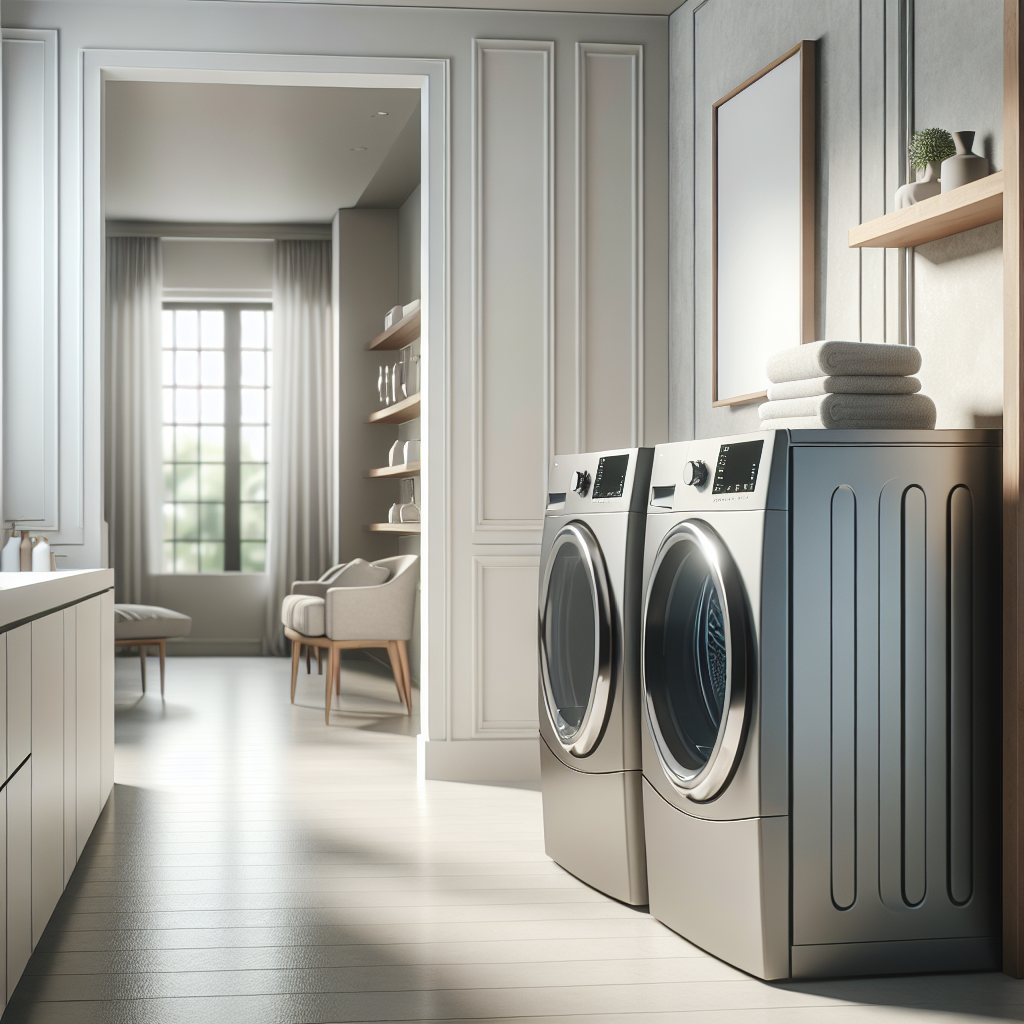
Choosing the right dryer means more than matching color or capacity. Accurate measurements save time, prevent returns, and make sure the unit fits doors, closets, and laundry alcoves.
This article covers common dryer sizes, how much room to leave for ventilation and doors, and what to expect from compact and stacked units. Use the details to measure confidently before you shop.
Common widths, heights, and depths
Most household dryers fall into a few predictable size groups. Knowing these ranges helps you narrow options quickly when comparing models.
Typical full-size measurements
Full-size models are built to work with standard washers. Expect a width around 27 inches, a height near 36 inches, and a depth that often ranges from 30 to 34 inches when you include the door and rear vent connection.
Compact and slim units
Compact machines are designed for apartments or tight spaces. Widths commonly sit at about 24 inches. Depths may be slightly less, often between 24 and 28 inches, and heights tend to match standard counters at roughly 33 to 36 inches.
Taller or larger-capacity dryers
Some high-capacity or commercial-style models add a couple of inches to depth and sometimes height. These units might be 29 to 31 inches deep and a bit taller than 36 inches, so double-check measurements before installation.
How much clearance does a dryer need?
Clearance space matters for airflow, ventilation, and door access. Recommendations vary by manufacturer, but practical allowances make installations smooth and safe.
Back and vent clearances
Leave at least a few inches behind the machine for hose or rigid venting and to avoid kinks. A typical suggestion is 3 to 6 inches behind the dryer to accommodate an exhaust hose and prevent contact with the wall.
Sides and top
Sides usually need minimal room. Many units can sit directly against cabinets, but a small gap—around 1 inch—helps with vibration and heat dissipation. Allow a similar inch above the dryer if it sits under a shelf or cabinet.
Door swing and front access
Consider the door opening and clearance in front of the dryer. A front-open door needs enough space to remove laundry comfortably; plan for at least 30 to 40 inches in front of the machine in high-use areas.
Stacked and combination setups
Stacking saves floor area and is common in apartments or narrow laundry rooms. Both stacked pairs and washer-dryer combos have distinct size considerations you should know.
Stacked units: heights and kits
When you stack a front-load washer and dryer, expect combined heights between 70 and 76 inches depending on machines and any pedestal used. Manufacturers sell stacking kits to secure the top unit and reduce vibration.
All-in-one laundry machines
Washer-dryer combos usually match compact widths (around 24 inches) and often have depths similar to compact dryers. They free up space but may have longer cycle times and smaller loads.
Fitting a dryer into closets and alcoves
Closet installations require attention to venting and airflow. Code and safety recommendations often influence how much clearance and ventilation you must provide.
Closet ventilation basics
A dryer placed inside a closet needs fresh air to operate safely and avoid moisture buildup. A louvered door or dedicated vent openings at the top and bottom of the closet help airflow.
Measuring for doors and shelves
Measure the full depth from the door or molding to the back wall, not just the visible floor space. Don’t forget to include the thickness of the dryer door and the area needed for hose bends behind the unit.
Choosing vents and hose types
The type of venting affects how close the dryer can sit to the wall and how efficient it will be. Different materials and lengths change performance and safety recommendations.
Flexible vs. rigid vents
- Flexible foil or plastic ducts are easy to install but can trap lint and reduce airflow over time.
- Rigid or semi-rigid metal ducts offer better airflow and are easier to clean, improving efficiency and safety.
Maximum vent length
Long vents reduce efficiency. Many manufacturers advise keeping vent length as short as possible and following specific maximums based on the number of elbows used. When planning, estimate extra inches for turns and connections.
Practical measuring checklist
Before you buy, confirm the machine will fit through doors and around corners. Use this short checklist to avoid surprises during delivery.
- Measure the width of doorways, hallways, and stair landings the dryer must pass through.
- Measure the laundry space’s width, depth, and height including baseboards, trim, and cabinetry.
- Note the location of vents, faucets, and electrical outlets and measure distances to them.
- Allow extra room behind the dryer for hoses and vent connections (3–6 inches is common).
- Check the path for the delivery team—tight corners can add constraints even when the space fits on paper.
Installation tips and common pitfalls
Small mistakes during installation lead to poor drying performance or safety risks. A few practical habits prevent most problems.
Leveling and stability
Make sure the dryer sits level on the floor. An uneven base causes vibration and noise and can wear parts faster. Use adjustable feet or shims to correct uneven floors.
Vent routing and maintenance
Plan a vent route that minimizes length and turns. Inspect and clean vents regularly; restricted airflow increases drying time and can cause overheating.
Electrical and gas connections
Gas-powered units require proper gas hookup and a vent. Electric dryers need a correct outlet type and sufficient amperage. Verify connections meet local codes and manufacturer recommendations.
Conclusion
Knowing typical dryer sizes and the clearance they need simplifies planning and prevents installation headaches. Measure carefully, consider venting and door access, and choose a model that matches your space constraints.
Whether you pick a full-size model, a compact unit, or a stacked setup, these measurement basics will keep the process straightforward and safe.
Frequently Asked Questions
What width do most home dryers use?
Most household dryers are about 27 inches wide. Compact dryers are typically around 24 inches wide and are suited to narrow laundry areas.
How deep is a standard dryer?
Standard dryer depths usually fall between 30 and 34 inches when you include the door and rear vent. Compact units are often shallower, around 24 to 28 inches.
How much space should I leave behind a dryer?
Allow about 3 to 6 inches behind the dryer for vent connections and air circulation. Exact recommendations depend on the vent type and the model’s installation instructions.
How tall is a stacked washer and dryer?
A stacked front-load washer and dryer together are commonly between 70 and 76 inches tall. Adding a pedestal or using non-standard units can increase the combined height.
Can I put a dryer inside a closet?
Yes, but the closet must provide sufficient airflow and venting. Many installations use louvered doors or vents and follow manufacturer clearance specs to avoid moisture buildup and overheating.