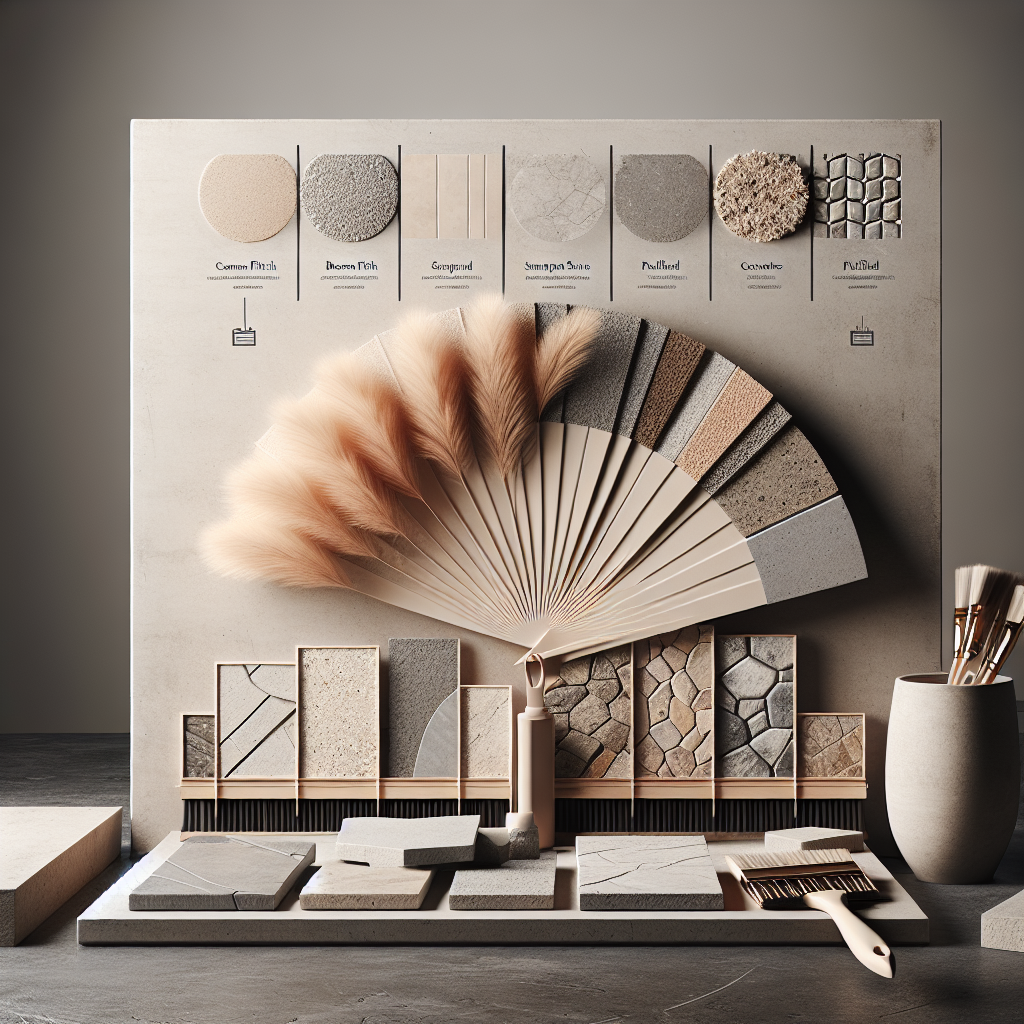
Concrete can look plain or become a strong visual element. Small changes to surface texture change how it feels, how safe it is, and how it ages.
This article explains common textures and finishes, how they perform, and practical tips to pick and keep the right surface for patios, floors, paths, and driveways.
Common Types of Surface Texture
Different textures come from tools, timing, or additives. Some methods emphasize grip, others highlight color or pattern. Choosing the right texture begins with where the concrete will go and how it will be used.
Stamped Texture
Stamped surfaces copy natural materials like stone, wood, or tile. A pattern mat presses into the slab while it is still pliable. This produces a decorative look with defined relief.
- Best for patios and walkways that need visual impact.
- Can be colored or stained to mimic natural tones.
- Sealing helps protect the pattern and improve durability.
Broom Finish
A broom finish gives a coarse, linear texture. A broom is drawn across the fresh surface to create tiny ridges that add traction. It is simple and cost effective.
- Often used on sidewalks and driveways.
- Offers good slip resistance when wet.
- Tool marks run in one direction and can be aligned with the path of travel.
Exposed Aggregate
Exposure reveals the small stones inside the mix. After partial setting, the top layer is removed to show pebbles or crushed rock. The result is rugged and visually interesting.
- Durable and textured, suitable for high traffic areas.
- Available in many color palettes depending on the aggregate used.
- Requires careful washing and sometimes sealing to keep the surface clean.
Polished Concrete
Polished concrete is a smooth, reflective finish achieved by grinding and buffing the slab. It highlights aggregate and color and creates a modern, low-maintenance floor.
- Great for interiors and commercial floors.
- Can be finished to different sheen levels from satin to high gloss.
- Needs periodic maintenance like polishing or resealing depending on use.
How Texture Affects Safety and Performance
Texture influences grip, wear, and water behavior. A finish that looks good may not be the best choice if the surface gets wet often.
Slip Resistance
Rougher textures tend to offer better traction. Broom and exposed aggregate finishes perform well outdoors where rain or frost is common.
Smoother finishes like polished concrete can be treated with anti slip products or mats in wet zones to reduce risk.
Durability and Wear
Dense, well-cured concrete resists abrasion and freeze thaw cycles better. Texture choice affects how dirt builds up and how the surface resists scuffs.
Exposed aggregate tolerates heavy use and hides minor damage, while stamped patterns may need more care to maintain their look.
Decorative Options and Color Choices
Texture and color work together to set mood and match surroundings. Pigments, stains, and surface treatments enhance the visual impact without changing structural properties.
Integral Color and Dyes
Integral color mixes pigment into the concrete before it is placed. That makes the tone consistent throughout the slab and hides minor chips.
Dyes and stains are applied to the surface and can create variegated, translucent, or vibrant results depending on the product.
Pattern and Joint Placement
Pattern placement matters. Joints and stamped seams should follow the room or yard layout to look intentional.
- Align control joints with natural breaks and edges.
- Use contrasting colors in stamped joints to emphasize pattern.
- Mix textures in one project to guide movement and define zones.
Practical Tips for Installation and Longevity
Simple choices during placement change how the texture performs years later. Timing, curing, and sealing are key steps that impact finish quality.
Timing and Tools
Most textures require work while the concrete is still plastic. The right tool and timing prevent overworking or uneven textures.
- Fully flush and level before texturing.
- Use dedicated float, broom, or stamping equipment for consistent results.
- Test a small section when trying a new color or pattern.
Sealing and Maintenance
Sealers lock in color, reduce staining, and can improve slip behavior. Choose a sealer suited to the finish and expected wear.
Regular cleaning with gentle detergents and periodic resealing extend life. For polished floors, light buffing keeps sheen and reduces scratch visibility.
Conclusion
Understanding texture options helps match the surface to use, climate, and style. Whether the priority is grip, appearance, or ease of care, small choices at installation make a big difference.
Think about how the space will be used, then pick a finish that balances look and function to get the best long term result.
Frequently Asked Questions
What texture is best for wet outdoor areas?
Rough textures such as broom finish or exposed aggregate provide superior grip when wet. These finishes channel water and reduce slipping. Sealers that add traction can help where extra slip resistance is needed.
How long does a stamped surface last?
With proper installation and sealing, a stamped surface can last many years. UV exposure and heavy traffic may fade color or wear the sealer, so occasional resealing keeps the pattern crisp and protected.
Can polished concrete be used outdoors?
Polished concrete is usually best indoors because its smooth surface can be slippery when wet and it may be more vulnerable to freeze thaw damage. Exterior use is possible with careful sealing and non slip treatments.
How do you repair small texture damage?
Small chips or surface wear can be patched with compatible cementitious patch material. For decorative finishes, color matching and texture tools help blend the repair. For larger damage, a professional evaluation ensures structural issues are addressed.
Is exposed aggregate harder to clean?
Exposed aggregate can trap dirt in crevices more than smooth finishes. Regular sweeping and occasional pressure washing keep it looking fresh. A penetrating sealer also reduces staining and makes cleaning easier.