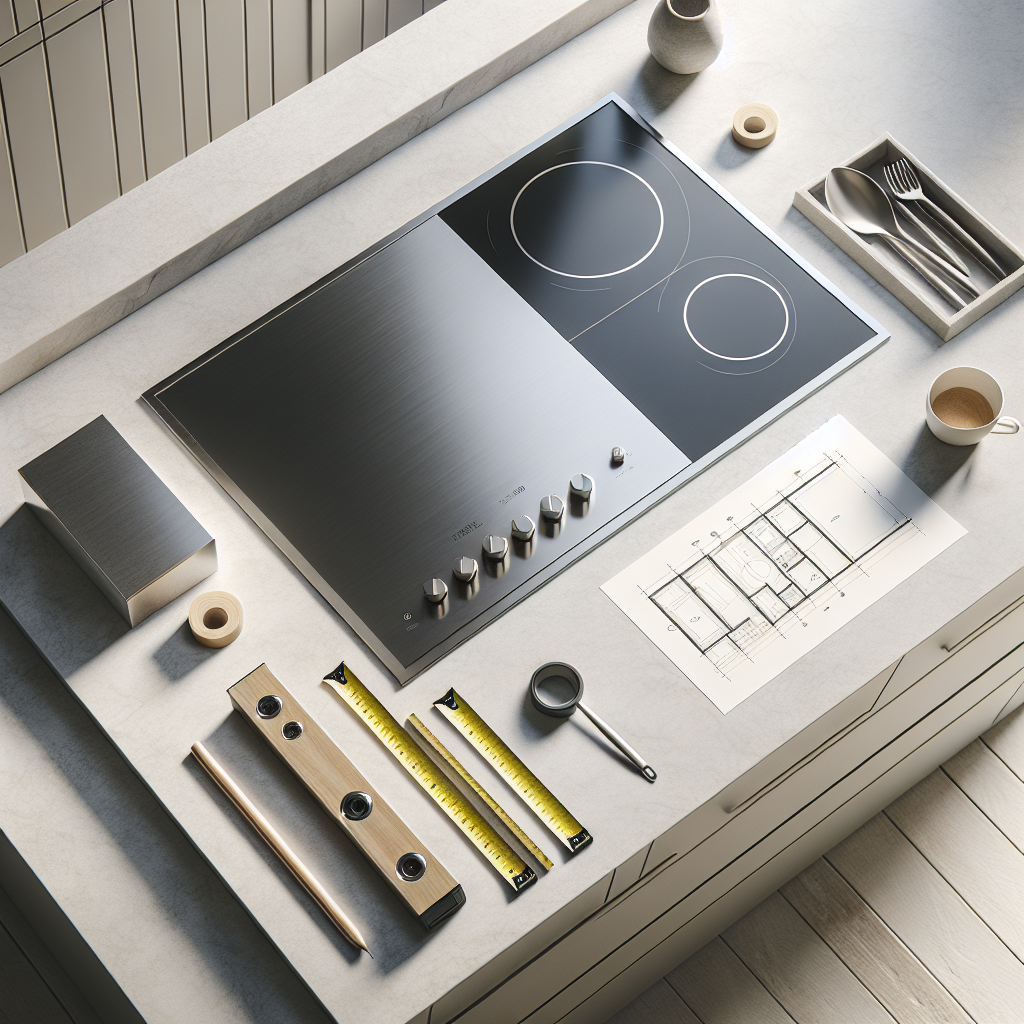
Choosing the right stove top size and planning the cutout are small steps that make a big difference in how a kitchen looks and works. Knowing typical widths, depths, and clearances helps avoid surprises during installation and keeps cooking safe and comfortable.
This article lays out common dimensions, measurement tips, and practical notes about ventilation and burner layout. It focuses on typical residential options and the details that matter when measuring and planning.
Common stove top sizes and layouts
Most residential cooktops come in a handful of standard widths, which match common cabinet and countertop layouts. Choosing the right width affects burner spacing and the cutout size needed in your countertop.
Typical width options are compact, standard, and large models suited to different kitchen footprints and cooking needs.
Popular widths
- 24 inches: Best for small kitchens, apartments, or secondary cooking areas. Generally has 2–3 burners.
- 30 inches: The most common residential size. Usually provides 4 burners in a balanced layout.
- 36 inches: Offers extra cooking space and often includes 5 burners or a larger central burner.
- 42–48 inches: Found in larger or gourmet kitchens. These models provide multi-burner setups and sometimes griddles or specialty zones.
Standard depth and height details
Depth is often driven by countertop standard depths and appliance design. Typical cooktop depth ranges from 20 to 25 inches measured front-to-back.
Cooktops sit flush with the countertop surface, so countertop height (commonly about 36 inches) determines the working height of the cook surface.
Measuring and planning the cooktop space
Accurate measurements prevent costly mistakes. Measure the available cabinet width, countertop depth, and check for obstacles under the counter like drawers or ovens that may affect the cutout.
Always work from the finished countertop surface and consider the finish thickness and edge profile when measuring the cutout.
How to get exact cutout dimensions
- Start with the cooktop’s overall width and depth as specified by the manufacturer.
- Check the required cutout width and depth—these are usually smaller than the overall size to allow for the cooktop lip or edge to rest on the countertop.
- Account for countertop material thickness; thick stone or butcher block may need adjustment to support the cooktop properly.
- Mark and re-measure at least twice before cutting, and dry-fit the unit if possible.
Clearances around the appliance
Side and rear clearances ensure safe heat dispersion and room for service access. Small gaps may be needed between the appliance edge and vertical surfaces or cabinets.
Typical side clearances range from 1 to 3 inches depending on the model and whether cabinets are heat-resistant. Leave extra space if tall cabinetry or heat-sensitive materials are nearby.
Installation clearances, cutouts and ventilation
Cooktop safety is tied closely to ventilation and overhead clearances. Gas and electric cooktops have different recommended clearances above the cooking surface and different ventilation needs.
Correct hood placement and sufficient airflow minimize heat and grease buildup while improving comfort while cooking.
Overhead clearance recommendations
- Electric cooktops: Many manufacturers recommend 24–30 inches from the cooktop surface to the bottom of overhead cabinets or a hood.
- Gas cooktops: Often need more clearance, typically 30 inches or more, due to open flames and higher heat output.
- Range hoods: The recommended mounting height varies by hood type and CFM rating—check the hood’s specifications and local codes.
Ventilation and airflow
Ventilation is measured in cubic feet per minute (CFM). A higher CFM moves more air and removes cooking fumes faster, which matters for heavy cooking or gas cooktops.
Typical residential hoods range from 300 to over 1,000 CFM. Choose ventilation that matches your cooking patterns and the size of the cooktop.
Cutout examples and notes
- A 30-inch cooktop often has a cutout width around 28 1/8 to 28 1/2 inches, but the exact number depends on model specifics.
- A 36-inch cooktop cutout typically falls near 34 to 35 1/2 inches width; depth cutouts commonly fall between 19 and 21 inches.
- Manufacturer templates provide the exact cutout and should always be followed over typical ranges.
Burner spacing, controls and countertop materials
How burners are arranged affects how many pots you can use at once and how comfortably you can cook. Control placement also influences ergonomics and safety.
Countertop choice influences how the cooktop is installed and how heat affects surrounding materials.
Burner spacing considerations
- Standard cooktops space burners so that medium-sized pots don’t overlap. Typical center-to-center spacing is about 6 to 9 inches between burners, larger on wider models.
- High-output burners need more room and often sit in the center or an offset position to avoid crowding.
- Specialty zones, like griddles or flexible induction zones, change spacing and may affect cutout shape.
Control layouts and safety
Controls can be front-mounted, top-mounted, or rear-mounted. Front-mounted controls are easy to reach but increase the chance of accidental activation by children or bumping.
Rear-mounted controls keep the front edge clean but require extra clearance at the back and might be harder to access for some users.
Countertop materials and edge details
Stone, quartz, laminate, and wood all behave differently around heat and cutouts. Stone is stable but heavy; wood needs sealing around the cutout; laminate must be supported to avoid water damage.
Edge profiles can affect how the cooktop rests—thick bullnose edges may require spacer strips or a slightly different cutout location.
Conclusion
Understanding standard dimensions, cutout needs, and clearance rules helps make the stove top fit look and function well. Measuring carefully, comparing models, and following manufacturer templates avoids installation issues.
Keep burner layout, ventilation, and countertop material in mind when choosing a cooktop to ensure it matches both your kitchen space and cooking style.
Frequently Asked Questions
What are the most common cooktop widths?
The most common widths are 30 inches and 36 inches. Smaller homes may use 24-inch models, while larger or professional-style kitchens may use 42–48 inch units.
How much clearance is needed above a gas cooktop?
Gas cooktops typically require at least 30 inches of clearance to overhead cabinets or hoods, though specific requirements can vary by manufacturer and local code.
Can I replace a 30-inch cooktop with a 36-inch in the same countertop?
Not without modifying the countertop and possibly the cabinet below. A larger cooktop needs a wider cutout and support changes; check cabinet width and ensure proper countertop material for the new opening.
What should I check before cutting a countertop for a cooktop?
Confirm the manufacturer’s cutout template, measure twice, check for under-counter obstacles like drawers or wiring, and account for material thickness and edge profiles.
Are there different cutout depths for induction versus gas cooktops?
Cutout depth ranges are similar, but internal components may differ. Induction units often need less ventilation under the unit than gas, but follow the exact manufacturer specifications for cutout depth and clearance.
How close can cabinets be to the sides of a cooktop?
Side clearances are usually 1 to 3 inches, depending on the model and whether cabinets are heat-resistant. Some manufacturers require specific minimums, so consult specs before finalizing placement.
Does countertop material change the installation method?
Yes. Heavy stone may need extra support; wood needs sealing and protection from heat; laminate requires a stable frame to prevent sagging at the cutout. Installation details change with material.