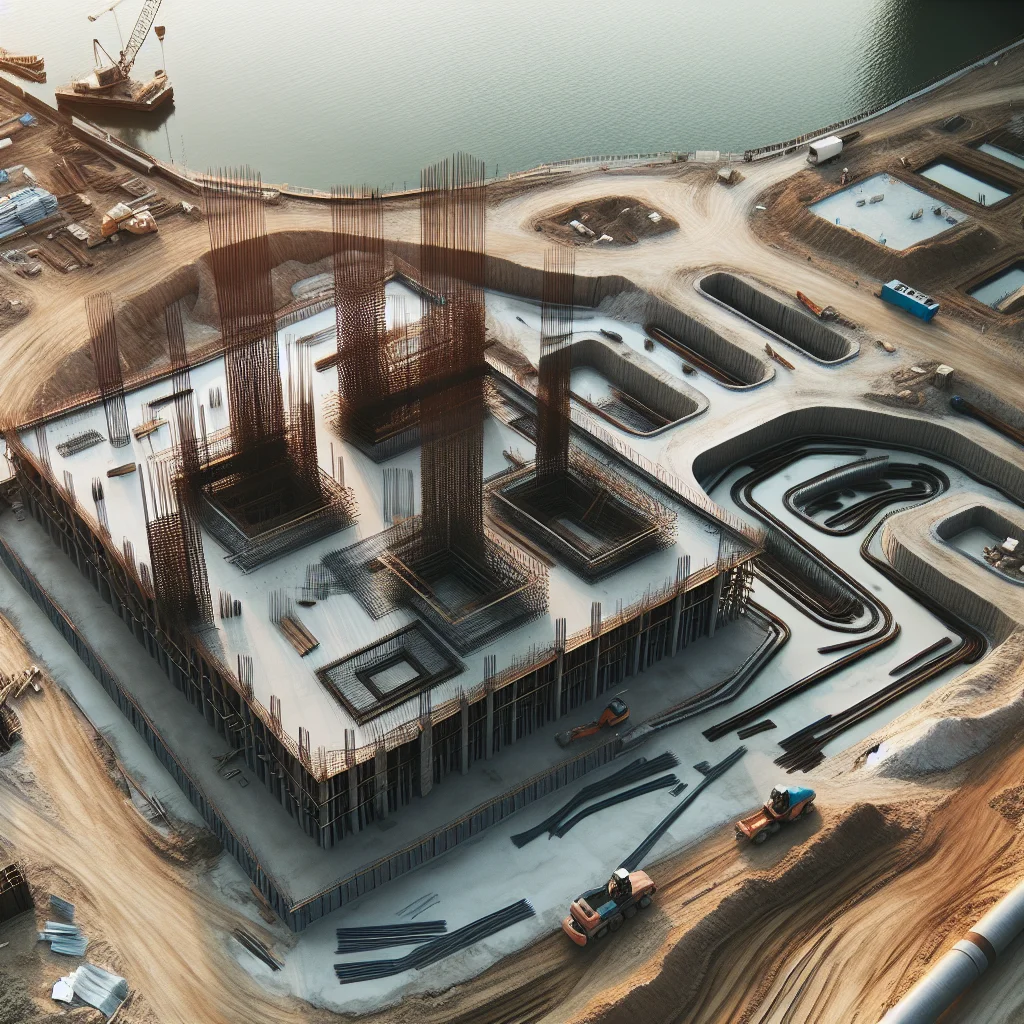
A solid foundation starts long before concrete is poured. Clear, orderly steps reduce risk, prevent unexpected settlement, and make construction smoother.
This article breaks the technical process into practical phases you can follow during planning and early construction. Each phase focuses on decisions that influence cost, durability, and safety.
Site assessment and soil investigation
Start by learning what the ground will do when loads are applied. Soil behavior and site conditions control most foundation choices.
Collecting accurate site data stops guesswork and narrows design options. Even simple projects benefit from targeted soil information.
Surface and topography checks
Walk the site to note slopes, erosion, existing structures, and access. Mapping surface features helps place footings where excavation and drainage will be simplest.
Record nearby trees, retaining walls, and utilities. These elements affect load paths and may cause local soil disturbances.
Soil sampling and basic lab tests
Take borings or test pits to reach bearing strata. Typical tests include particle-size distribution, Atterberg limits, and standard penetration values.
These lab results inform bearing capacity, compressibility, and whether soil improvement is needed.
Groundwater and seasonal effects
Identify the water table level and seasonal fluctuations. High groundwater can reduce effective stress and weaken shallow foundations.
Plan for dewatering during excavation and consider long-term drainage to avoid saturation around footings.
Load estimation, foundation selection, and calculations
Translate the building layout and intended loads into numbers that guide foundation size and reinforcement. Accuracy here avoids costly redesigns later.
Load paths, safety factors, and local codes shape the calculation approach. Keep records of assumptions and source values.
Types of loads to consider
Include dead loads (self-weight), live loads (occupancy and furniture), wind, seismic, and any concentrated loads from heavy equipment.
Factor in transient conditions like construction loads and temporary storage on slabs or near foundations.
Choosing shallow or deep options
Select shallow footings when bearing strata are near the surface and settlement is within limits. Spread footings and mat foundations suit many low- to mid-rise buildings.
Deep foundations such as piles or drilled shafts become necessary when competent soil lies deep or when loads are heavy and uneven.
Bearing capacity and footing sizing
Use lab values and empirical correlations to estimate allowable bearing pressure. Apply safety factors consistent with code requirements.
Determine footing width and depth so bearing stress under the footing does not exceed allowable limits and differential settlement stays acceptable.
Settlement analysis and control
Estimate immediate and consolidation settlement. For compressible soils, consolidation calculations predict long-term settlement that affects finishes and serviceability.
When predicted settlements are high, consider soil improvement, deeper foundations, or larger mats to distribute loads and reduce settlement.
Reinforcement and detailing basics
Design reinforcement to handle bending, shear, and punching in footings and slabs. Proper anchorage and lap lengths matter more on-site than idealized drawings.
Keep reinforcement practical: use standard bar sizes and spacing that fit the excavation and concrete placement methods.
Checks during design
Run stability checks for sliding and overturning, especially on sloped sites or when lateral loads are significant. Verify local code load combinations.
Prepare simple sketches showing load paths, foundation dimensions, and key assumptions so site teams can implement the design correctly.
Construction quality, inspection, and documentation
Design intent must survive the transition to the field. Construction practices and inspections are where many problems are caught or created.
Clear documentation and staged checks reduce rework and ensure the foundation performs as modeled.
Excavation and subgrade preparation
Excavate to the planned level and remove unsuitable material. Compact subgrade where required and check levels with survey marks.
Record any soft spots or unexpected water; these often require on-the-spot decisions about remediation.
Formwork, reinforcement placement, and tolerances
Confirm formwork dimensions and reinforcement locations against drawings. Maintain clearances for cover and pour sequencing to prevent congestion.
Document deviations and acceptability, since small shifts in reinforcement can change load paths and crack patterns.
Concrete quality and curing
Use concrete mixes specified for strength and exposure. Control placement methods to avoid segregation and ensure full contact between concrete and reinforcement.
Proper curing preserves strength and reduces early-age cracking. Protect fresh concrete from rapid drying or freezing conditions.
Inspection records and as-built notes
Keep a concise inspection log: soil observations, elevations, reinforcement checks, concrete pours, and test results. These notes are vital if adjustments are required later.
As-built sketches should show any field changes. They form the basis for maintenance and future modifications.
Conclusion
Following a clear sequence—site study, load calculation, foundation choice, and careful construction—reduces surprises and improves long-term performance.
Good decisions come from combining accurate data, conservative assumptions where needed, and straightforward on-site verification.
Frequently Asked Questions
How deep should a foundation typically go?
Depth depends on frost line, bearing strata, and groundwater. In many temperate regions, shallow footings sit below frost depth to avoid freeze-thaw movement.
When competent soil is deeper, foundations extend until a stable layer is reached or piles are used to transfer loads to deeper strata.
When is a mat foundation preferable?
Mats work well when loads are spread across many columns, soil has moderate bearing capacity, or differential settlement needs to be minimized by treating the footprint as a single slab.
Mats also simplify construction in congested column layouts by distributing loads more evenly than isolated footings.
What are common signs of impending settlement problems?
Early indicators include uneven floors, hairline cracks in finishes, and misaligned door frames. These signs should prompt a site review and possibly monitoring.
Documenting building movements over time helps distinguish benign shrinkage cracks from structural settlement that requires repair.
How does groundwater affect foundation choices?
High groundwater reduces effective stress and can cause buoyancy or uplift in shallow elements. It also complicates excavation and may require waterproofing or drainage systems.
Designers often select deeper foundations or soil stabilization when groundwater threatens bearing capacity or long-term durability.
Which documents are essential to keep after foundation completion?
Retain soil reports, design calculations, reinforcement schedules, concrete test results, and inspection logs. As-built drawings showing any deviations are crucial.
These records support future maintenance, remodeling, or legal requirements and help diagnose problems if they arise.