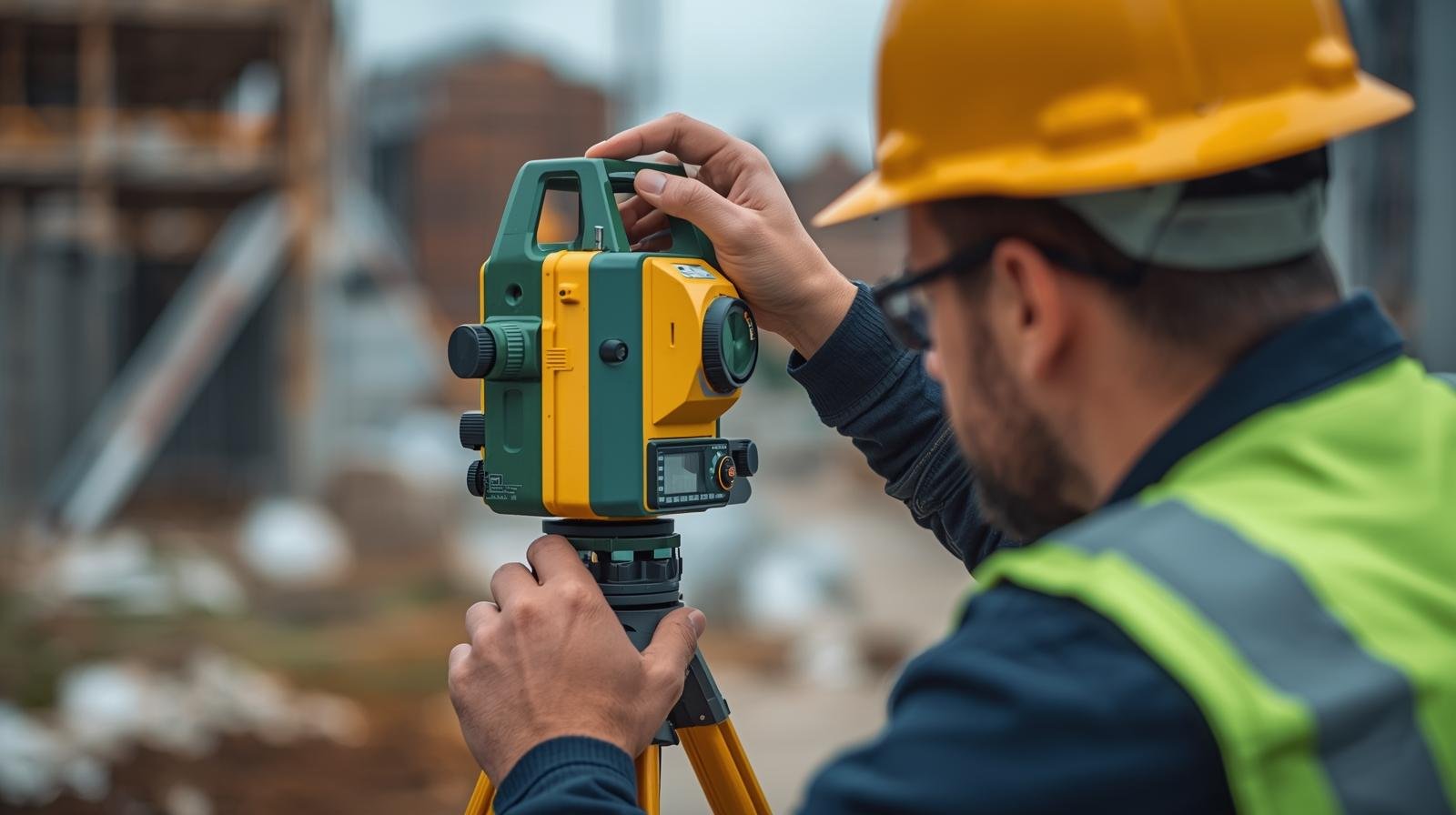
The temporary adjustment of dumpy level is an important procedure performed before taking any levelling readings in surveying. These adjustments ensure that the instrument is properly positioned, leveled, and focused so that accurate measurements can be obtained. Temporary adjustments are called “temporary” because they must be performed every time the instrument is set up at a new location. Without proper adjustment, the dumpy level may give incorrect staff readings and inaccurate elevation measurements. Therefore, every surveyor must understand the correct procedure for temporary adjustment before starting levelling work.
What Is Temporary Adjustment of Dumpy Level
Temporary adjustment of a dumpy level refers to the steps performed to set up and prepare the instrument for levelling work at a particular station. These adjustments ensure that the line of sight of the telescope becomes perfectly horizontal and the instrument is ready to observe the levelling staff. The adjustments are necessary each time the instrument is moved to a new point during surveying operations.
Steps in Temporary Adjustment of Dumpy Level
Temporary adjustment of a dumpy level consists of three main steps.
1. Setting Up the Instrument
The first step is to place the tripod stand firmly on the ground and mount the dumpy level on the tripod head. The legs of the tripod should be adjusted so that the instrument is approximately horizontal and at a convenient height for the observer. The tripod must be firmly pressed into the ground to ensure stability during observation.
2. Levelling the Instrument
Levelling is the process of making the bubble in the spirit level tube come to the center, which ensures that the instrument is perfectly horizontal. This is done using the leveling screws provided at the base of the instrument. First, the telescope is aligned parallel to two leveling screws. These screws are then turned simultaneously either inward or outward until the bubble moves to the center. After that, the telescope is rotated by 90 degrees, and the third leveling screw is adjusted to center the bubble again. This process is repeated until the bubble remains centered in every direction.
3. Focusing the Telescope
After levelling the instrument, the telescope must be focused to obtain a clear image of the levelling staff. This process includes two types of focusing: eyepiece focusing and objective focusing. First, the eyepiece is adjusted until the crosshairs appear sharp and clear. Then the objective lens is adjusted using the focusing screw so that the image of the levelling staff becomes clear. Proper focusing eliminates parallax error, which can otherwise affect measurement accuracy.
Importance of Temporary Adjustment
Temporary adjustments are necessary to ensure accurate leveling measurements during surveying operations.
Key Reasons
- Ensures the instrument is perfectly horizontal
- Eliminates measurement errors
- Provides clear staff readings
- Improves survey accuracy
- Ensures reliable elevation calculations
Without proper adjustment, the survey results may be incorrect and unreliable.
Common Mistakes During Temporary Adjustment
Surveyors sometimes make mistakes while adjusting the dumpy level, which can affect accuracy.
Common Errors
- Tripod not placed on stable ground
- Bubble not centered properly
- Incorrect focusing of eyepiece
- Parallax error due to improper focusing
- Instrument not tightly fixed to tripod
These mistakes must be avoided to maintain accurate leveling results.
Precautions During Temporary Adjustment
Certain precautions should be followed while performing temporary adjustments.
Important Precautions
- Always set the tripod on firm and stable ground
- Ensure the bubble remains centered after rotation
- Remove parallax before taking readings
- Tighten all instrument clamps properly
- Avoid vibrations during observations
Following these precautions helps maintain measurement accuracy in levelling work.
Difference Between Temporary and Permanent Adjustments
| Adjustment Type | Purpose | Frequency |
|---|---|---|
| Temporary Adjustment | Prepare instrument for use | Done every setup |
| Permanent Adjustment | Maintain instrument accuracy | Done occasionally |
Applications of Dumpy Level Adjustments
Temporary adjustments are essential in many surveying activities.
Common Applications
- Building construction surveys
- Road and highway leveling
- Railway alignment
- Canal construction
- Land surveying projects
Proper adjustments ensure accurate elevation measurements in these projects.
FAQs About Temporary Adjustment of Dumpy Level
What are the steps in temporary adjustment of dumpy level?
The main steps include setting up the instrument, leveling the instrument, and focusing the telescope.
Why are temporary adjustments necessary?
They ensure the instrument is properly leveled and ready for accurate measurements.
How often are temporary adjustments performed?
Temporary adjustments are performed every time the instrument is set up at a new location.
What error is removed by proper focusing?
Proper focusing removes parallax error, which occurs when the crosshair and staff image are not in the same plane.
Conclusion
The temporary adjustment of dumpy level is a crucial step in surveying that ensures the instrument is properly set up for accurate levelling measurements. The process includes setting up the instrument, leveling it using leveling screws, and focusing the telescope to remove parallax error. By performing these adjustments correctly, surveyors can obtain reliable staff readings and precise elevation measurements. Proper temporary adjustment is therefore essential for successful surveying and construction projects.