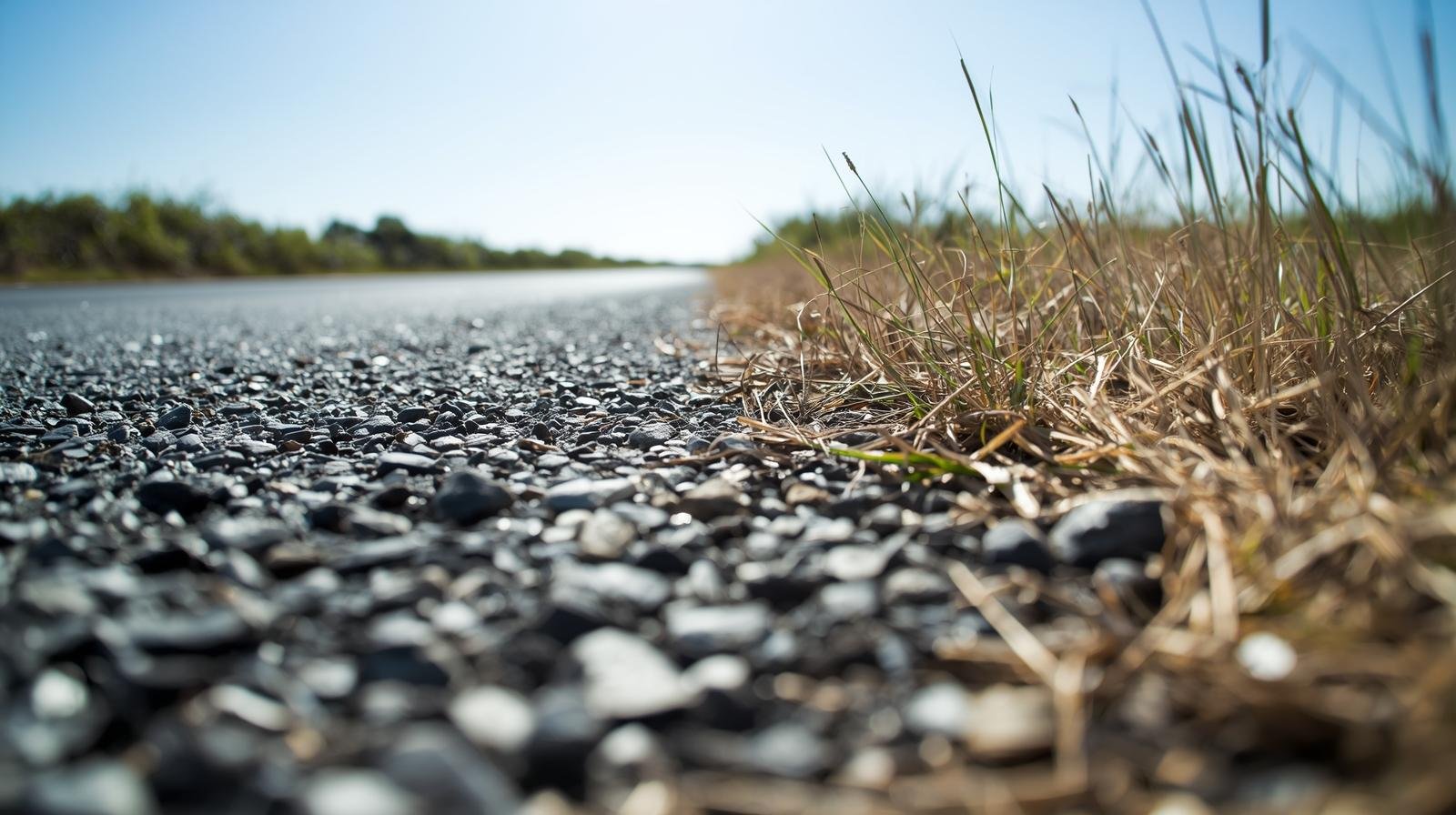
A road shoulder is one of the most critical yet often underestimated components of modern road infrastructure. Designed as the strip of land immediately adjacent to the main carriageway, the road shoulder plays a decisive role in traffic safety, pavement performance, drainage, and long-term durability of roads. A properly designed and constructed road shoulder improves operational efficiency, enhances driver confidence, and significantly reduces accident severity. In high-quality road engineering, the shoulder is not an afterthought. It is an engineered element that directly affects the life cycle cost, maintenance needs, and safety profile of highways, urban roads, and rural routes alike.
What Is a Road Shoulder?
A road shoulder is the area provided on either side of the roadway, beyond the edge of the traffic lanes. It is not meant for regular vehicular movement but serves multiple structural, functional, and safety-related purposes. Shoulders can be paved or unpaved depending on traffic volume, road classification, climatic conditions, and budget constraints. From an engineering standpoint, the shoulder acts as a transition zone between the pavement and the natural ground. It supports the pavement edge, allows emergency stopping, and facilitates drainage away from the carriageway.
Primary Functions of a Road Shoulder
Structural Support to Pavement
The shoulder provides lateral confinement to the pavement layers. Without adequate shoulder support, the pavement edges are prone to cracking, breaking, and premature failure due to repeated wheel loads.
Emergency Stopping Area
One of the most vital safety functions of a road shoulder is to offer a safe refuge for disabled vehicles. In case of breakdowns, tire failures, or medical emergencies, drivers can pull over without obstructing traffic flow.
Improved Road Safety
Shoulders increase effective roadway width, which reduces side-swipe accidents and allows drivers to recover control if they drift off the main lane. This is especially important on high-speed highways.
Drainage and Water Control
A well-designed road shoulder helps drain surface water away from the pavement, preventing water infiltration into base and subgrade layers. This directly enhances pavement life.
Space for Road Maintenance
Shoulders provide working space for maintenance crews, signage installation, guardrails, lighting poles, and utility services without disturbing traffic.
Types of Road Shoulders
Paved Shoulder
A paved shoulder is constructed using materials similar to the main carriageway, such as bituminous concrete or cement concrete. These shoulders are common on highways and expressways with heavy traffic. Key characteristics include high load-bearing capacity, suitability for emergency vehicle use, low maintenance requirements, and better drainage control.
Unpaved Shoulder
An unpaved shoulder is made from compacted soil, gravel, or moorum. It is typically used on low-volume roads and rural highways. Key characteristics include economical construction, higher maintenance needs, susceptibility to erosion and rutting, and limited load-bearing capability.
Stabilized Shoulder
A stabilized shoulder uses materials treated with cement, lime, or bitumen to improve strength and durability. This type offers a balance between cost and performance.
Standard Width of Road Shoulder
The width of a road shoulder depends on road type, traffic speed, and functional classification. Typical values include national highways and expressways ranging from 2.5 m to 3.0 m, state highways from 1.5 m to 2.5 m, and rural roads from 0.75 m to 1.5 m. Wider shoulders improve safety and accommodate emergency parking, while narrow shoulders are limited to basic structural support.
Road Shoulder Design Considerations
Cross Slope
The shoulder must have a slightly steeper cross slope than the main carriageway to ensure rapid drainage. A slope of 3–4 percent is commonly adopted.
Material Selection
Material choice depends on traffic volume, climate conditions, subgrade strength, and maintenance capability. Paved shoulders are preferred in regions with heavy rainfall and high-speed traffic.
Load Transfer
The shoulder must effectively transfer loads from the pavement edge to the subgrade without excessive deformation. Proper compaction and material gradation are critical.
Edge Protection
To prevent edge cracking, the joint between pavement and shoulder should be properly sealed and compacted.
Construction Process of a Road Shoulder
Subgrade Preparation
The subgrade is leveled, compacted, and treated if necessary to achieve the required bearing capacity.
Base Layer Construction
A granular or stabilized base layer is laid and compacted to form a strong foundation for the shoulder.
Surface Layer Application
Depending on the design, the surface may be gravel, bituminous mix, or concrete. Proper finishing ensures smooth transition with the carriageway.
Drainage Integration
Side drains and longitudinal slopes are provided to ensure water does not stagnate near the pavement edge.
Importance of Road Shoulder in Highway Safety
A properly designed road shoulder significantly reduces run-off-road accidents, edge drop-related crashes, and vehicle rollover risks. Shoulders also enhance driver comfort, especially during night driving and adverse weather conditions.
Common Problems in Road Shoulders
Erosion and rutting commonly affect unpaved shoulders due to rainfall and vehicle encroachment. Edge drop-off occurs when poor maintenance creates height differences between the pavement and shoulder. Vegetation growth can block drainage paths and reduce shoulder width. Water logging caused by improper slope or blocked drains weakens the pavement structure.
Maintenance Practices for Road Shoulders
Regular maintenance ensures long-term performance and includes regrading and recompaction, filling ruts and depressions, clearing drainage channels, and repairing edge cracks. Preventive maintenance is more cost-effective than major rehabilitation.
Advantages of Well-Designed Road Shoulders
A well-designed road shoulder extends pavement life, reduces maintenance costs, improves traffic safety, enhances drainage performance, and improves road aesthetics. A road without a functional shoulder is structurally weaker and operationally unsafe.
Road Shoulder vs Roadway
The roadway is meant for continuous traffic movement and carries primary loads, while the road shoulder serves safety and structural support functions with occasional load exposure but remains critical to overall performance.
Future Trends in Road Shoulder Design
Modern highway engineering emphasizes fully paved shoulders, use of recycled materials, improved edge reinforcement techniques, and integration with intelligent transport systems to enhance safety and sustainability.
Conclusion
A road shoulder is not merely an extra strip of land beside the road. It is a strategic engineering element that directly influences safety, durability, drainage, and overall road performance. Investing in properly designed, constructed, and maintained shoulders leads to safer roads, lower lifecycle costs, and better driving experiences. In high-performance road infrastructure, the shoulder is as important as the pavement itself. Ignoring it compromises the entire system. Prioritizing shoulder quality ensures roads that perform reliably under growing traffic demands.