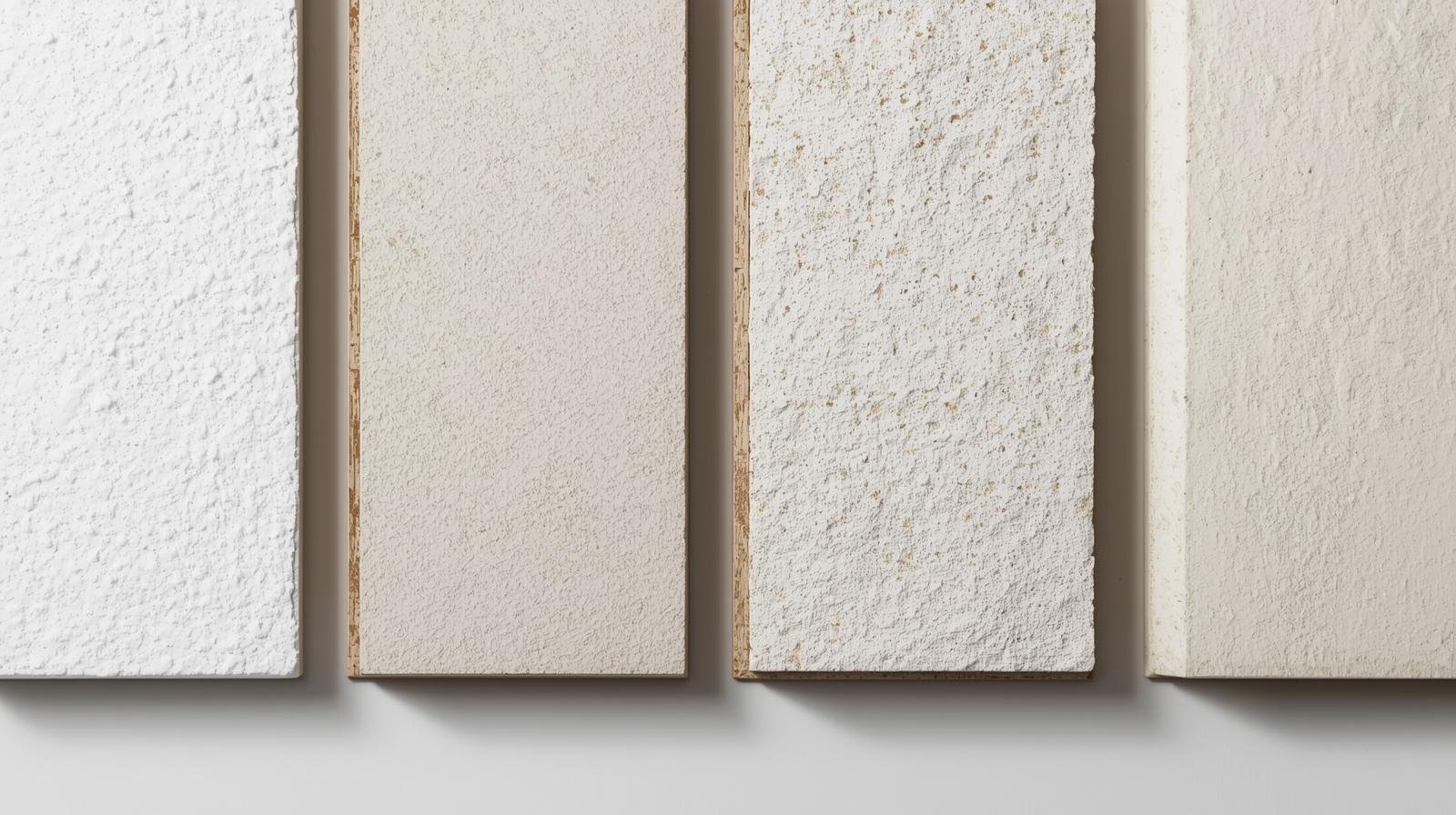
Gypsum board types are among the most commonly used materials in modern construction for ceilings, wall partitions, and interior finishes. Known for their smooth texture, fire resistance, and easy installation, gypsum boards have become a preferred alternative to traditional plaster. Understanding different gypsum board types is essential for selecting the right material for residential, commercial, or industrial projects. This article explains all types of gypsum boards, their uses, benefits, and key differences in simple and human-friendly language.
What Is a Gypsum Board?
A gypsum board, also known as drywall, plasterboard, or sheetrock, is a flat panel made from a core of gypsum plaster sandwiched between two thick sheets of paper. It provides a smooth surface for painting and finishing and is widely used in interior wall and ceiling applications. Gypsum boards are lightweight, durable, and easy to install, making them ideal for both new constructions and renovations. These boards also help improve acoustic performance and thermal insulation, depending on their type.
Importance of Gypsum Boards in Construction
Gypsum boards have replaced traditional plaster due to their multiple benefits. They are cost-effective, time-saving, and provide a superior finish. Their use minimizes cracks and ensures faster construction, especially in dry interior systems. Builders and architects prefer them because they:
- Reduce labor and material costs.
- Offer smooth, consistent wall surfaces.
- Improve fire and moisture resistance.
- Are eco-friendly and recyclable.
- Allow easy modification and repair.
Different Gypsum Board Types
There are several types of gypsum boards designed for specific purposes. The right selection depends on environmental conditions, usage, and required performance. Let’s explore the main gypsum board types used in construction today.
Regular Gypsum Board
Regular gypsum board, also known as standard drywall, is the most basic and commonly used type. It is primarily used for walls and ceilings in areas where moisture and fire resistance are not required.
Features:
- White face paper and gray backing.
- Available in various thicknesses like 9.5mm and 12.5mm.
Applications: - Living rooms, bedrooms, and office interiors.
- False ceilings and wall linings.
Benefits: - Economical and easy to install.
- Smooth surface ready for paint or wallpaper.
Moisture-Resistant Gypsum Board
Also called green board, this gypsum board type is treated with water-resistant additives to prevent moisture absorption.
Features:
- Green-colored surface for easy identification.
- Contains special wax or silicone-based additives.
Applications: - Bathrooms, kitchens, and utility areas.
- Walls exposed to occasional dampness.
Benefits: - Resistant to humidity and mold growth.
- Extends wall life in moisture-prone spaces.
Fire-Resistant Gypsum Board
The fire-resistant gypsum board (Type X drywall) contains glass fibers and other non-combustible materials to enhance fire resistance. It is designed to withstand high temperatures and prevent flame spread.
Features:
- Reinforced with special additives.
- Classified as Type X or Type C depending on performance.
Applications: - Fire-rated partitions, stairwells, and corridors.
- Commercial and industrial buildings.
Benefits: - Provides up to 2 hours of fire resistance.
- Improves building safety and compliance.
Soundproof Gypsum Board
Soundproof gypsum board, also known as acoustic drywall, is designed to minimize noise transmission between rooms. It contains a special core material with sound-damping layers.
Features:
- Higher density than regular boards.
- Laminated with sound-absorbing materials.
Applications: - Theaters, studios, conference rooms, and hospitals.
Benefits: - Reduces sound transmission effectively.
- Enhances privacy and acoustic comfort.
Moisture and Fire-Resistant Gypsum Board
This type combines both fire and moisture-resistant properties. It is used in areas where safety and humidity protection are essential.
Features:
- Dual protection core.
- Usually identifiable by a blue or purple color.
Applications: - Bathrooms, kitchens, and utility areas in commercial buildings.
Benefits: - Ideal for multi-functional spaces.
- Long-lasting and durable under tough conditions.
Exterior Gypsum Sheathing Board
Exterior gypsum sheathing is used as a base layer for exterior walls before applying cladding or siding. It resists moisture and provides strength to external frameworks.
Features:
- Fiberglass-reinforced face for extra durability.
- Designed for weather protection.
Applications: - Exterior walls, soffits, and ceilings.
Benefits: - Provides a solid substrate for finishing materials.
- Protects against wind and moisture.
Paperless Gypsum Board
Paperless gypsum board uses a fiberglass mat instead of paper facing, which enhances mold and moisture resistance.
Features:
- Non-paper surface with glass fiber facing.
- Superior resistance to humidity and microbial growth.
Applications: - Hospitals, kitchens, and humid environments.
Benefits: - Long lifespan with reduced maintenance.
- Resistant to warping and delamination.
Pre-Decorated Gypsum Board
Pre-decorated boards come with factory-applied finishes like vinyl or laminated coatings. They reduce finishing time and are ready for installation.
Features:
- Available in various colors and patterns.
- Ready-to-use surface for direct fixing.
Applications: - Commercial interiors, offices, and retail stores.
Benefits: - Saves finishing time and labor.
- Aesthetic appearance without painting.
Comparison Table of Gypsum Board Types
| Type | Key Property | Best Used For | Color/Identification |
|---|---|---|---|
| Regular Gypsum Board | Standard strength | General walls & ceilings | White/Gray |
| Moisture-Resistant Board | Water resistance | Bathrooms & kitchens | Green |
| Fire-Resistant Board | Flame protection | Fire-rated partitions | Pink/Red |
| Soundproof Board | Noise control | Theaters, offices | Blue |
| Moisture & Fire-Resistant Board | Dual protection | Wet, fire-prone areas | Purple |
| Exterior Sheathing Board | Outdoor strength | Exterior walls | Yellow |
| Paperless Board | Mold resistance | Hospitals, humid zones | Gray |
| Pre-Decorated Board | Finished surface | Interior design | Various |
Benefits of Using Gypsum Boards
- Lightweight and easy to install
- Reduces construction time significantly
- Provides a smooth and crack-free surface
- Enhances fire and sound resistance
- Environmentally friendly and recyclable
- Requires minimal maintenance
Applications of Gypsum Boards
Gypsum boards are used widely across different sectors:
- Residential: Ceilings, wall partitions, and home interiors.
- Commercial: Offices, hospitals, and educational buildings.
- Industrial: Fire-rated walls, acoustic control areas.
- Architectural: Decorative false ceilings and wall linings.
Maintenance Tips for Gypsum Boards
To ensure durability, keep gypsum boards dry, avoid heavy impact, and use moisture-resistant boards in humid areas. Regular inspection and repainting can maintain their appearance for years.
FAQs About Gypsum Board Types
1. Which gypsum board type is best for bathrooms?
The moisture-resistant (green board) or moisture & fire-resistant (purple board) types are ideal for bathrooms.
2. Are gypsum boards fireproof?
They are fire-resistant but not completely fireproof. Type X or Type C boards can resist fire for up to two hours.
3. Can gypsum boards be used on exterior walls?
Yes, exterior gypsum sheathing boards are specially designed for that purpose.
4. What is the difference between regular and paperless gypsum boards?
Paperless boards use fiberglass mats instead of paper, making them more durable and mold-resistant.
5. How long does a gypsum board last?
When properly installed and maintained, gypsum boards can last 30–50 years depending on environmental conditions.
Conclusion
Understanding gypsum board types helps you choose the right product for your specific project needs. Whether you need fire safety, moisture protection, or acoustic performance, there’s a gypsum board designed for every purpose. Regular, moisture-resistant, fire-resistant, and soundproof boards each serve a unique role in modern construction. Selecting the right one ensures better durability, cost efficiency, and long-term performance. Investing in the right type of gypsum board means investing in quality, safety, and sustainability for your building.
All online study is beneficial to shopkeeper