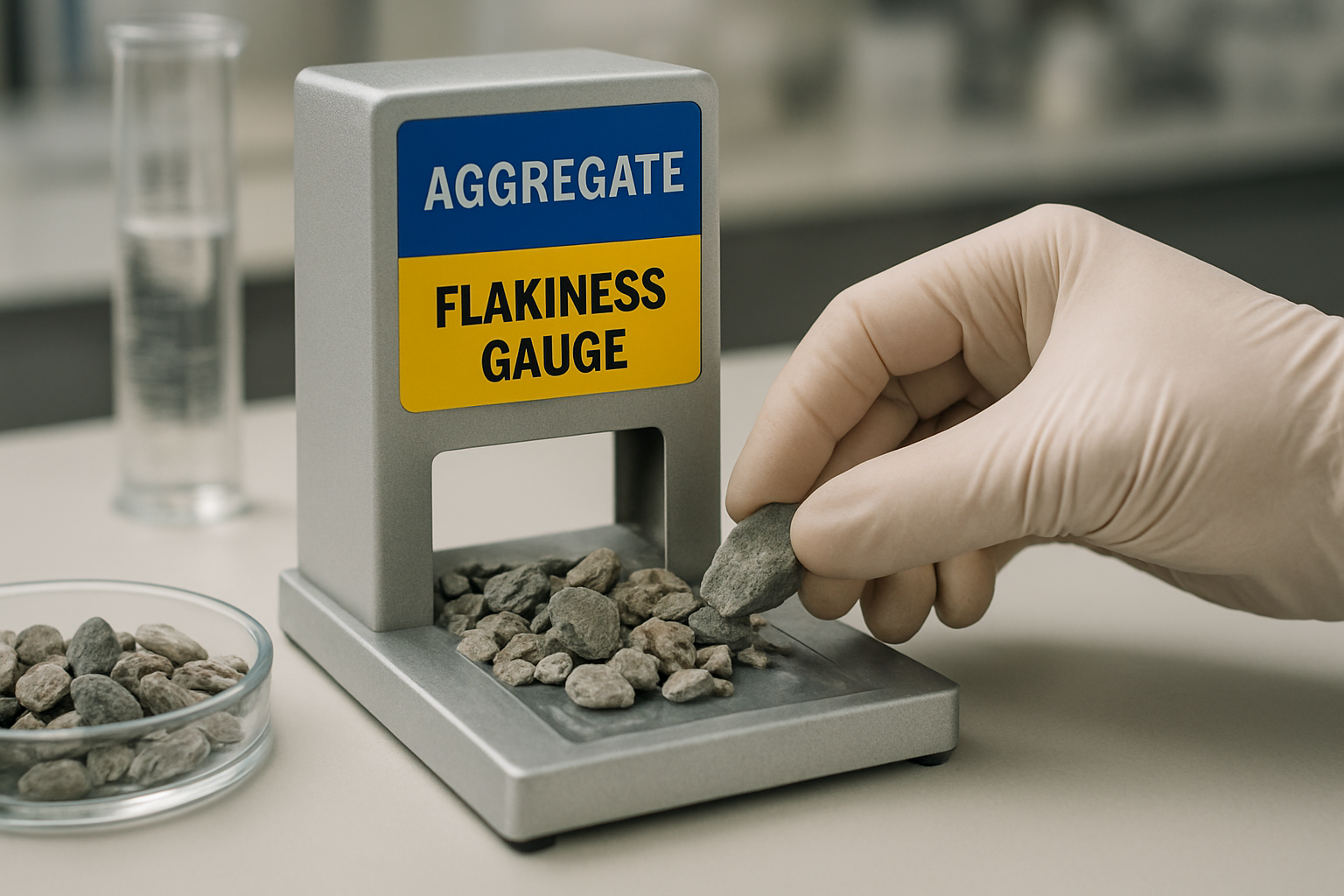
The Flakiness Index Test is a crucial procedure in civil engineering for assessing the shape of aggregates used in construction. The evaluation focuses on particle thickness, which is essential for ensuring the quality of concrete and asphalt mixtures. Flaky aggregates can negatively impact the performance and durability of construction materials, leading to issues like reduced workability and decreased strength. This article delineates the apparatus, procedure, calculations, and applications associated with the Flakiness Index Test. For the applicable test method and revision, refer to the BIS standards portal.
Understanding the nature of aggregates is indispensable for civil engineers. Proper assessment methods, such as the Flakiness Index Test, help ascertain the suitability of aggregates for specific projects. By using a thickness gauge to evaluate the particle thickness of aggregates, engineers can derive critical insights into their shape, thereby ensuring optimal performance in construction applications.
Apparatus Required for the Flakiness Index Test
To conduct the Flakiness Index Test effectively, specific apparatus and equipment are needed:
- Thickness Gauge: A long, flat, and straight instrument that helps measure the thickness of aggregate particles.
- Sample Ruler: This is often used for measuring the size of the aggregate particles before testing.
- Weighing Scale: An accurate balance for measuring the weight of aggregates.
- Sieves: Various sieves as per standards (generally following IS 2386 standards) for separating aggregates.
- Container: A tray or container to hold the samples being tested.
Sample Selection
Selecting an appropriate sample size is fundamental to the accuracy of the Flakiness Index Test. The typical process involves:
- Collecting a sample that is representative of the aggregate batch, usually consisting of at least 2 kg of material.
- Passing the sample through a set of sieves to filter the aggregates into specified size fractions.
- Ensuring that the sample size conforms to the requirements of the test standards (usually between 4.75 mm to 63 mm for course aggregates).
Procedure of the Flakiness Index Test
The Flakiness Index Test involves several systematic steps:
- Sieving: Begin by passing the aggregate sample through the specified sieves. This method helps categorize the aggregates into different size fractions.
- Thickness Measurement: For each size fraction, take a representative sample of aggregates. Then, use the thickness gauge to measure each particle. Ensure each particle is larger than the minimum dimension specified in the test standards.
- Recording Data: Keep a detailed record of the number of flaky particles observed during measurement. In the standard flakiness-index method, a particle is classified as flaky when its least dimension (thickness) is less than 0.6 times the mean sieve size of its size fraction. Use the specified thickness gauge for each fraction.
- Weighting: Weigh the flaky aggregates to determine their total weight in relation to the overall sample.
Calculations
After recording the measurements, the calculation of the Flakiness Index can be carried out using the formula:
Flakiness Index (%) = (Weight of flaky particles / Total weight of representative sample) × 100
This calculation yields a percentage that indicates the proportion of flaky aggregates within the sample. Higher percentages depict a higher flakiness index, signaling potential issues with aggregate quality.
Reporting Results
The results of the Flakiness Index Test should be clearly documented, including:
- Date of test and testing location
- Sample size and source details
- All measured weights and calculated Flakiness Index percentages
- Any observations regarding aggregate characteristics, such as color or environmental conditions
Applications of the Flakiness Index Test
The Flakiness Index Test has significant applications in various sectors of construction:
- Concrete Production: Helps ensure the proper shape of aggregates, which contributes to concrete durability and workability.
- Road Construction: Ensures the aggregates used in asphalt mixes possess the required toughness and stability.
- Quality Control: Regular testing of aggregate sources to maintain compliance with standard specifications.
Common Mistakes in the Flakiness Index Test
Several pitfalls may arise during the Flakiness Index Test, including:
- Inadequate Sample Size: Failing to collect a representative and sufficient sample can yield inaccurate results.
- Incorrect Thickness Measurement: Not following the guidelines for measuring thickness can misrepresent the flakiness of aggregates.
- Poor Recording Practices: Incomplete or careless recording of data may hinder the analysis and reporting process.
FAQs about the Flakiness Index Test
What is the ideal Flakiness Index for aggregates?
Generally, a Flakiness Index below 15% is considered appropriate for most concrete applications, while lower percentages are preferable for road constructions.
Can the test be performed on all types of aggregates?
Yes, the Flakiness Index Test can be performed on both coarse and fine aggregates, though standard procedures may vary slightly.
What impact does flaky aggregate have on construction performance?
Flaky aggregates can reduce concrete workability, leading to poor compaction, increased water demand, and potential durability issues.
How often should the Flakiness Index Test be conducted?
It is advisable to perform the Flakiness Index Test frequently, especially when sourcing aggregates from different suppliers or batches.
Is there an alternative test to measure aggregate shape?
Yes, the Aspect Ratio Test is another common method used to analyze aggregate shape based on length and width measurements.
Conclusion
The Flakiness Index Test is an essential procedure for assessing the shape characteristics of aggregates used in construction. By accurately measuring the thickness of aggregate particles, civil engineers can ensure better material quality, leading to more durable structures. Understanding and correctly conducting this test not only complies with industry standards but also enhances the overall performance of construction materials.