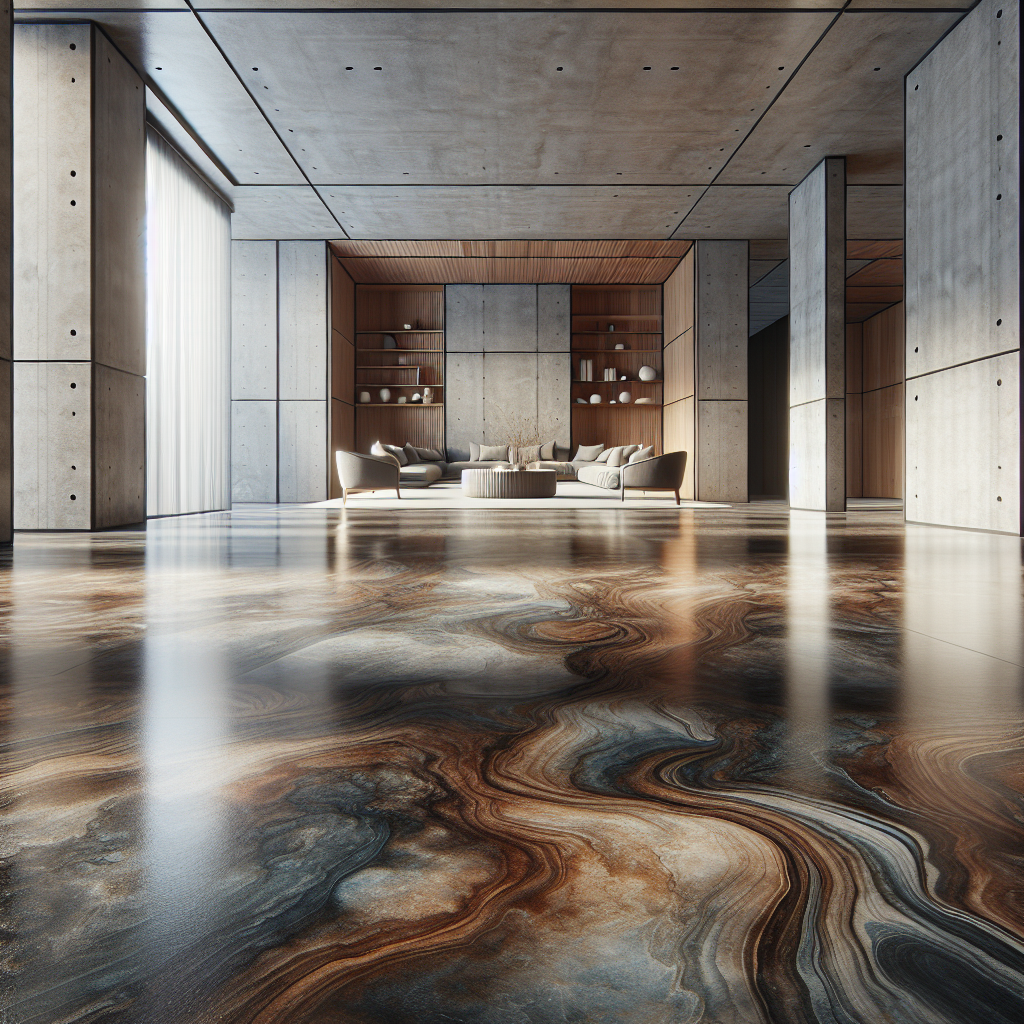
Acid stain concrete turns ordinary slabs into rich, mottled surfaces that age gracefully. It reacts with the concrete to produce colors that look natural and vary from chip to chip.
This post explains how staining works, what to expect during and after application, and practical tips to keep floors looking their best. Read on to understand the key steps and common questions homeowners ask.
How acid stain transforms concrete
The process is chemical, not a surface coating. An acid-based solution carries metallic salts into the concrete where they react with lime and minerals. That reaction creates translucent, variegated colors that become part of the slab.
Unlike paint, stains don’t sit on top of the surface. That means colors can last longer and show subtle depth. Variations in concrete mix, moisture, and surface condition all influence the final look, so each application is unique.
Chemical reaction and permanence
Acid stains contain diluted hydrochloric acid and metallic salts like iron and copper. When applied, the acid etches the surface slightly and helps the salts bond with calcium compounds in the concrete.
This bond makes the color semi-permanent. It resists peeling, because the change occurs within the matrix of the concrete rather than as a film on top.
Typical color range and visual effects
Common tones include earthy browns, amber, ochre, and soft greens. The results are often variegated—patchy or marbled—which many people find attractive since it mimics natural stone.
Because reactions depend on the existing concrete chemistry, two slabs stained with the same product can look noticeably different.
Preparing the slab and the application process
Successful staining starts with proper surface preparation. Clean, repair, and dry the slab to create a predictable reaction when the stain is applied.
Small steps in prep avoid blotchy results and ensure sealer adhesion later.
Surface cleaning and repairs
Remove grease, paint, curing compounds, and contaminants. Pressure washing and chemical degreasers are common. Old sealers must be stripped so the stain can reach bare concrete.
Fill cracks and deep holes with a compatible patch product. Smooth repairs blend better and prevent shadowing from irregular areas.
Applying the stain
Work in small, manageable sections. Use a pump sprayer or applicator to mist the solution evenly. Timing and coverage matter—too much product in one spot may darken more intensely.
Multiple light passes generally produce better depth and more control than one heavy application. Let the stain react until the desired tone appears, then neutralize.
Neutralizing and rinsing
After the chemical reaction, neutralize the acid with a mild alkaline solution such as a baking soda mix or a manufacturer-recommended neutralizer. Rinse thoroughly to remove salts and residue.
Allow the slab to dry completely before sealing. Moisture trapped under sealer can cause cloudy finishes or adhesion problems.
Finishing choices and sealers
Sealing locks in color, protects from wear, and defines the sheen. The right sealer also affects slip resistance and maintenance needs.
Pick a sealer based on where the floor will be used and the level of gloss desired.
Sealer types and their effects
Penetrating sealers soak in and offer a natural look with minimal sheen. They preserve breathability but provide less surface protection than films.
Film-forming sealers (acrylics, polyurethanes, and epoxies) create a protective layer and come in matte to high-gloss sheens. They enhance color and depth but may need reapplication over time.
Urethane and polyaspartic finishes are more durable for heavy-traffic interiors and can resist chemicals and abrasion better than basic acrylics.
Choosing sheen and build-up
Low sheen keeps the natural, stone-like appearance. Glossy finishes amplify color and highlight surface imperfections, so prep must be meticulous for a high-gloss look.
Multiple thin coats of sealer often outperform thick single coats. Test a small area to see how the finish alters color and slip properties.
Maintenance, durability, and common issues
Proper maintenance preserves the stain and sealer. Many problems are avoidable with simple care routines and quick repair of worn areas.
Understanding what causes issues helps extend the life of the floor.
Routine care
Sweep and dust mop regularly to remove grit that can abrade sealer. Use pH-neutral cleaners and avoid harsh acids or alkalis that might dull or etch the surface.
Reapply sealer when wear becomes noticeable. The frequency depends on traffic: light-use residential floors may need resealing every 2–5 years, while commercial areas require more frequent attention.
Spot repairs and refinishing
Small worn spots can often be sanded lightly, re-stained, and resealed. For widespread wear or color inconsistency, a full recoat of sealer may refresh the look without restaining.
If color correction is needed, sometimes a complementary toner or stain system can even out patches. Severe damage might require grinding and a new staining cycle.
Common problems and causes
Blotchy color usually comes from improper cleaning or uneven moisture. Consistent prep reduces the risk.
Efflorescence (white salt deposits) appears when salts leach to the surface. Proper rinsing and allowing the slab to dry help prevent this.
Sealer clouding can result from trapped moisture or applying sealer over a damp slab. Always check dryness before sealing.
Cost considerations, DIY vs professional, and design ideas
Budget depends on slab condition, color complexity, and sealer choice. Expect a wide range of costs between a simple DIY job and a professionally finished floor with multiple sealer coats.
Decide based on your comfort level with chemical handling, surface prep, and finishing tools.
Typical costs broken down
Materials include stain, neutralizer, sealers, and cleaners. These can add up, especially for premium sealers.
Prep and repairs may require grinders, patch compounds, or stripper products. Renting equipment increases cost but improves outcomes.
Labor for professionals covers skilled prep, consistent application, and warranty. That adds cost but reduces risk of poor results.
When a professional makes sense
Hire someone when the slab has heavy contamination, complex repairs, or when you want a high-gloss, flawless finish. Pros can also manage large areas efficiently and apply industrial-grade sealers safely.
DIY is viable for small, clean areas if you follow prep steps carefully and test in an inconspicuous spot first.
Design ideas and creative effects
Combine colors with stencils, saw cuts, or overlays to create patterns and faux tile. Layering stains can deepen tones, and antiquing techniques bring out texture.
Use rugs and furniture placement to balance the mottled look, and select sealer sheen to match the room style—matte for rustic spaces, satin or gloss for modern interiors.
Conclusion
Acid staining creates unique, durable floors that age with character. The chemical nature of the process gives depth and permanence that many finishes can’t match.
Success depends on careful preparation, proper neutralizing and rinsing, and choosing the right sealer for the intended use. With the right steps, stained concrete can be a long-lasting, attractive surface.
Frequently Asked Questions
How long does acid-stained concrete last?
With proper sealing and routine maintenance, stained concrete can last for decades. The sealer will need periodic reapplication depending on traffic and exposure.
Can I stain old, previously sealed concrete?
Yes, but the old sealer must be fully removed. Stripping and cleaning expose bare concrete so the stain can react properly and produce consistent color.
Is staining suitable for outdoor patios?
Yes. Use UV-stable, breathable sealers designed for exterior use. Expect natural weathering; protective sealers and proper drainage extend surface life.
Will acid stain cover surface imperfections?
No. Stain highlights the natural texture and imperfections of concrete. Minor flaws often add character, but deep defects should be repaired before staining.
Are there safer alternatives to acid-based stains?
Water-based and acrylic reactive stains can produce similar looks with fewer fumes. They rely on dyes or different chemistries and may offer brighter, more uniform colors.
Can I change the color later?
Yes. You can restain or apply a topical coating to alter appearance. For a true color change that penetrates, grinding down and restaining is the most reliable route.