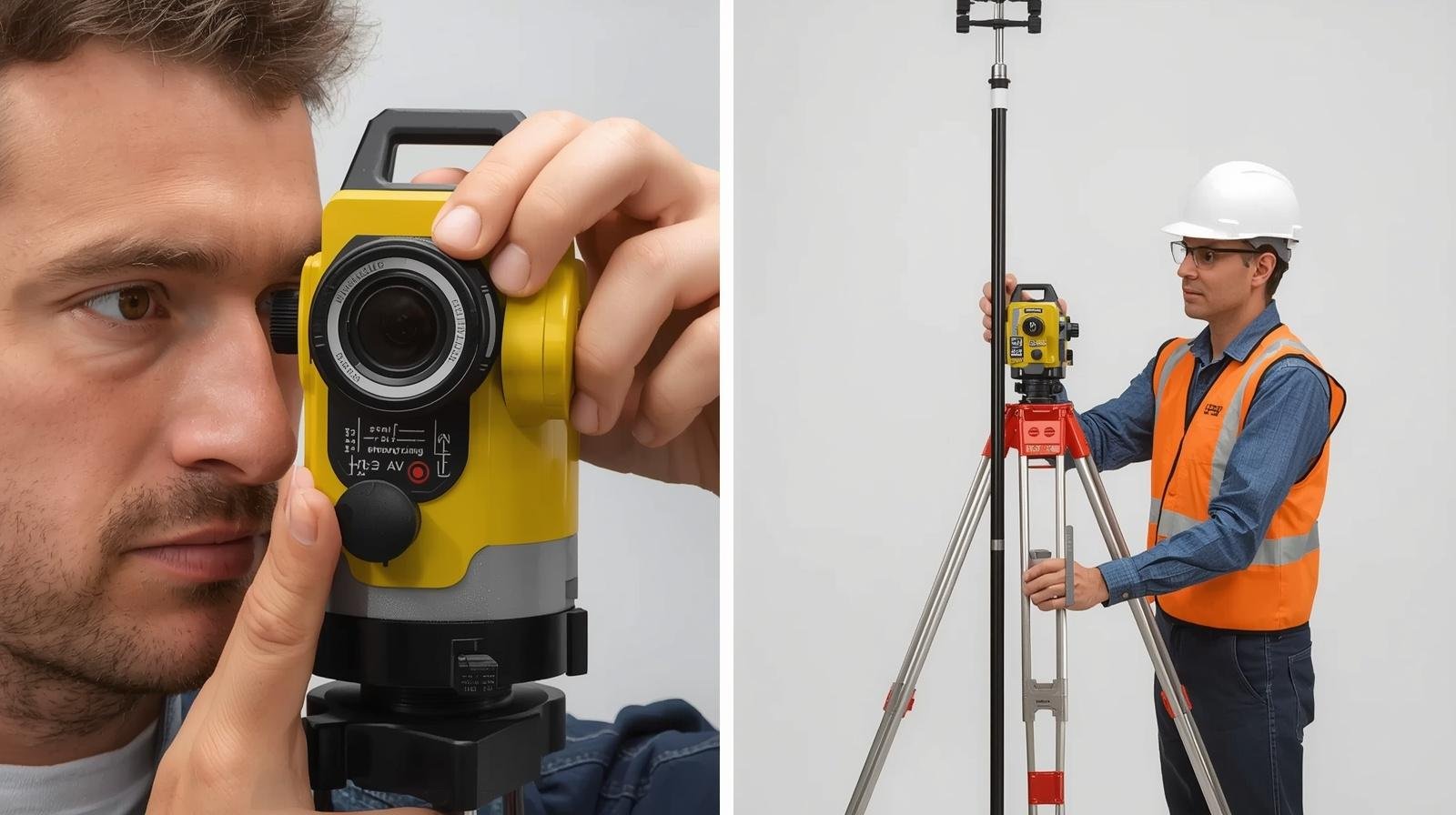
The parallax error auto level solution is a key skill for accurate surveying. In this article I explain parallax causes and give a clear, practical guide to eyepiece adjustment and staff holding. You will learn the correct method to remove parallax and ensure reliable readings.
What is Parallax and Why It Matters
Parallax happens when the crosshair and the staff are not in the same focus plane. This causes wrong readings. In simple words, what you see moves when you move your eye. In leveling, even a small parallax can change elevation results.
How parallax appears in an auto level
When you look through the auto level and shift your eye, the crosshair seems to move on the staff. That shows there is parallax. Fixing it improves accuracy.
Effects on surveying work
Parallax can cause systematic errors. Multiple wrong readings affect cut and fill decisions and final plans. Always check for parallax before you trust a reading.
Parallax Error Auto Level Solution Method
Below is a step-by-step approach to remove parallax. This Parallax Error Auto Level Solution Method is easy to follow on site.
Step 1 — Set up the auto level
Place the auto level on a stable tripod. Roughly level it and center over the point if needed. Wait for the instrument to settle.
Step 2 — Focus the objective (if available)
Some auto levels have a focus on the objective. If yours does, focus so the staff appears sharp. Objective focus reduces blur but does not replace eyepiece adjustment.
Step 3 — Eyepiece adjustment
Now do the eyepiece adjustment until there is no parallax. This eyepiece adjustment step is the most important.
- Close one eye and look through the eyepiece with the other.
- Move your head slightly left and right.
- If the crosshair moves relative to the staff, rotate the eyepiece slowly.
- Stop when the crosshair stays fixed while you move your head.
Staff Holding Correct Method
How you hold the staff matters as much as the instrument work. Below is the staff holding correct method for stable readings.
Verticality and stability
Hold the staff straight and plumb. Use a hand at the top and one near the middle for tall staff. Avoid tilting or leaning the staff.
Position and sight line
Keep the staff directly under the crosshair. The person holding the staff should not stand between you and the staff or move while you read.
Communication and small movements
Signal clearly before taking a reading. Even a small bob or step by the staff holder can change the value. Ask for a short still pose for the reading.
Complete Practical Procedure
Follow these actions each time you take a reading to avoid parallax error and get repeatable results.
Full checklist
- Level instrument and wait for stabilization.
- Perform eyepiece adjustment until parallax is gone.
- Ask staff holder to keep the staff plumb and still.
- Center crosshair and confirm no movement by shifting your eye slightly.
- Record reading quickly and clearly.
Quick Troubleshooting
If you still see parallax after eyepiece adjustment, try these checks.
Common fixes
- Clean the eyepiece and objective glass gently.
- Check for loose eyepiece locking rings and tighten.
- Confirm instrument optics are not damaged.
- Try another staff or holder to rule out staff tilt.
Practical Tips and Common Mistakes
Small habits save time and avoid errors. Learn simple rules to keep your survey accurate.
Do this every time
- Always check eyepiece focus at the start of the job.
- Teach staff holders the staff holding correct method.
- Re-check parallax if you change the observation distance.
Avoid these mistakes
- Do not rush eyepiece adjustment.
- Avoid reading through dirty glass.
- Do not allow staff tilt or movement during reading.
Quick Reference Table
Use this table on site to remember steps fast.
| Task | Action |
| Instrument Setup | Level and stabilize tripod |
| Eyepiece | Rotate until crosshair stays fixed |
| Staff Holding | Keep staff plumb and still |
| Check | Shift eye to confirm no movement |
Video and Learning Resources
If you prefer watching, search for “Parallax error auto level complete solution – eyepiece adjustment staff holding correct method practical surveying Hindi video”. This video shows the full practical steps in Hindi and helps reinforce the method.
Frequently Asked Questions
How do I tell if my auto level has parallax?
Look through the instrument and move your eye a little. If the crosshair moves relative to the staff, you have parallax. Fix it with eyepiece adjustment.
Can I fix parallax without eyepiece adjustment?
You might reduce it by moving closer or farther, but true correction needs eyepiece adjustment. Objective focus alone is not enough.
What is the correct method to hold the staff?
Hold the staff plumb, steady, and centered under the crosshair. Use two hands for taller staff and ask the holder to remain still during reading.
Is parallax common with all auto levels?
Yes. Any optical instrument with crosshairs can show parallax if eyepiece focus is off. Regular checks prevent errors.
Conclusion
Parallax error auto level solution is simple when you follow the steps: adjust the eyepiece, hold the staff correctly, and check before each reading. Practice these steps and you will get reliable survey results every time.