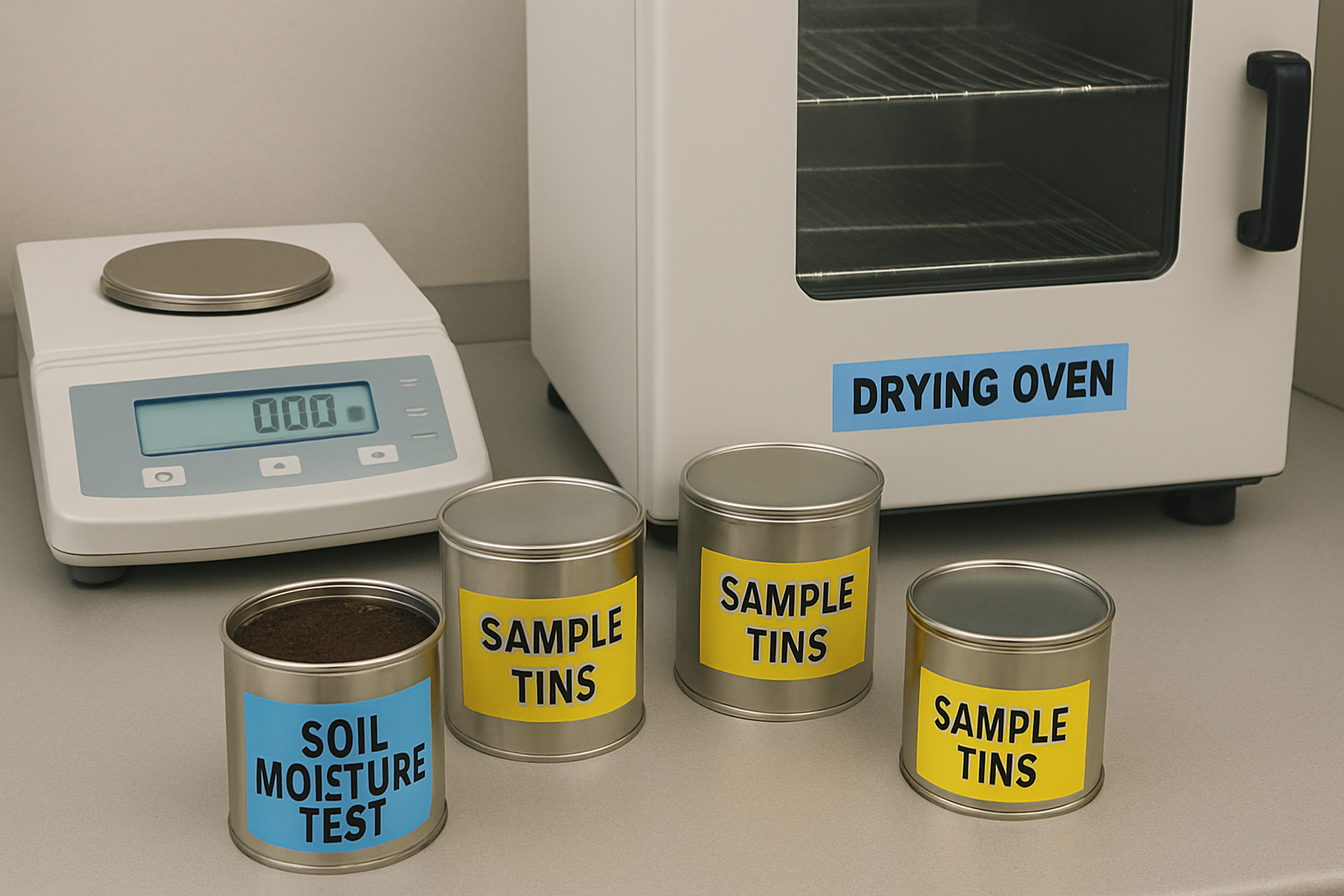
The moisture content test of soil is a crucial analysis in civil engineering that determines the amount of water present in soil samples. Accurate measurement of moisture content is essential for construction projects, as it influences soil behavior, stability, and compaction. This article explores the oven drying method, a standard technique for measuring the water content of soil, detailing the procedure, calculation, and reporting of results. For the current method and revision, check the relevant entry in the BIS standards portal.
The oven drying method provides reliable results by removing moisture from soil samples and measuring the weight difference before and after drying. This process helps civil engineering professionals understand soil conditions and make informed decisions regarding material selection and construction practices. Whether you’re a student or a practicing engineer, understanding how to conduct a moisture content test of soil is fundamental to assessing soil suitability for projects.
Understanding the Basics of Soil Moisture Content
Moisture content is defined as the ratio of the weight of water in a soil sample to the weight of the dry soil, expressed as a percentage. It plays a vital role in various engineering applications, including foundation design, earthworks, and material quality control. Proper assessment of the water content of soil helps in optimizing compaction, improving drainage design, and mitigating stability issues.
Oven Drying Method Overview
The oven drying method is one of the most common techniques employed for the moisture content test of soil. It involves two main stages: the wet weight determination and the dry weight determination of the soil sample. Below are the detailed steps involved in this method.
Apparatus Required
- Soil sample
- Analytical balance
- Moisture content oven (set at 105-110°C)
- Desiccator (for cooling the sample)
- Spatula or spoon (for transferring soil)
- Container for soil (weighing dish)
Procedure
- Preparation of Soil Sample: Collect a representative soil sample and ensure it is free from organic material and contaminants.
- Wet Weight Measurement: Weigh the container (W1) and add the soil sample to it. Record the total weight (Wwet), which is the weight of the container plus the wet soil.
- Oven Drying: Dry the specimen at the temperature and until the constant-mass condition required by the applicable soil test standard. The usual oven temperature for many mineral soils is around 105–110°C, but organic, gypsum-bearing or other temperature-sensitive soils may require a different method. Do not use a fixed 24-hour period as a substitute for constant mass.
- Dry Weight Measurement: After drying, remove the container from the oven and allow it to cool in a desiccator to prevent moisture absorption. Weigh the container with the dry soil (W2).
Soil Moisture Calculation
The calculation of moisture content from the results obtained plays a crucial role in understanding the soil’s characteristics. The formula used is as follows:
Moisture Content (%) = [(Mwet − Mdry) / Mdry] × 100
Where Mwet is the mass of wet soil only and Mdry is the mass of oven-dried soil only. Calculate each by subtracting the empty container mass from the corresponding combined mass. Do not put container-plus-soil masses directly into the formula.
This formula yields the moisture content as a percentage, which helps determine the suitability of the soil for construction applications. For example, if Wwet is 150 grams and W2 is 120 grams, then:
For example, if the wet soil mass is 150 g and the oven-dried soil mass is 120 g (container mass already deducted):
MC = [(150 − 120) / 120] × 100 = 25%
Reporting Results
Once the water content of the soil has been calculated, it should be reported clearly and concisely. The report must include:
- The initial wet weight of the sample
- The dry weight of the sample
- The calculated moisture content percentage
- The date of the test and sample identification
Proper documentation ensures that the data can be referenced for future analysis and project requirements.
Common Mistakes to Avoid
- Inaccurate Weighing: Always use calibrated balances for weighing. Ensure that the balance is zeroed before each measurement.
- Inadequate Drying: Determine drying completion using the constant-mass requirement of the applicable method; elapsed time alone does not confirm that all removable water has been driven off.
- Moisture Absorption Post Drying: Allow dry samples to cool in a desiccator to avoid moisture re-absorption from the air.
Applications of Moisture Content Tests
The moisture content test of soil has vast applications in civil engineering, including:
- Foundation design: Determining bearing capacity and settlement characteristics.
- Earthworks: Ensuring optimal compaction and stability during excavation and backfill.
- Material quality control: Assessing the moisture content of soil used for pavement and road construction.
- Hydrological studies: Analyzing drainage and infiltration properties in various soil types.
FAQs
1. What is the significance of measuring soil moisture content?
Determining soil moisture content is essential for predicting soil behavior during construction, assessing compaction needs, and ensuring stability.
2. Can moisture content affect the strength of soil?
Yes, moisture content directly influences the strength and stability of soil. Excess moisture can lead to soil liquefaction or reduce shear strength.
3. Are there alternative methods to measure moisture content in soil?
Yes, methods such as the microwave method and nuclear density gauge can be used, but oven drying remains the standard for its accuracy and reliability.
4. How long should soil samples be dried in the oven?
Drying duration depends on specimen size, soil type, oven conditions and the applicable standard’s constant-mass requirement. Some methods use overnight drying as a practical starting point, but the sample must meet the prescribed endpoint before the final mass is recorded.
5. Is moisture content the same for all soil types?
No, moisture content varies among soil types, influenced by factors such as grain size, texture, and organic matter content.
Conclusion
Conducting a moisture content test of soil using the oven drying method is fundamental in civil engineering. By understanding this testing process, professionals can make informed decisions regarding construction practices and ensure the suitability of soil for various applications. Accurate measurement and reporting of moisture content ultimately contribute to the overall success of construction projects.