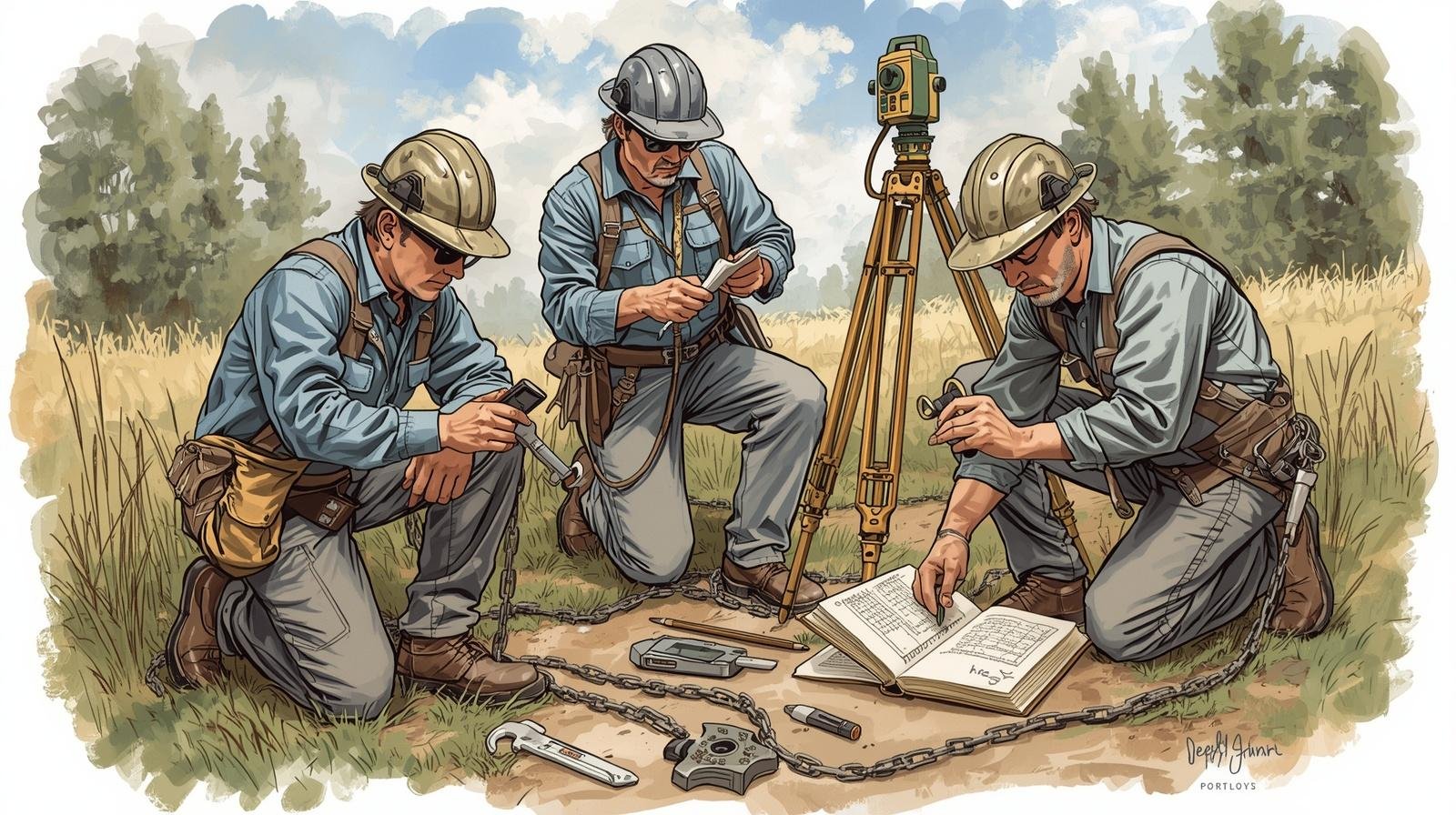
This Chain surveying beginners complete guide will help you learn the basics step by step. You will read about ranging, offsets, field book, equipment handling, tips, and a practical training method. The language is simple and the steps are easy to follow.
What Is Chain Surveying?
Chain surveying is a simple and accurate method for measuring small areas. It uses a chain or tape to measure distances on the ground. This section gives a short overview before deeper topics.
Basic concept
Chain surveying measures the length between points along straight lines. It is best for flat ground and small plots. The surveyor marks points called stations and measures between them.
When to use chain surveying
- Small construction sites
- Plotting property boundaries
- Simple site layout work
Essential Equipment and Equipment Handling
Knowing the equipment and how to handle it makes surveying faster and safer. Read this short guide before you go to the field.
Common equipment
- Survey chain or tape (Gunter’s chain or metric tape)
- Arrows and pegs for marking stations
- Field book and pencil
- Plumb bob or ranging rod
- Chalk or spray paint for temporary marks
Equipment handling tips
- Keep the chain clean and dry.
- Avoid kinks and knots in the tape.
- Store tapes rolled, not folded.
- Use gloves to protect your hands from wire tapes.
- Check zero and end hooks for wear.
| Equipment | Handling Advice |
| Chain / Tape | Keep tension steady, avoid dragging, coil after use |
| Field Book | Use a hard cover, keep dry, write clearly |
| Plumb Bob | Check alignment, avoid drops that bend the tip |
Ranging: Lining Up Your Survey Lines
Ranging makes sure your chain line is straight. Good ranging improves accuracy. Read the short intro and then learn the steps.
Direct ranging
Direct ranging is used when you can see both ends of the line. Place range rods at each end and adjust until they line up. Keep the chain centered on the line.
Indirect ranging
Use indirect ranging when the ends are not visible. Set intermediate points and use back sighting to keep the line straight. Use offsets to fix positions around obstacles.
Offsets: Dealing with Obstacles
Offsets let you measure points away from the main chain line. They are useful around trees, ditches, or buildings. This short intro explains types and use.
Perpendicular offsets
Perpendicular offsets are taken at right angles to the chain line. They are simple and give clear coordinates for features near the line.
Oblique offsets
Oblique offsets are taken at an angle when perpendicular measurement is hard. Record the angle and distance carefully in the field book.
- Always mark offset points with pegs or arrows.
- Measure offsets from a known station for easy plotting.
- Record whether offsets are left or right of the line.
Field Book: Recording and Sketching
The field book is your primary record. Good notes reduce plotting errors. Read this short guide on neat, useful entries.
Basic field book layout
Use columns for station, length, offset, bearing or angle, and remarks. Draw a simple sketch of the line and features next to the entries.
What to record
- Station numbers and names
- Distances measured (chain lengths and links or meters and centimeters)
- Offsets with direction (left/right)
- Any changes or corrections
- Weather or ground conditions if relevant
Practical Training Method
Practice is the best way to learn chain surveying. Use clear steps and short practice sessions. Below are effective exercises you can try.
Step-by-step beginner drill
- Start with a straight 30 m line on flat ground.
- Practice direct ranging and measure the line twice.
- Add simple perpendicular offsets to mark nearby points.
- Record everything in the field book and sketch the plan.
- Plot your notes to check errors.
Advance the exercise
Introduce obstacles, use indirect ranging, and practice re-checking lines. Work in pairs: one person measures while the other records and ranges.
Common Mistakes and How to Fix Them
Avoid these typical errors to keep your survey reliable. Short tips help you catch mistakes early.
- Poor ranging — recheck alignment frequently.
- Wrong zero at tape end — verify before starting.
- Unreadable field book entries — write clearly and fix errors properly.
- Loose chain tension — use consistent pull for each measurement.
Quick Tips for Better Results
Small habits make a big difference in chain surveying. Use these practical tips on every job.
- Mark stations clearly with arrows or pegs.
- Double-check distances when time allows.
- Keep spare pegs and pencils in your kit.
- Practice plotting to spot common recording mistakes.
Frequently Asked Questions
What is the focus of this guide?
This guide focuses on chain surveying basics for beginners, including ranging, offsets, field book use, equipment handling, tips, and a practical training method.
How do I choose between direct and indirect ranging?
Use direct ranging when you can see both ends of the line. Use indirect ranging when obstacles block the view and you need intermediate stations.
How should I keep my field book?
Keep the field book dry and neat. Use a hard cover. Record station numbers, distances, offsets, and a simple sketch beside entries.
What is a good beginner practice routine?
Start with straight lines and direct ranging. Add offsets and small obstacles later. Practice short sessions often, and always plot your data to check accuracy.
Conclusion
Chain surveying is an easy-to-learn skill that grows better with practice. This Chain surveying beginners complete guide gives clear steps for ranging, offsets, field book, and equipment handling. Use the tips and practical training method to build confidence and accuracy in the field.