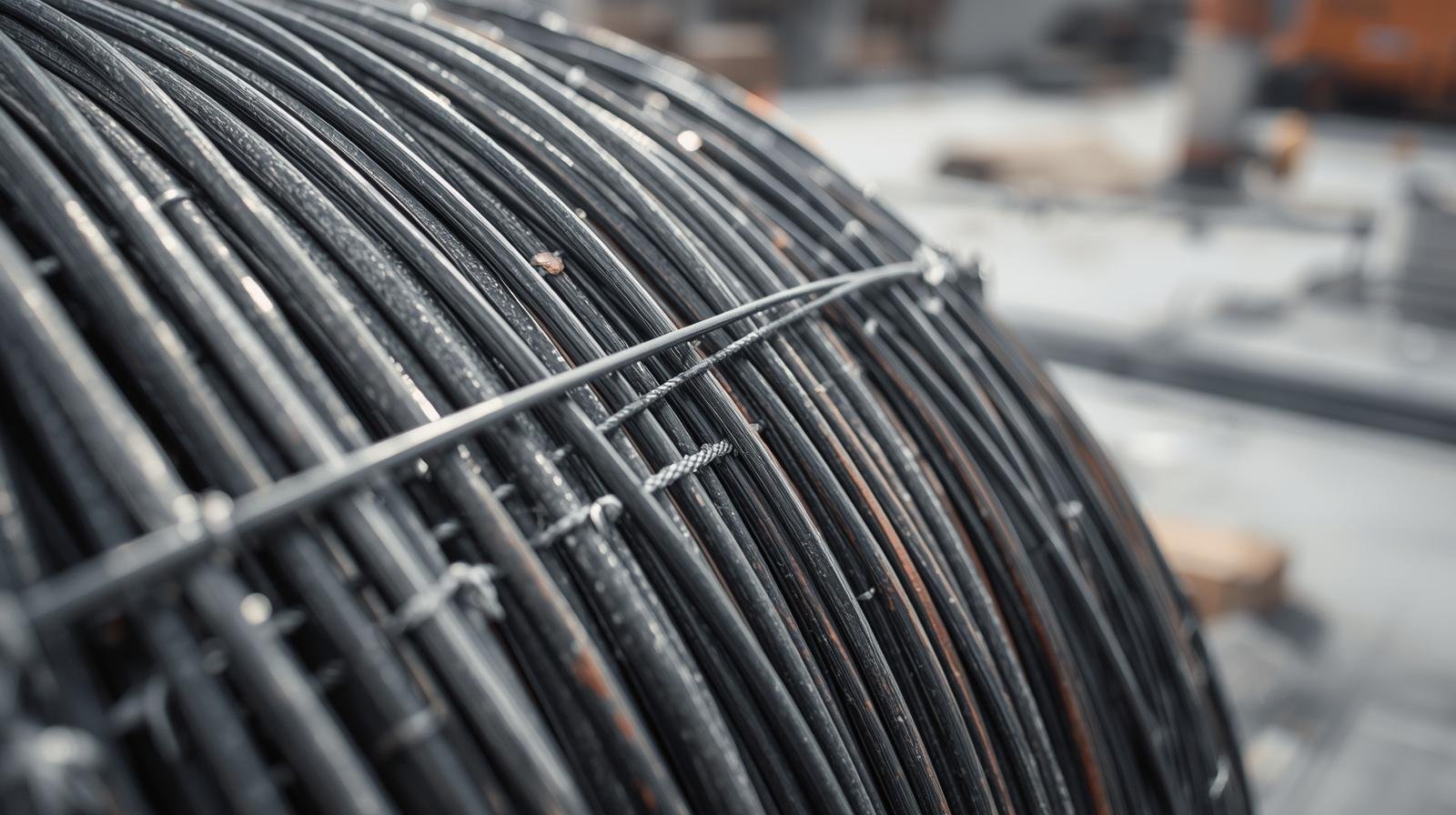
In reinforced concrete construction, maintaining the correct position of reinforcement bars is essential for strength and durability. The steel binding wire for slab plays a key role in holding reinforcement firmly in place during concreting. Without binding wire, rebars may shift or dislocate under the pressure of poured concrete, leading to weak zones and structural cracks. Binding wire ensures that reinforcement cages remain intact until the concrete sets, making it one of the most important accessories in slab construction.
What is Steel Binding Wire?
Steel binding wire is a soft annealed wire made from low carbon steel, used to tie reinforcement bars in concrete work. Its flexibility allows it to be twisted and tied without breaking, ensuring a strong hold between intersecting rebars. In slab construction, binding wire is used extensively to fix top and bottom reinforcement meshes, chairs, stirrups, and spacers.
Importance of Steel Binding Wire in Slab Construction
The steel binding wire for slab has several key functions:
- Holds reinforcement bars in position during concreting
- Provides stability to the reinforcement mesh
- Helps maintain correct bar spacing and cover
- Prevents displacement of chairs, stirrups, and spacers
- Ensures long-term structural strength of the slab
Types of Steel Binding Wire
Different grades and types of binding wire are available depending on construction requirements.
Mild Steel Binding Wire
- Most commonly used in slab construction
- Diameter ranges from 0.61 mm to 1.22 mm
- Easy to twist and economical
Annealed Binding Wire
- Heat-treated for extra softness and flexibility
- Ideal for large reinforcement cages
- Prevents breaking during twisting
Galvanized Binding Wire
- Coated with zinc to resist corrosion
- Used in coastal regions and damp environments
- Provides longer service life
PVC Coated Binding Wire
- Steel wire coated with PVC for durability
- Rarely used in slabs but suitable for special structures
Standard Size and Specification of Binding Wire for Slab
Soft annealed mild-steel wire is commonly selected for tying slab reinforcement. In the gauge chart below, the approximate diameters follow the commonly used SWG convention; suppliers may label gauges differently, so confirm the actual diameter on the product specification. The required wire size depends on bar size, tying method and site practice—not on slab thickness alone.
| Binding Wire Gauge | Diameter (mm) | Usage in Slab Construction |
|---|---|---|
| 20 Gauge | 0.9 mm | Light tying, small mesh bars |
| 18 Gauge | 1.2 mm | Medium reinforcement work |
| 16 Gauge | 1.6 mm | Standard slab reinforcement |
| 14 Gauge | 2.0 mm | Heavy reinforcement cages |
Quantity of Steel Binding Wire for Slab
The requirement of steel binding wire for slab depends on the quantity of reinforcement steel used. General guidelines are:
- On average, binding wire quantity = 0.9 to 1.2% of total steel weight
- For 100 kg of reinforcement steel, 0.9–1.2 kg of binding wire is required
- For residential slabs with 1 ton of steel, around 10–12 kg of binding wire is needed
Calculation Example
If a slab requires 1500 kg of reinforcement steel:
Binding wire = 1% of 1500 kg = 15 kg approx.
Binding Wire Tying Methods in Slab
Correct tying method ensures strong joints and prevents slipping of bars.
Single Tie
- A simple knot using one twist of wire
- Used in light reinforcement work
Double Tie
- Wire is twisted twice for extra strength
- Commonly used in slab reinforcement
Saddle Tie
- Wire looped over bars like a saddle and twisted
- Provides firm grip in cross junctions
Figure Eight Tie
- Wire passed diagonally in a figure-8 pattern
- Strongest method, used for heavy load areas
Step-by-Step Process of Tying Binding Wire in Slab
- Cut binding wire into 30–40 cm long pieces
- Place the wire under the intersecting bars
- Cross both ends diagonally and twist tightly
- Use pliers to ensure a firm tie without sharp ends
- Avoid over-tightening which may break the wire
- Repeat across all intersections and reinforcement joints
Tools Required for Binding Wire Tying
- Cutting pliers for wire pieces
- Twisting pliers for tightening
- Gloves for safety during work
- Measuring scale for length estimation
Best Practices for Using Steel Binding Wire in Slab
- Always use annealed binding wire for flexibility
- Ensure knots are tight but not breaking
- Place all cut wire ends downward to avoid injury during concreting
- Avoid excessive binding wire as it causes congestion in reinforcement
- Check all tied joints before pouring concrete
Advantages of Steel Binding Wire in Slab
- Easy to use and economical
- Strong joints ensure reinforcement stability
- Enhances safety during concreting
- Prevents displacement of reinforcement mesh
- Provides long-term durability to slab structure
Disadvantages of Improper Binding Wire Usage
- Loose ties may cause reinforcement shifting
- Over-tightening may lead to wire breakage
- Poor quality wire rusts quickly, reducing bond strength
- Excessive wire use wastes material and increases cost
Cost and Purchase Checks for Binding Wire
Binding-wire prices change with steel rates, wire diameter, finish, quantity and location. Check the current quotation from local suppliers rather than relying on a fixed online rate. Compare the quoted price per kilogram, actual wire diameter, coil weight and whether the material is soft annealed wire suitable for easy tying. The number of cut pieces per kilogram varies with diameter and cut length, so it should be calculated from the supplied coil rather than treated as a fixed figure.
IS Code for Steel Binding Wire
Although IS 280 covers mild steel wire specifications, IS 456:2000 provides guidelines for reinforcement placement and cover. Binding wire is used as a practical tool to comply with these standards.
Site Checklist Before Slab Concreting
Before concrete is placed, the site engineer or supervisor should check the reinforcement against the approved structural drawings and bar bending schedule. Binding wire is only used to hold bars in position; it does not replace reinforcement, spacers or chairs and does not increase the designed steel area.
- Check bar diameter, spacing, number of bars and lap locations against drawings.
- Confirm cover blocks and chairs are correctly placed and stable.
- Ensure reinforcement does not move when workers and concreting equipment approach the pour area.
- Turn or tuck sharp wire ends away from the concrete cover zone.
- Remove loose wire pieces, debris, oil and other unwanted material from the formwork.
- Obtain the required inspection approval before concreting.
FAQs on Steel Binding Wire for Slab
What is the standard gauge of binding wire for slab?
The standard gauge is 16 (1.6 mm), but 18 gauge is also commonly used.
How much binding wire is required for 1 ton of steel?
Approximately 9 to 12 kg of binding wire is required for 1 ton of reinforcement steel.
Which type of binding wire is best for slab construction?
Annealed mild steel binding wire is best because it is soft, flexible, and economical.
Can galvanized binding wire be used in slabs?
Yes, it can be used especially in damp or coastal regions to prevent rusting.
What happens if binding wire is not used in slabs?
Without binding wire, rebars may shift during concreting, leading to improper cover, weak bonding, and structural cracks.
Conclusion
The steel binding wire for slab is a small but essential material in reinforced concrete construction. It holds reinforcement bars firmly in position, ensures proper cover, and prevents displacement during concreting. By choosing the right size, calculating correct quantity, and applying proper tying methods, engineers and masons can achieve stronger and more durable slabs. Although binding wire cost is minimal, its role in slab quality and long-term durability is highly significant.