The specific gravity of soil solids is a crucial parameter in geotechnical engineering, as it directly impacts the analysis of soil behavior and stability. Understanding and accurately measuring this property helps civil engineers and site professionals determine critical soil characteristics such as density, porosity, and compaction. One widely accepted method for determining the specific gravity of soil solids is the pycnometer test, which provides reliable results that can be effectively used in various soil laboratory tests. For the applicable test method and revision, refer to the NPTEL Geotechnical Engineering course.
In this article, we will walk through the pycnometer test procedure, discuss important observations to note during the process, highlight necessary precautions, and explain how the results are utilized in geotechnical calculations. A solid grasp of this testing method enhances the accuracy of soil evaluations, allowing for informed decisions in construction projects.
Understanding Specific Gravity of Soil Solids
Specific gravity is the ratio of the density of a substance to the density of a reference material, typically water, at a specific temperature. In the context of soil, the specific gravity of soil solids (denoted as G_s) is calculated using the formula:
G_s = (Weight of soil solids in air) / (Weight of equal volume of water)
This value is critical because it aids in determining the overall density and weight of soil samples, which influences construction techniques and the design of foundations. Knowing the specific gravity of soil helps in classifying soils and assessing their behavior under load conditions.
Pycnometer Test Procedure
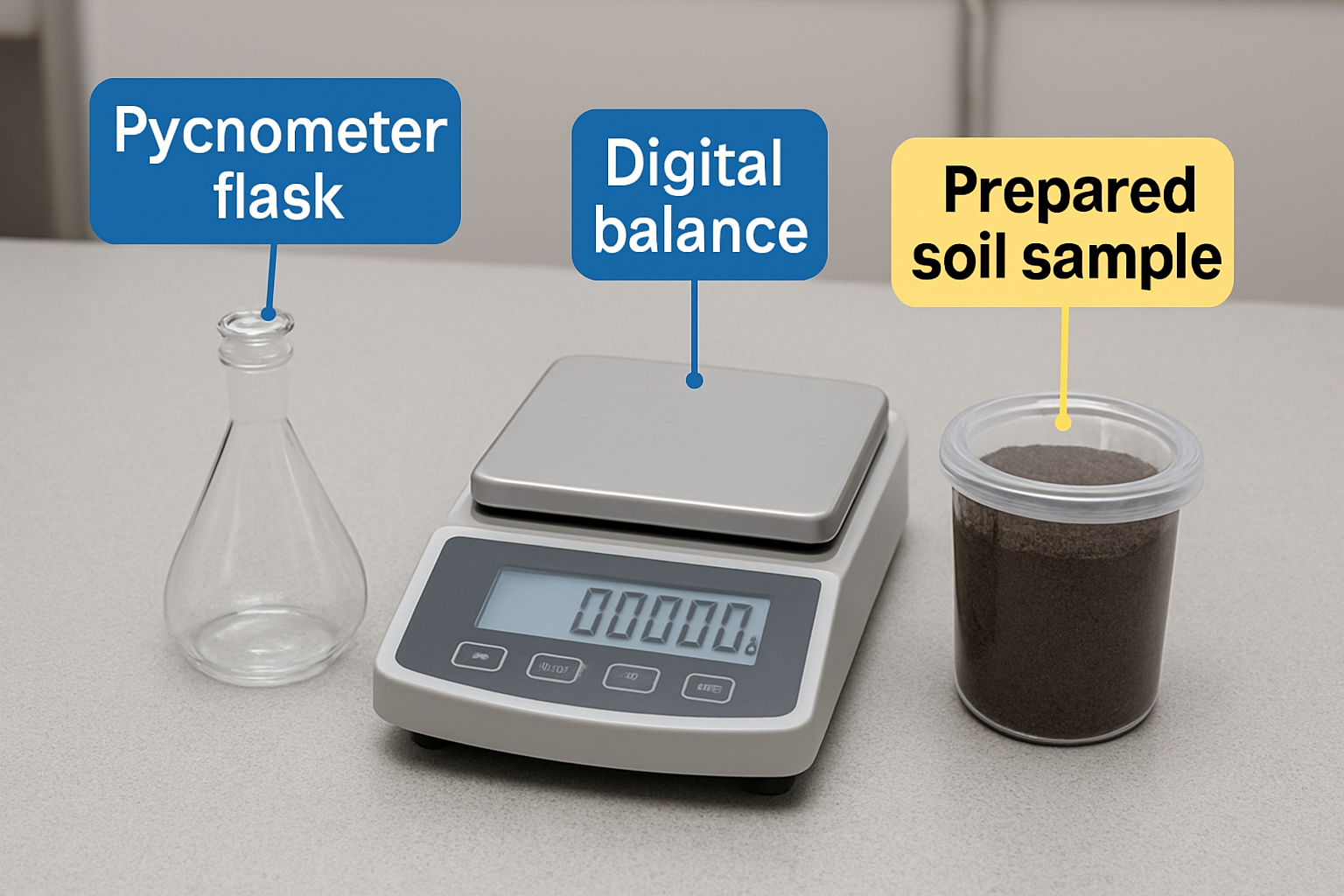
The pycnometer is a specialized device used for measuring the specific gravity of soil solids. Follow these steps for an accurate pycnometer test:
- Equipment Required: Gather a pycnometer, a balance scale, distilled water, a drying oven, and a soil sample.
- Prepare the Soil Sample: Dry the soil sample in an oven at 105°C to 110°C until a constant weight is achieved. This ensures that all moisture is removed.
- Weigh the Pycnometer: Record the weight of the dry pycnometer (W1). Then, fill the pycnometer with distilled water and weigh it (W2).
- Add Soil Sample: Remove some water from the pycnometer to make room for the soil sample. Add the dried soil sample to the pycnometer and carefully refill it with distilled water. Ensure no air bubbles are trapped in the soil.
- Final Weighing: Weigh the filled pycnometer again (W3). Record all the weights carefully.
Calculating Specific Gravity
With the weights recorded, you can calculate the specific gravity of the soil solids using the following formula:
The three weighings listed above are not sufficient to calculate soil-solids specific gravity by the usual pycnometer method. Record the following four masses, using the same clean, dry pycnometer and temperature-corrected water readings:
- M1: mass of empty, dry pycnometer
- M2: mass of pycnometer plus dry soil
- M3: mass of pycnometer, soil and water filled to the calibration mark
- M4: mass of pycnometer filled with water to the same mark
Gs = (M2 − M1) / [(M2 − M1) − (M3 − M2) + (M4 − M1)]
Use the equation and temperature correction specified by the governing test standard and laboratory procedure. Remove entrapped air before taking the final mass.
Where:
- W1 = Weight of the empty pycnometer
- W2 = Weight of the pycnometer filled with water
- W3 = Weight of the pycnometer filled with soil and water
Observations and Precautions
During the pycnometer test, several observations should be made:
- Ensure that the soil sample is completely free of moisture before weighing.
- Handle the pycnometer with care to prevent any damage or spillage of water.
- Keep the temperature of the water constant, as variations can affect density.
Some important precautions include:
- Using distilled water eliminates impurities that can alter density readings.
- Make sure to dry the pycnometer and soil sample thoroughly to obtain accurate weights.
- Avoid placing the pycnometer in direct sunlight or heat sources, which can influence water temperature and density.
Applications of Specific Gravity Results
The specific gravity of soil solids has several practical applications in geotechnical engineering:
- Soil Classification: It aids in classifying soil types, which is essential for understanding soil behavior and selection of appropriate construction methods.
- Compaction Control: Knowing specific gravity helps in determining the optimum moisture content for effective soil compaction.
- Engineering Analysis: The specific gravity is used to compute various other properties, such as void ratio and degree of saturation, which are critical for structural load assessments.
Common Mistakes in Pycnometer Tests
Some typical errors that can occur during the pycnometer test procedure include:
- Neglecting to calibrate the balance scale can lead to inaccurate weight measurements.
- Using non-distilled water, which may contain impurities affecting density calculations.
- Rushing the drying process, resulting in residual moisture affecting the weight of the soil sample.
Frequently Asked Questions (FAQs)
1. What is the significance of specific gravity in soil mechanics?
Specific gravity helps determine the weight and composition of soil, influencing soil classification, stability analyses, and significant engineering calculations.
2. Why is a pycnometer used over other methods?
The pycnometer provides highly accurate measurements and is suitable for small soil samples, making it ideal for laboratory applications.
3. Can different types of soil be tested using the same pycnometer?
Yes, but it is critical to clean the pycnometer thoroughly between tests to prevent cross-contamination of soil samples.
4. Is it necessary to control water temperature during the test?
Yes, maintaining a consistent temperature is essential since water density changes with temperature, impacting your calculations.
5. How often should the equipment be calibrated?
Calibration should be performed regularly, as per the laboratory’s standard operating procedures and before conducting any tests to ensure accuracy.
In conclusion, understanding the specific gravity of soil solids through the pycnometer test procedure is fundamental for geotechnical investigations. By following the outlined steps, observing critical factors, and respecting precautions, civil engineering students, contractors, and professionals can yield reliable results that contribute to successful project outcomes.