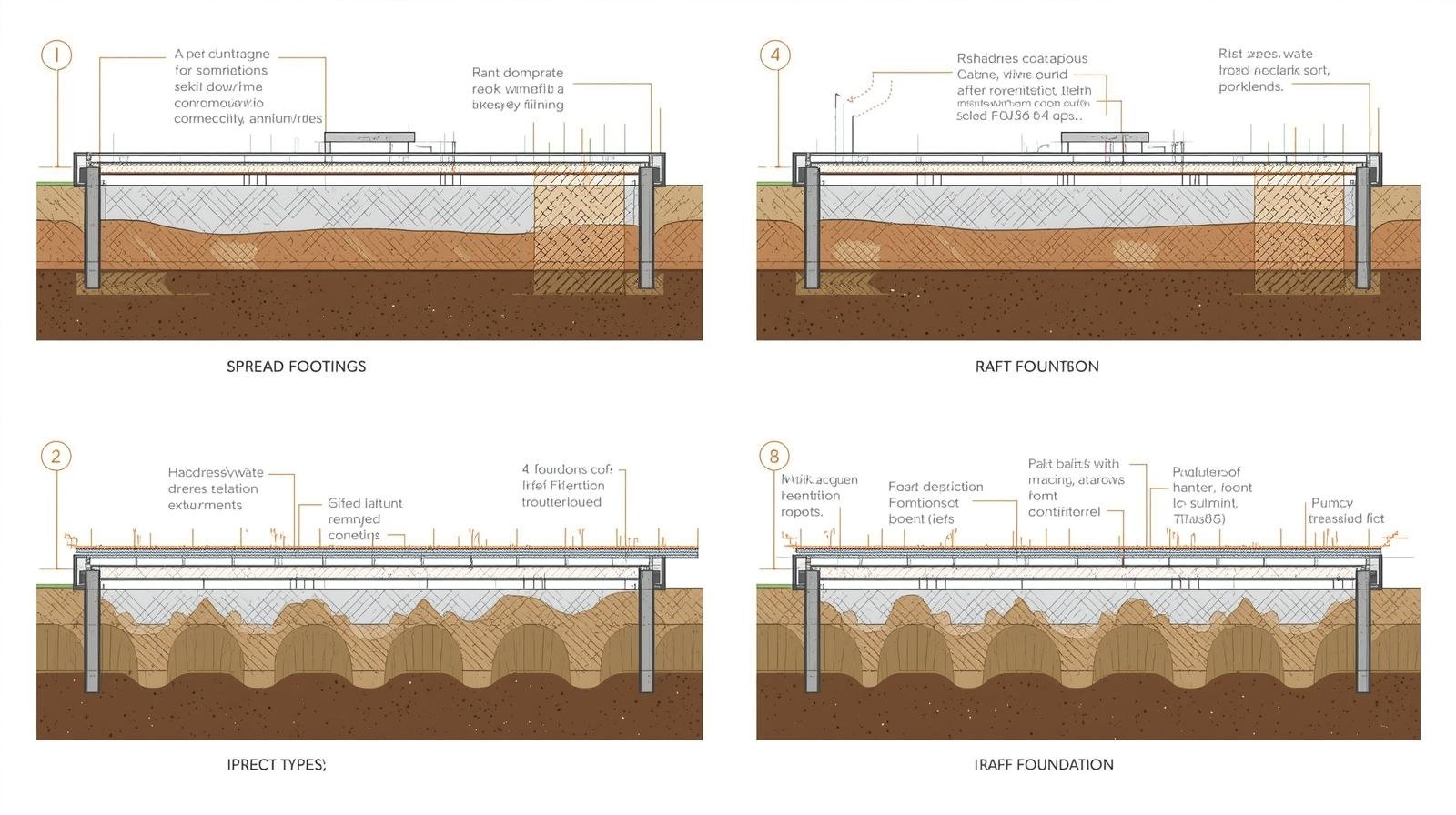
Designing a strong and stable foundation is one of the most important steps in any construction project. The role of foundation design basics lies in how loads are distributed and how soil conditions affect structural stability. A well-designed foundation transfers building loads safely into the soil while preventing settlement, cracks, or collapse. When engineers study load distribution and soil considerations, they ensure that the building will remain durable and safe for years.
Importance of Foundation Design Basics
Understanding foundation design basics is essential because the entire building rests on it. If the foundation is weak, the structure may face issues like uneven settlement, cracks in walls, or even complete failure. By analyzing soil conditions and ensuring proper load distribution, engineers design a system that balances strength, durability, and economy.
Key objectives of foundation design include:
- Safely transferring loads to the ground
- Avoiding differential settlement
- Ensuring long-term stability
- Adapting to soil conditions and environmental factors
Load Distribution in Foundation Design
Load distribution refers to how structural loads such as dead load, live load, and wind load are transferred from the superstructure to the soil. A good design spreads these loads evenly to prevent stress concentration.
Types of Loads Affecting Foundations
- Dead Load: Permanent weight of structural elements like walls, beams, and floors.
- Live Load: Temporary loads such as people, furniture, and equipment.
- Wind Load: Pressure exerted by wind, especially on tall buildings.
- Seismic Load: Forces generated during earthquakes.
- Snow Load: Weight of snow in colder regions.
Principles of Load Distribution
In foundation design basics, engineers ensure that:
- Loads are transmitted vertically and uniformly to the soil.
- Foundation size and depth match the type of load.
- Stress on soil does not exceed its bearing capacity.
For example, a strip foundation distributes loads from walls, while a raft foundation spreads loads over a large area to avoid settlement in weak soils.
Soil Considerations in Foundation Design
Soil is not uniform everywhere, and its properties directly influence foundation design. If soil is too weak or compressible, even a strong foundation may fail. Understanding soil considerations helps in selecting the right type of foundation.
Soil Properties That Matter
- Bearing Capacity: Maximum load the soil can support without failure.
- Compressibility: How much the soil compresses under load.
- Permeability: Ability of soil to drain water.
- Shear Strength: Resistance to sliding or shear failure.
- Moisture Content: Affects strength and settlement.
Common Types of Soil in Foundation Work
- Clay Soil: High compressibility, poor drainage, prone to swelling and shrinkage.
- Sandy Soil: Usually drains freely, but its strength and settlement behavior depend on density, grading, saturation and confinement.
- Silt Soil: Moderate strength, but poor drainage leads to instability.
- Rock or very dense strata: May provide high bearing resistance, but weathering, joints, cavities and rock quality must be investigated.
Soil Testing in Foundation Design Basics
Before construction, engineers perform soil investigations to measure properties such as strength and moisture. Common soil tests include:
- Standard Penetration Test (SPT)
- Plate Load Test
- Cone Penetration Test (CPT)
- Laboratory tests for moisture content, density, and shear strength
These tests provide data to decide foundation depth, width, and type.
Types of Foundations Based on Load and Soil
Foundation design basics involve selecting the right type based on soil condition and load distribution.
Shallow Foundations
- Spread Footing: Simple and cost-effective, used where soil has good bearing capacity.
- Strip Footing: Supports load-bearing walls by spreading loads.
- Mat or Raft Foundation: Spreads column and wall loads over a large area; suitability depends on bearing resistance, total and differential settlement, and structural design.
Deep Foundations
- Pile Foundation: Transfers loads deep into stronger soil or rock layers.
- Pier Foundation: Similar to piles but larger in diameter, used for bridges and heavy structures.
- Caisson Foundation: Used for underwater construction like ports and bridges.
Factors Affecting Foundation Design Basics
Several factors influence how foundations are designed:
- Soil type and properties
- Type of building load
- Environmental conditions (flood, earthquake, wind)
- Depth of groundwater table
- Construction cost and available technology
Foundation Settlement and Its Control
Settlement occurs when the soil beneath a foundation compresses. Controlled settlement is acceptable, but excessive or uneven settlement can damage the structure.
Types of settlement include:
- Uniform Settlement: Safe if within limits.
- Differential Settlement: Uneven sinking of different parts of the structure, dangerous for stability.
Methods to control settlement:
- Proper soil investigation before design
- Using deeper foundations in weak soils
- Soil stabilization techniques like compaction and grouting
Practical Design Guidelines for Engineers
When applying foundation design basics, engineers follow certain practical guidelines:
- For geotechnical checks, compare foundation contact pressure with the allowable pressure on a consistent gross or net and service-load basis; check structural strength separately using the required design load combinations.
- Maintain minimum foundation depth to avoid seasonal changes.
- Use waterproofing and drainage systems in water-logged areas.
- Select economical foundation type without compromising safety.
FAQs on Load Distribution and Soil Considerations
Why is soil testing important in foundation design?
Soil testing determines strength, compressibility, and bearing capacity, which help engineers design a safe and durable foundation.
What happens if load distribution is uneven?
Uneven load distribution can cause cracks, tilting, or even failure of the building due to excessive stress in one area.
Which foundation is best for weak soils?
No single foundation type is best for every weak-soil site. Engineers compare ground improvement, raft foundations and deep foundations using the soil profile, groundwater, building loads, settlement estimates and construction constraints.
How does water affect foundation design basics?
High groundwater can reduce soil strength and cause uplift pressure. Proper drainage and waterproofing are essential in such conditions.
Can clay soil support a foundation?
Yes, but clay soils require special attention due to shrink-swell behavior. Engineers often use deep foundations or soil stabilization methods.
Conclusion
Foundation design basics revolve around two key aspects: load distribution and soil considerations. By ensuring that loads are evenly spread and the soil’s capacity is well understood, engineers create stable, safe, and long-lasting foundations. Whether designing shallow or deep foundations, the combination of proper soil testing, load analysis, and structural judgment ensures that buildings remain strong against time and environmental challenges.